Notable Cadets

Search Cadet Stories

Filter Cadet Stories

Preparing the Home Front

Preparing the Home Front

Prior to the U.S. entry into World War I, neither the Army nor Navy was prepared for war. In many parts of the country patriotic rallies and preparedness meetings were held as early as 1915. Colonel Charles Hyatt responded to a 1917 rally in Chester by offering training and equipment to those men who could not join the National Guard but wished to receive practical military training in preparation for service.

In early April, a group of eighty boys and 104 men braved a cold rain to enlist in the Citizen’s Training Corps at PMC. Two groups were formed. Those boys sixteen or older were part of the High School Cadet Corps, and those men eighteen to fifty-five were part of the Citizen’s Training Corps. Eventually the number rose to 400, many traveling from as far away as Wilmington and Philadelphia. The course, conducted by Captain Lewis Morey and the Military Staff of PMC, was to last for ten weeks. The Citizen’s Training Corps drilled two nights each week for two hours. The high school cadets trained two afternoons for an hour and a half each week. Drills were originally held in the riding hall, but with the arrival of eight arc lights from the City of Chester, the citizen soldiers began to drill outdoors. Besides the drills and strenuous physical exercises, lectures in the Assembly Room in Old Main were held. The topics included a variety of military subjects, such as the mechanism and use of the Army rifle and trench construction.

While PMC made an important contribution on the home front, graduates were training similar groups throughout the United States. Colonel Hyatt received frequent reports from alumni in New Jersey and Tennessee.

Share link - http://pmc.widener.edu/pmc/legacies/cadets/preparing-home-front 

Warrior Thunder Hawk

Warrior Thunder Hawk

At the end of the 1929 Commencement ceremonies, Red Tomahawk, dressed in the full regalia of a Sioux chieftain, bestowed on General Charles Hyatt the title “Warrior Thunder Hawk.” He then presented Hyatt with a magnificent war bonnet with three hundred eagle feathers. As Red Tomahawk explained “… this Eagle war bonnet, not as an emblem of war, but as an emblem of peace.”

This honor was a gift from the Sioux tribe. It was later learned that General Hyatt was among only a small group of notables to receive this honor. The other honoraries were Former President Calvin Coolidge, President Herbert Hoover, Romania’s Queen Marie, Marshal Ferdinand Foch, and General Charles Summerall.

Although Red Tomahawk spent his lifetime creating a positive image of his culture, he was best known because of his involvement with the ending of Sitting Bull’s life in 1890.

Share link - http://pmc.widener.edu/pmc/legacies/cadets/warrior-thunder-hawk 

Operation Tender Tiger

Operation Tender Tiger

In 1965, Cadet Bill Symolon, Noel Koch and Pat Brennan organized a charity drive to care for Vietnam orphans in the province of Binh Dinh. At a time when there was national disagreement about Vietnam, these students saw their efforts as “An opportunity to provide substantive evidence to the Vietnamese people that we are’ concerned with their welfare … that we see them as something more than pawns in an international chess game. ”

The original goal was to raise $5,000 through a variety of campus fund-raisers. The support for Operation Tender Tigers grew quickly. Besides organizing an auction featuring many PMC’s notables, buttons were sold; a folk festival and dances were organized and community groups also stepped forward. Garnet Valley High School in Glen Mills sent 75 dollars. The effort was also recognized and commended by Pennsylvania Governor William Scranton. Soon support for Operation Tender Tiger was on the campuses of Delaware, West Chester and Villanova.

Operation Tender Tiger came to a successful end in May 1966. The student organizing committee presented a check for $5,500 to the Catholic Relief Services. Vu Vn Thai, ambassador of Vietnam, was the guest of honor at the presentation. The money raised was intended for the construction of an orphanage in the city of Qui Nhon. Plans called for the Orphanage of The Tender Tiger to accommodate 450 war orphans in two dormitories. In addition, there was to be a five-classroom school, a dining hall and two administrative buildings.

Share link - http://pmc.widener.edu/pmc/legacies/cadets/operation-tender-tiger 

The DeMille “Freedom” Trophy

The DeMille “Freedom” Trophy

Shortly after his father’s death in 1893, Cecil DeMille was enrolled at Pennsylvania Military College. According to DeMille’s biographer, Charles Higham, while at PMC DeMille was a “determined, forceful boy,” who “loved the endless dawn drills, the cold baths, the stern reminders of the dangers of falling from a high level of many virtues.” In the two years he spent at PMC, DeMille was a successful student, ranking fourth in his class and was an athlete. Colonel Hyatt approved of his passion for the theatre and in 1898 DeMille left PMC.

Although he did not graduate from PMC, DeMille remained loyal to the school throughout his life. In 1931, he received an honorary degree Doctor of Letters. In 1951, this acknowledged founding father of the Hollywood film industry, created the DeMille “Freedom Trophy.” It was to be given yearly to the Cadet who has “shown in an outstanding manner his personal conviction and devotion to the American ideal of individual freedom and the inalienable rights of man.”

According to George Bjotvedt ’51, who interviewed DeMille in California, “The award idea was born during a nostalgic discussion with Mr. DeMille about the time he was a cadet in gray. A marksmanship medal, awarded to DeMille while attending PMC, was one of his most cherished possessions.” For the next 24 years, the DeMille “Freedom” Trophy was one of the most coveted awards presented at Commencement.

YearCadet
1951Glenn E. Patsch
1952Henry C. Schmidt
1952William M. Rideway
1953Edward W. Blackburn
1954Peter M. Marx
1955David S. Johnson
1956Louis A. Sasso
1957Franklin A. Walsh
1958Charles A. Clemens
1959David O. Hinterleiter
1960Sheldon Schwartz
1961John A. Macintyre, Jr.
1962Lawrence P. Gioielli
1963Raymond L. Hastings
1964Richard H. Kilmer
1965David E. Allen
1966George W. Graner
1967Joe M. Charles
1968Stephen A. Raho
1969Robert A. Miller
1970Joseph S. Lewis
1971Edward M. Davidson
1972William J. Troy
1973Junior Treadway
1974Edward T. Moore
1975Frank D. Hnat

Share link - http://pmc.widener.edu/pmc/legacies/cadets/demille-freedom-trophy 

Accreditation of PMC

Accreditation of PMC

By the 1920’s, the reputation and enrollment of PMC was endangered by a lack of academic accreditation. To overcome these challenges, admissions standards were changed and all high school work was shifted to the Pennsylvania Military College Preparatory School. As Vice-President, Colonel Frank Hyatt also investigated having PMC approved by the Middle States Association.

Founded in 1887, The Middle States Association is an organization that provides schools, colleges and universities affirmation that they meet the established and rigorous academic standards of the Association. The value of this accreditation is the recognition that a reliable and independent authority has affirmed the quality of education offered by a college or university.

Colonel Hyatt learned that PMC did not meet the standards for accreditation by Middle States because

PMC was a private military college with no endowment.
Its library facilities were lacking.
The relationship with the preparatory school was to close.

To meet the requirements of Middle States, PMC began to expand the library, in large part due to gift of 3,000 books from Dr. James H. Gravell, of the Board of Trustees, and the appointment of Albert Corpening as the first librarian. In addition, steps were taken to make the preparatory school separate, including making Karl Agan, the College Registrar, Headmaster of the Pennsylvania Military Preparatory School.

In 1947, new efforts were made to gain accreditation, including building a new library. Unfortunately, the visiting committee from Middle States denied the college’s application in 1949 because of a lack of financial stability. With the arrival of General Edward E. MacMorland in 1953, a detailed plan had been developed to accomplish the goal of achieving Middle States accreditation. Under the General’s leadership along with the many improvements made over the past 10 years by other dedicated people, PMC was ready. Despite several areas that needed “clarification,” PMC was accredited in 1954.

During a follow-up evaluation in 1957, which was to confirm the findings of the 1954 evaluation, the Middle States Visiting Committee commended PMC for its “administration and leadership, improved alumni relations, good record keeping, improved financial and budgetary situation, high spirit and morale of students and good library leadership and staff.”

Share link - http://pmc.widener.edu/pmc/legacies/cadets/accreditation-pmc 

Rukard Hurd and the Legacy of “Taps”

Rukard H. Hurd 1878 (Taps)

The iconic bugle call “Taps” is possibly the most familiar melody to those who have served their country. When played, these twenty-four notes produce an emotion that lingers in the hearts and minds long after its tones end.

According to Taps historian M/Sgt Jari Villanueva, the bugle call was intended to signal lights out. While encamped at Harrison’s Landing during the Peninsular Campaign of 1862, Union General Daniel Butterfield (Third Brigade, First Division, Fifth Army Corps, Army of the Potomac) sought to replace the bugle call Extinguish Lights. He felt the call was too formal. He called Oliver Willcox Norton, the brigade bugler, and the two men worked together on a new call. Taps was first sounded in July 1862, and quickly spread to other units. The first use of Taps at a military funeral occurred when Captain John C. Tidball of Battery A, 2nd Artillery, ordered it played for the burial of a soldier killed in action. This custom was quickly adopted throughout the Army of the Potomac. In 1874, the U.S. Army officially recognized Taps.

Almost immediately words were added. The first were, “Go To Sleep, Go to Sleep.” The most famous and possibly the most recognized set of words to Taps has been attributed to Rukurd Hurd, an 1878 graduate of Pennsylvania Military Academy.

Day is done, gone the sun,
From the lake, from the hills, from the sky.
All is well. Safely rest.
God is nigh.

Fading light dims the sight,
And a star gems the sky, gleaming bright,
From afar drawing nigh,
Falls the night.

Dear one, rest! In the west
Sable night lulls the day on her breast,
Sweet, goodnight!
Now away, to thy rest.

Love, sweet dreams! Lo the beams
Of the light fairy moon kiss the streams;
Love, goodnight!
Ah, too soon! Peaceful dreams!

Rukurd Hurd left PMA in 1878 with a degree in civil engineering and settled in Minnesota. Although he was the secretary of the Minnesota State Tax Commission, he was also a consulting engineer for the United States Bureau of Mines. In 1911, he wrote Hurd’s Iron Ore Manual of the Lake Superior Region, and was recognized to be one of the leading mining experts in the country. During World War I, Hurd was a Major in the Engineer Reserve Corps and in charge of the Division of Statistics and Reports. In addition to composing the lyrics for Taps, Hurd wrote the music and words to three cadet songs: Rally (in memory of Theodore Hyatt), PMC Marching Song, and PMC Cadet Ley (dedicated to Charles Hyatt).

Share link - http://pmc.widener.edu/pmc/legacies/cadets/rukard-h-hurd-1878-taps 

Raymond W. Hardenbergh
Class of 1898

Raymond W. Hardenbergh ’98: Service, Leadership, and the Legacy of Rags

Raymond W. Hardenbergh '98: Service, Leadership, and the Legacy of Rags
Raymond W. Hardenbergh, also a member of PMC’s Class of 1898, left campus prior to Commencement to serve in the Spanish-American War. A Cadet Lieutenant at the time, he enlisted as a private in Company E of the 13th Pennsylvania Infantry, joining the regiment at Camp Hastings. Like his fellow cadets who entered military service, Hardenbergh received his degree in civil engineering.

From the 13th Pennsylvania, Hardenbergh went on to serve with the Army Corps of Engineers in Cuba under Colonel Edgar Jadwin, where he was appointed a Second Lieutenant in the regular army. His military career expanded further as he participated in the Philippine Insurrection. During World War I, he served as brigade adjutant with the 159th Brigade, 80th Division, American Expeditionary Forces.

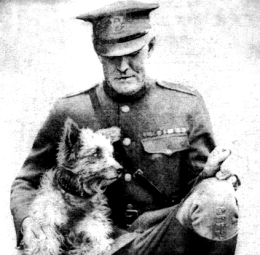
Hardenbergh is perhaps best remembered not only for his service, but for his connection to “Rags,” the famed war dog and mascot of the 1st Infantry Division. Rags, a mixed-breed terrier discovered in Paris by Sergeant James Donovan, was trained to carry messages between front-line units. During the Meuse-Argonne Campaign, Rags delivered a critical message despite being bombed, gassed, and partially blinded—an act that saved many lives and brought him widespread recognition.

After the war, both Donovan and Rags returned to the United States, where Donovan later died in 1919. Rags remained at Fort Sheridan, Illinois, where gas victims were being treated. When Major Hardenbergh arrived at Fort Sheridan the following year, he and his family adopted Rags, providing a home for the decorated war dog.

In 1924, Hardenbergh was transferred to Governor’s Island in New York Harbor, home of the 1st Infantry Division, where Rags became something of a celebrity in Manhattan. Hardenbergh was later transferred to the War Department in 1934. Rags died in 1936 and was buried with full military honors; a monument was erected in his memory at Aspen Hill Memorial Park and Animal Sanctuary in Silver Spring, Maryland.

Colonel Raymond W. Hardenbergh died on February 3, 1949.

Share link - http://pmc.widener.edu/pmc/legacies/cadets/raymond-w-hardenbergh-98-service-leadership-and-legacy-rags 

Ezra H. Ripple
Class of 1898

Ezra H. Ripple, Jr. ’98: From Cadet to World War I Officer

Ezra H. Ripple '98: From Cadet to Command

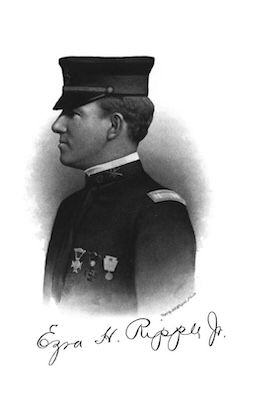
Ezra H. Ripple, Jr., a member of PMC’s Class of 1898, answered the call to service before completing his studies. In May of that year, as the nation mobilized for the Spanish-American War, Ripple—then a Cadet Lieutenant—left campus to enlist as a private in Company D of the 13th Regiment of the Pennsylvania National Guard. Like many of his classmates who entered service, he still received his degree in civil engineering.

Ripple joined his regiment at Camp Hastings for training. At the time of muster, the 13th Pennsylvania consisted of thirty-six officers and 604 enlisted men. In May, the regiment was ordered to Camp Alger, near Dunn Loring, Virginia, where it became part of the 2nd Army Corps, First Division. The unit remained there until August, when it was ordered back to Pennsylvania’s Camp Meade near Middletown. The war came to an end on August 13, and the 13th Pennsylvania did not see combat.

Following his military service, Ripple worked as a mine surveyor until 1900, when he chose to pursue a career in law. He entered the law department of the University of Pennsylvania and graduated in 1904. The following year, he was admitted to the Lackawanna bar.

Ripple’s commitment to military service continued well beyond his early enlistment. In 1916, he commanded the 13th Pennsylvania during the Mexican Border Campaign. During World War I, he was drafted into service and assigned to Headquarters, 55th Infantry Brigade, 28th Infantry Division—once again answering the call in a time of national need.

Share Link - http://pmc.widener.edu/pmc/legacies/cadets/ezra-h-ripple-jr-98-cadet-world-war-i-officer 

James Spurrier ’40, Emery Hickman ’40, William Dudley ’42 (From the Polo Field to the Battlefield)

James Spurrier ’40, Emery Hickman ’40, William Dudley ’42 (From the Polo Field to the Battlefield)

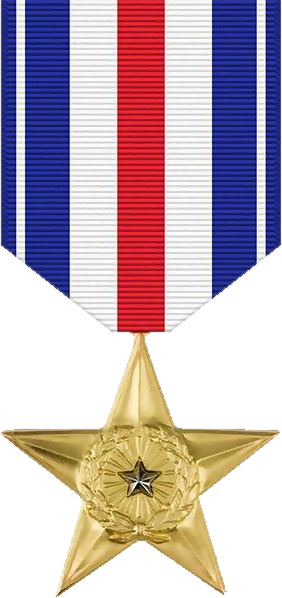
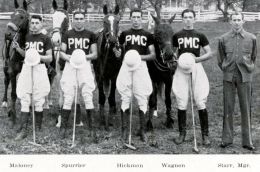
The 1939-1940 polo season was, perhaps, one of the greatest for polo at PMC. Under the guidance of Coach Carl Schaubel, ’30, considered at the time to be the best polo coach in the country, the team of Jim Spurrier ‘40, Emery Hickman ‘40 and “Bud” Maloney ‘41 excelled. Jim Spurrier was the sparkplug of the team. Bud Maloney formed the spearhead on attack, and Emory Hickman constantly retrieved the ball, feeding it to Spurrier and Maloney. Following the completion of a successful regular season, the PMC team once again played in the Intercollegiate Polo Tournament. They beat Harvard and West Point, but were defeated by Princeton in the Championship game. After graduation, these men, along with William Dudley ’42, a sophomore and another member of the polo team, were again teamed together in the 1st Cavalry Division. Three of these polo players distinguished themselves in action and earned Silver Star Medals for their leadership and heroism.

After months of “island hopping” through the Japanese held island chain known as “the Admiralties”, the 1st Cavalry Division invaded the Philippine Island of Leyte in October 1944. On November 30th, B Troop, under the command of CPT James R. Spurrier, was ordered to open the only available supply route by attacking a strongly entrenched force. To accomplish this, Spurrier was forced to cut his own trail through a densely wooded jungle over rugged mountain terrain. As darkness fell, there was the added danger of his troops becoming lost. Spurrier demonstrated initiative and courage leading his men to a point from which an attack could be made at first light. During the night, he gathered reinforcements to his command with men returning from the hospital and others carrying rations. As the sun rose the next day, Spurrier launched a coordinated attack. After 12 hours of hand-to-hand combat led by Spurrier, the supply route was reopened and an estimated 218 Japanese troops had been killed.

In January 1945, Luzon was invaded and General MacArthur issued the order “Go to Manila!” to liberate prisoners held by the Japanese and take the Malacañan Palace, the White House of the Philippines. Detached from the famous “flying column” and ordered to seize and hold the Palace, F Troop, commanded by CPT Emery M. Hickman, began the race towards Manila. To reach the objective, the squadron swept through the maze of unfamiliar streets and quickly overran the Japanese that were preparing to destroy the Palace. Hickey then organized the defense of the compound so well that when the Japanese tried to re-enter the grounds during the night they were stopped while taking many casualties. The next day, the Japanese began a murderous artillery bombardment of the Palace from across the Pasig River. Without regard for his personal safety Hickman courageously directed the fire of F Troop ordnance, observed the effects of the fire, and saw that all casualties received care.

As the 8th Cavalry Regiment began its push southward of Manila, Japanese resistance blocked its progress. Troop E, commanded by CPT William Dudley, was given the assignment to clear the area, starting with Gilmore Street. On Gilmore, a determined and tenacious Japanese force, consisting of machine guns and sniper fire, defended the area. Dudley was continually in the lead and exposed to the withering enemy fire. Throughout the daylong battle, Dudley remained in the forefront of the Troop reassuring his men and exploiting every gain before the enemy could reorganize. His leadership, personal courage, and heroism were directly responsible for the success of his and the regiment’s mission.

Emery M. Hickman
Class of 1940
2nd Battalion, 8th Cavalry, 1st Cavalry Division, USAFFE

Silver Star for gallantry while leading his troops designated to seize and hold the Malacanon Palace, Philippines.

James R. Spurrier
Class of 1940
1st Battalion, 12th Cavalry, 1st Cavalry Division, USAFFE

Silver Star for gallantry while leading his troops in an attack of a strongly entrenched Japanese position

Share link - http://pmc.widener.edu/pmc/legacies/cadets/james-spurrier-40-emery-hickman-40-william-dudley-42-polo-field-battlefield 

Dwight D. Eisenhower
Class of 1963

Dwight D. Eisenhower: Honorary First Captain at PMC

Throughout its history, PMC was host to many of the nation’s leaders. A long line of men, including General John J. Pershing, General Douglas MacArthur, Cecil B. DeMille, John Philip Sousa and Bob Hope, reviewed the Corps of Cadets. Among these many notables were several Presidents of the United States, Warren G. Harding, Franklin D. Roosevelt, Herbert Hoover and Dwight D. Eisenhower.

Eisenhower’s visit to PMC in the spring of 1963 is considered to be a landmark event. The former President was greeted upon his arrival by a PMC Honor Guard, President Moll, and the Commandant of Cadets, Major General William Biddle, who had served under Eisenhower in World War II. After lunch, Brigade Commander Jack Geoghegan ‘63 escorted Eisenhower to the parade field. After a 21-gun salute Eisenhower inspected the Corps of Cadets. Afterwards, Geoghegan presented Eisenhower with a sabre making Eisenhower the first Honorary First Captain in the 151-year history of PMC. The sabre is the traditional symbol that linked the Corps of Cadets of the Past and Present. After Geoghegan’s presentation, Eisenhower made brief remarks to the crowd. “I assure you,” said Eisenhower, a 1915 graduate of the U.S. Military Academy, “I did not attain the rank of First Captain at West Point.”

After a short reception following the activities of the afternoon, Eisenhower drove off with an aide to Gettysburg. As a courtesy, each year, General Biddle informed Eisenhower of the achievements of the Cadet Brigade Commanders.

Share Link - http://pmc.widener.edu/pmc/legacies/cadets/dwight-d-eisenhower-honorary-first-captain-pmc 

Benjamin S. Berry
Class of 1902

Benjamin S. Berry ’02: Hero of Belleau Wood

In late May of 1918 a massive German offensive smashed though the British and French lines. The Germans were now bearing down on Paris. The Marines were ordered to march toward Belleau Wood. An old hunting preserve, Belleau Wood covered about a square mile. In the heavy undergrowth the Germans created an ideal defense with a regiment armed with both light and heavy machine guns.

On June 6, the 3rd Battalion 5th Marines (3/5), commanded by Major Benjamin S. Berry advanced from the west into Belleau Wood as part of the Allied effort to take the village of Bouresches. As the first waves of Marines made their frontal assault, in a well-disciplined line, they had to go through a meadow of murderous machine gun fire. Almost immediately, Major Berry was wounded in his forearm. Marines attacked the woods six more times before the Germans were successfully expelled.

After the battle the wood was renamed “Bois de la Brigade de Marine” (“Wood of the Marine Brigade”) in honor of the tenacity of the Marines, by the French. An official German report classified the Marines as “vigorous, self-confident, and remarkable marksmen….

News reached P.M.C. that Major Benjamin S. Berry, ‘02, had been awarded the Croix de Guerre for bravery during the battle of Belleau Wood. On May 27, Secretary of the Navy Josephus Daniels presented a gold sword to Major Berry in recognition of his splendid service in France. The inscription on the sword reads: “From P.M.C. to Benjamin S. Berry, Major, United States Marine Corps, for bravery and distinguished service in the World War, 1917-18.” Later, Major Berry received the Distinguished Service Cross.

Navy Cross for gallantry in action in the Bois-de-Belleau, northwest of Chateau-Thierry, France.

Share link - http://pmc.widener.edu/pmc/legacies/cadets/benjamin-s-berry-02-hero-belleau-wood 

Churchill B. Mehard
Class of 1902

Churchill B. Mehard ’02: Brigadier General in WWI

Churchill Mehard was born in Mercer, PA and attended public schools. He then enrolled in Haverford College, PA. He left Haverford in February 1898, he arrived at PMC. Known as “Baldy,” for the lack of hair on his head, it was clear that he wanted to earn military honors in the Corps of Cadets and pursue a law career. Although he earned an appointment to West Point, he remained at PMC and in his senior year was appointed First Captain.

After Commencement, Mehard began his study of law at the Pittsburgh Law School and was admitted to the Allegheny County bar in 1903. Yet, his military aspirations remained. He enlisted in the Pennsylvania National Guard and was commissioned a First Lieutenant in 1903. As World War I approached, Mehard was commissioned into the U.S. Army under the National Defense Act of 1916, and assigned as an instructor at Fort McPherson, GA. On August 15, 1917, he was assigned to the 321st Field Artillery, 157h Brigade, 82nd Division AEF as a Major. After completing School of Fire at Fort Sill, OK, Mehard remained as a senior instructor. In May of 1918, he was ordered to rejoin the 321st Field Artillery in France. He led his troops through the second Battle of the Marne the St. Mihiel offensive, and throughout the entire Meuse-Argonne operation. Despite being severely gassed at L’Esperance, he was twice cited for gallantry in action. After the Armistice, he returned to America, and appointed Colonel of the field artillery of the Pennsylvania National Guard. In 1923 he was promoted to Brigadier General and commander of the 53rd Field Artillery Brigade.

Upon his return from France, Mehard resumed his law practice with his father, Judge Samuel Mehard. After his father’s death, Mehard reportedly became a “hard-drinking socialite” who was happy to be named the city solicitor of Pittsburgh. In 1939, he was found guilty in the City Hall consent verdict scandal (involving accusations of bribery) along with several other attorneys. Mehard successfully pleaded for mitigation of his sentence on grounds of his failing health. He moved to Arizona and died in September, 1943.

Share link - http://pmc.widener.edu/pmc/legacies/cadets/churchill-b-mehard-02-brigadier-general-wwi 

Eugene L. Melchoir
Class of 1949

Eugene L. Melchoir ’49: PMC’s First Korean War Casualty

As a senior, “Midge” Melchoir was the Battalion Adjutant, business manager for the Sabre & Sash and a member of the Glee Club. At Commencement, he was commissioned a second lieutenant, began active duty immediately, and volunteered for paratrooper duty at Ft. Benning, GA. During his final jump, he broke his leg and was forced to transfer to the infantry. He was then flown to Korea as an officer replacement in the 1st Cavalry Division.

Melchoir arrived in Korea in September (1950) and was immediately assigned to lead a platoon in Company G. His new command was comprised of South Korean soldiers with only one Korean who could speak English. Melchoir made him his sergeant. As the Army was pushing toward the 38th parallel, the 5th Cavalry spear-headed the drive to Pyongyang. Melchoir and his platoon were constantly on the march. Although the North Koreans provided little resistance, there were numerous skirmishes.

After the capture of Pyongyang, the 5th Cavalry continued to push northward. While outside of Suncheon, the lead elements were attacked by a well dug in reinforced regiment. Melchoir’s platoon was ordered to take a road block, located on a ridge. During the attack, all but six members of the platoon were casualties, including Melchoir who was wounded in both legs. Despite his wounds, he continued to direct his platoon using hand and arm signals, until he was evacuated. After the attack, he was flown to Japan where he began his recovery. Several weeks later, he was flown to the Valley Forge Hospital where he received months of treatment. In March 1951, Melchoir was awarded the Silver Star (click here to read more) for his gallant actions and inspirational leadership. After spending 2 years in Veterans Hospitals, he was discharged.

Melchoir worked for the Hercules Powder Company, a small explosives company serving the mining industry, gun owners, and the military, for 6 years. He left Hercules to become the owner and operator of Midge’s Bar in Kennett Square for 35 years. Melchoir died at the Neighborhood Hospice in West Chester, PA., at the age of 84.

Silver Star for conspicuous gallantry in action near Suncheon, Korea. While proceeding along the main supply route to Suncheon, Korea. Elements of the 2nd Battalion were fired upon by a well dug-in-in reinforced regiment. Company G, the Korean platoon, moved out commanded by Lt. Melchoir. They immediately encountered a hazardous barrage of enemy mortar, automatic weapons and small arms fire, inflicting significant causalities. Being unable to speak the Korean language, Lt. Melchoir successfully overcame the language barrier by constantly exposing himself to the deadly fire of the enemy to indicate to his men their mission, and while directing their fire by using hand and arm signals. During this action, Lt. Melchoir was wounded in both legs but still courageously continued to direct his platoon until he was evacuated. His selfless and courageous actions prevented a well-planned ambush from inflicting higher losses on his platoon and disrupting the mission.

Share link - http://pmc.widener.edu/pmc/legacies/cadets/eugene-l-melchoir-49-pmcs-first-korean-war-casualty 

John L. Fancourt
Class of 1943

John L. Fancourt ’43: POW Escape and Post-War Leadership

After completing Germantown Academy in Pennsylvania, John “Jack” Fancourt attended PMC. He was a local track star, and, by his senior year, held the Middle Atlantic 220-yard record. He received a Bachelor of Science degree in Civil Engineering and went on to attend Officer Candidate School (Infantry). Because of a deficiency in math, he failed to graduate, and was transferred to Camp Butler, North Carolina. Private Fancourt wasted little time requesting an over sea’s transfer to replacement forces and was assigned to Company K, 179th Infantry Regiment, 45th Division.

During early morning hours of January 22, 1944, the Allies landed on the Italian beach near Anzio. They advanced inland, but were stopped by a German counter attack in early February. At dawn on February 16, the Germans, supported by tanks, launched an attack, with the 179th receiving the brunt of the assault. On February 18, the Germans launched a more intense assault and destroyed one battalion of the 179th, forcing the remainder of the regiment to fall back. Company K suffered heavy casualties, but Fancourt survived. He was captured by the Germans, and along with other prisoners forced to walk towards Rome. After four days, they reached “Cinecitta,” a prisoner of war camp located just outside of Rome. The camp was used to hold prisoners for short periods of time. It was lightly guarded by German soldiers, and surrounded by barbed wire. One night, the guards were distracted by an air raid near the camp. This allowed Fancourt and several others to escape through the barbed wire fence. For the next several months, Fancourt, now with a moustache and long hair, hid in an apartment in Rome, and eluded recapture with the help of the Italian Underground,. In June, Rome was liberated, and Fancourt returned to duty.

At the request of Major General James Ulio, Adjutant General of the Army and a trustee of PMC, Fancourt returned to the school for a short time as a staff member of the Army Specialized Training (AST) unit. After being honorably discharged in late 1945, Fancourt joined the family business, W.F. Fancourt & Company, makers of textile soaps, in Philadelphia. Eventually the company moved to Greensboro, North Carolina. There he enjoyed fishing and golf, serving as the Honorary Chairman of the Greater Greensboro Open in 1974. He died in 1996.

Share link - http://pmc.widener.edu/pmc/legacies/cadets/john-l-fancourt-43-pow-escape-and-post-war-leadership 

Joseph A. Minturn
Class of 1880

Joseph A. Minturn ’80: Camoufler in World War I

After Commencement, Joseph Minturn returned to Indianapolis and opened a wood carving business, having learned the machinist trade before he entered PMC. Wood carving became nearly obsolete when photo-chemical engraving was introduced and Minturn decided to enter the Indiana Law School. He was admitted to the bar in 1895 and began a successful career in patent law. In 1916, he founded the Indiana Society of Mayflower descendants after learning that he was a direct descendant of John Howland, one of the passengers on the Mayflower.

In response to advertisements in the local papers in 1917 to join the Officer’s Training Camp at Fort Benjamin Harrison and his own sense of duty, Minturn applied and was ordered to report at once. He registered, was given a thorough medical exam and was pronounced “sound and all right, but over-age.” He was then sworn in. Within weeks, Minturn was honorably discharged from the Army because of his age (he was 56 at the time). He left Fort Harrison and immediately traveled to Washington, D.C. There he hoped to receive a special dispensation from President Woodrow Wilson. Despite his unsuccessful efforts to acquire Congressional support from the Indiana delegation, Vice-President Thomas R. Marshall, a fellow Hoosier, came to his aid by contacting the Secretary of War. Minturn received new orders to re-enlist at Fort Harrison. After he completed his training, Minturn was commissioned as a second lieutenant in the Quartermaster Corps and ordered to Camp Taylor, in Kentucky.

Fort De Piesnoy

At the start of World War I it became apparent that, because of advances in surveillance, there was a urgent need for specialists, called camouflers, who could fool the enemy through ingenious perspective illusions. Because of his ability to sketch and help make large-scale backdrops, Minturn was promoted and transferred to the Engineer School and attached to the 309th Engineers of the 84th division. In October, 1918, Minturn went to France with the 309th. There he was ordered to the A.E.F. Army Specialist School at Langres, France. He became an instructor in camouflage and military sketching. In 1919, the Army Schools were closed and Minturn was transferred to A.E.F. Headquarters. There he continued his work of illustrating manuals. In June, he returned to America and was discharged. He then returned to Indianapolis.

In 1920, Minturn and six other Indianapolis men who had served in the War founded The Service Club of Indianapolis. This group held regular lunch meetings to maintain the “bonds of friendship” they had formed during the War. The only requirement was that members had to have seen service in the Army, Navy or Marine Corps. In 1921, the story of Minturn’s war experiences along with many of his own illustrations were published in “The American Spirit.” He remained active in Indianapolis for many years and died after a short illness in 1943.

Share link - http://pmc.widener.edu/pmc/legacies/cadets/joseph-minturn-80-camoufler-world-war-i 

Frank B. Wood
Class of 1899

Frank B. Wood ’99: Military Officer and Aviation Enthusiast

Frank B. Wood attended public school in Huntley, IL, and completed his studies at the Elgin Academy. He entered Pennsylvania Military College as a member of the Class of 1899. In the summer following the outbreak of the Spanish-American War, Wood was commissioned a First Lieutenant in Company B, 4th Wisconsin Infantry. Prior to reporting to training camp, the regiment was ordered to Oshkosh by Governor Scofield. Its mission was “preserving the peach” by quelling the strike of woodworkers. At the end of July, the Regiment reported to Camp Douglas to prepare for active duty. Despite Wood’s claims that he charged up San Juan Hill with Teddy Roosevelt’s Rough Riders, he and the 4th Regiment remained in the United States until the end of the War.

Barney Oldfield

Wood returned to Elgin (IL) and opened an auto garage. He quickly became an auto enthusiast and a member of the Chicago Motor Club. At the time the Crown Point Road Race was the first in the Midwest. Due to financial troubles and unfavorable road conditions along the 232-mile route, the race was forced to change locations. Frank Wood and others formed the Elgin Automobile Club and invited the Chicago Motor Club to consider a 8.5-mile course they planned. Although there were many claims that Barney Oldfield, a famous auto racer participated, the AAA (American Automobile Association) had suspended Oldfield from racing due to his “outlaw” behavior. He did participate in later road races in Elgin.

One of the strangest claims made by Wood was his connection with the Wright Brothers first flight in 1903. In various interviews, including with PMC’s Impact Magazine (Summer, 1969), he recounted meeting Barney Oldfield in Philadelphia and driving to Kitty Hawk where they witnessed the Wright Brothers make three trial flights on December 14. Wood stated, “it was Oldfield who made them possible, by instructing the Wrights how to lengthen their elevator lever so the plane would “get more air.” Stephen Author, in his book The Wright Brothers in North Carolina, wrote that the Wright Brothers only attempted one flight on December 14. Furthermore, witnesses to the trials were recorded on paper and film and Frank Wood and Barney Oldfield were not among them.

In the 1920’s, Wood moved to Panama City, FL where he was affectionately known as the “major.” His love of fast cars remained and he would often be seen driving a racing car. He also learned how to sail, and became the first Commodore of the St. Andrew Bay Yacht Club. His first love, however, was aviation, Thanks to his daughter, Betty Wood McNabb who joined the Civil Air Patrol (CAP) in 1953 and flew more than 9,000 hours during her career, Wood accompanied her on several flights. In 1975 he passed away quietly. 

Share link - http://pmc.widener.edu/pmc/legacies/cadets/frank-b-wood-99-military-officer-and-aviation-enthusiast 

George H. Webb
Class of 1880

George H. Webb ’80: Distinguished Railroad Engineer and Military Officer

Born in Iowa in 1860, George Herbert Webb attended the public schools of Pittsburgh and Pennsylvania Military College. He graduated in 1880 with a degree in Civil Engineering and started his career as a surveyor with the Baltimore & Ohio Railroad. Beginning in 1889, he spent the next two years building a railroad in Chile. He then worked in Peru as the chief engineer of the Transandine Railway, a remarkable project which built a railroad through the Andes. He returned to the United States and by 1905 was made chief engineer of the Michigan Central Railway. He omit planned and rebuilt the Third Avenue rail yard in Detroit and in 1913, completed the new Michigan Central Depot.

In 1917, he left the Michigan Central Railway and was commissioned a lieutenant-colonel in the 16th Regiment of Engineers (Railway). The 16th was organized and trained within the city limits and was Michigan’s only volunteer regiment. Among the 687 members of the 16th Regiment were some of the best skilled tradesmen from Detroit. Shortly after World War 1 was declared, the Regiment was ordered to proceed to France. They arrived on August 27, 1917. For the next 21 months, they were in constant service. Along with the other Engineer Regiments of the American Expeditionary Forces, the 16th was assigned to building the infrastructure needed for the success of AEF. Its accomplishments included designing and building the Nevers Cutoff, allowing supply trains to bypass Paris, and repairing the supply line between Verdun and Dan-sur-Meuse during the AEF offensive in the Meuse-Argonne region.

After the Armistice, the Regiment continued its work for some time. On May 5, 1919, it arrived home at the Michigan Central Depot. They paraded through Detroit the next day, and was mustered out of service the following day.

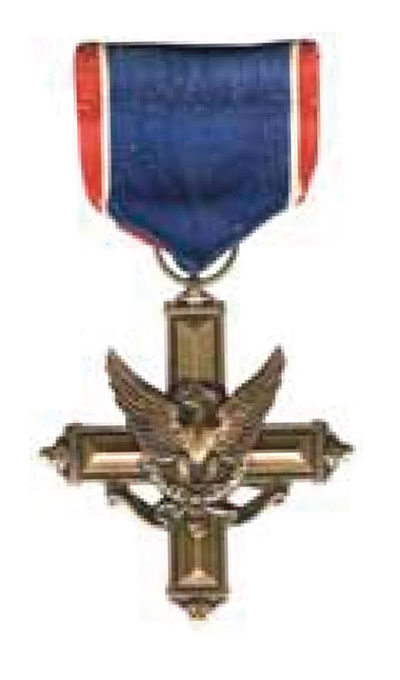
In July, 1919, Colonel Webb was awarded the Army’s Distinguished Service Medal for:

“exceptionally meritorious and distinguished services … with the execution of some of the largest construction enterprises in France. Confronted by difficulties of labor, material, and equipment, he set about his task with ceaseless energy, and by his resourcefulness, initiative, and skill he overcame all obstacles and completed these difficult projects with great success.”

After his discharge, Colonel Webb resumed his job as chief engineer of the Michigan Central Railway. He passed away in 1921 while living in Newton Lower Falls, near Boston.

Share link - http://pmc.widener.edu/pmc/legacies/cadets/george-h-webb-80-distinguished-railroad-engineer-and-military-officer 

George M. Studebaker
Class of 1885

George M. Studebaker ’85: Young Colonel and Industrial Pioneer

After his Commencement in 1885, George M. Studebaker returned to Indiana. He joined his father’s wagon and carriage business, the Studebaker Wagon Company, and married Ada Lantz. He also joined the 3rd Regiment of the Indiana National Guard.

Between 1895 and 1898, Cuba and the Philippine Islands revolted against Spain. The Cuban revolt had many supporters among the American people and in response to the popular outcry, President William McKinley sent the Battleship Maine to Havana. Its mission was to provide a naval presence there but on the night of February 5th, the Maine was exploded and sunk. A reluctant McKinley reacted to the public demands and Congress approved the President’s request for a declaration of war on April 10.

The 157th Regiment of Infantry, Indiana National Guard, which was known as the “Studebaker Tigers,” was formed from volunteers from the 3rd Regiment. Studebaker, the youngest colonel in the service of the country at the time, was the commander. Immediately following McKinley’s war message, Colonel Studebaker telegrammed Indiana Governor James Goodrich, offering the services of the regiment.

The `157th Regiment was the first organization of volunteers to be mustered into the Volunteer Service for the Spanish-American War. The regiment reported to Camp George H. Thomas at Chattanooga National Military Park, Chickamauga in Georgia. Due to the slow process of examining and passing the physical exam, the regiment was accepted by the United States Army after some delay. The regiment moved to Port Tampa City (FL) where it remained until it was ordered to return to Indianapolis for muster out of service.

Studebaker returned to work at the Studebaker Wagon Company, which entered the car business in 1902. Two years later, Studebaker brought out its first gasoline automobile—a two-cylinder, 16-horsepower touring car. In 1911, the company purchased the Everitt-Metzger-Flanders Co. of Detroit and formed the Studebaker Corp.

Studebaker returned to work at the Studebaker Wagon Company, which entered the car business in 1902. Two years later, Studebaker brought out its first gasoline automobile—a two-cylinder, 16-horsepower touring car. In 1911, the company purchased the Everitt-Metzger-Flanders Co. of Detroit and formed the Studebaker Corp.

Share link - http://pmc.widener.edu/pmc/legacies/cadets/george-m-studebaker-85-young-colonel-and-industrial-pioneer 

George T. Cann
Class of 1885

George T. Cann ’85: Scholar, Marksman, and Judicial Leader

Cann Memorial Hall was dedicated in February, 1965. At the time, Cann housed 86 Rooks (freshmen Cadets) and a small cadre of upperclassmen. The dormitory was named in honor of George Turner Cann, PMC 1885. The dedication ceremony was attended by faculty, Cadets and honored guests of PMC, including Cadet Captain Walter Clayton Jr., President of the Board of Trustees, Laurence Sharples, and Cann family members. In accepting the dormitory, it was said Cann “certainly was not ordinary.”

Judge Cann’s forebears settled in Georgia shortly after James Oglethorpe founded the colony in 1732. He was the valedictorian of his high school class in 1882 and entered Pennsylvania Military Academy in the fall. After only three years, he earned the distinction of being Cadet Captain, achieved the highest grade average (99.7 on the Merit List) ever attained at PMA, and became the class valedictorian. After graduation he attended Columbia University where he continued his studies and received his diploma from the law school. He returned to Savannah and was admitted to the bar. His law career included three terms as county attorney and as judge of the Eastern Judicial Circuit Court of Georgia.

George Cann was an active participant in many civic and fraternal organizations, including the Savannah Board of Trade, the Georgia Historical Society, and Director of the YMCA. In 1887, he joined the Savannah Volunteer Guards as a private. He advanced quickly, however, and attained the rank of captain of Company C. He was a skilled marksman and led Company C at the sixth annual New Jersey Riflemen tournament at Sea Girt, NJ. In 1896. Cann won the Wimbledon Cup with a score of 103 of of a possible 150.

In 1924, Judge Cann conferred the degree of Bachelor of Military Science upon 64 PMC alumni. Judge Cann explained that “the degree was designed to honor graduates of PMC who had served in any branch of the military in time of actual warfare.” He went on to say that PMC

creates a sound body and healthy mind, teaches obedience ot law and authority and inspires lofty ideals. PMC men have been heroes in peace and in war. They are always ready to make the supreme sacrifice when their country calls them.

Throughout his life Judge Cann continued his involvement with PMC. He was a member of the Board of Trustees from 1924-1937 and was awarded the Honorary Degrees of Master of Arts in 1892 and Doctor of Laws in 1935.

Share link - http://pmc.widener.edu/pmc/legacies/cadets/george-t-cann-85-scholar-marksman-and-judicial-leader 

Gordon M. Bettles
Class of 1910

Gordon M. Bettles ’10: From Mining Leader to POW in Manila

Gordon M. Bettles left Montana in 1906 and entered PMC, He quickly became a leader in a very talented class. As a senior, he received the honor of being the Cadet Battalion Commander. Commander Bettles was also an athlete and captained the football team. At Commencement he was awarded a degree in Civil Engineering and continued his education at the Colorado School of Mines. He oversaw the successful mining operations of the Yellow Tiger Mining Company in Goldfield, Nevada and introduced the use of an oil-driven compressor to mine the gold. In 1937, Bettles left his lucrative position at the Wiljobar Corporation in California and sailed to the Philippines. He was to become a part of a mining syndicate in Manila.

The bombings at Pearl Harbor in 1941 suddenly and dramatically changed the American attitude towards the Philippines. Since becoming a colony at the end of the Spanish American War, America’s approach was muddled. To many, the Philippine were an economic investment. This resulted in various large and small companies seeking the wealth of lumber, sugar and precious metals that the islands offered. After Pearl Harbor, the view was that Manila Bay was a large well-fortified port in the Pacific.

Within a month, Gordon Bettles and 6,000 other American and British civilians were interred in Japanese prison camps in Manila. The largest of these camps was Camp No. 1, University of Santo Tomása Internment Camp. The University campus consisted of 50 acres and was surrounded by high masonry walls on three sides an an ornate iron fence facing the main street. Inside the compound were the Main Building and an education building, both structures were 3-stores in height and contained offices, classrooms and a gymnasium. In addition, there were two light construction one-story buildings called the Annex and the Infirmary. Segregated by sex, thirty to fifty people were crowded into these small spaces. Bathrooms were scarce.

While there were many difficulties accommodating the growing number of internees, the Japanese absolved themselves of any responsibility. The Japanese did not consider the internees to be prisoners, but merely civilians held in protective custody. This left the internees struggling to find ways of feeding of themselves and dealing with a variety of health issues.

On June 14, 1943, Gordon M. Bettles, age 50, died of unknown causes while imprisoned. He was buried in the Manila North Cemetery.

Share link - http://pmc.widener.edu/pmc/legacies/cadets/gordon-m-bettles-10-mining-leader-pow-manila