Notable Cadets

Search Cadet Stories

Filter Cadet Stories

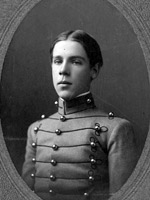
Cecil B. DeMille
Class of 1898

Cecil B. DeMille ’98: From PMC Cadet to Hollywood Pioneer

Cecil Blount DeMille was born August 12, 1881, in Ashfield, Massachusetts. Cecil's father and mother were schoolteachers and staunch Episcopalians. Each night, his fundamentalist father, Henry, read passages from the Old and New Testaments to his family. The true passion in Henry DeMille's life though, was theater and he had moderate success as a writer and producer of plays. After her husband's death, Mathilda Beatrice DeMille opened the Henry C. DeMille School, a girls boarding school, at the family home in Pompton, New Jersey. Cecil was enrolled at Pennsylvania Military College in 1896 for free in exchange for the education his mother provided the daughter of Colonel Charles Hyatt.  Cecil made the trip from New Jersey to Chester on bicycle, with his mother, to save money. In the two years he spent at PMC, DeMille won medals in marksmanship and attained a grade point average of 94 out of 100.   Eugene S. Hoopes, a fellow cadet at the time, remembered DeMille in his memoir, Wearing the Gray, as ""an odd character, a bit of a dreamer and very restless. He was not the type who could adjust himself to the requirements of military life.""  According to his biographer Charles Higham, Pennsylvania Military College was a good fit for Cecil because Charles Hyatt was as staunch a Christian as his father had been. Higham writes in Cecil B. DeMille: A Biography of the Most Successful Film Maker of Them All that Cecil was a ""determined, forceful, neat boy,"" an ""ideal all-rounder, an athlete with brains."" DeMille ""loved the endless dawn drills, the cold baths, the stern reminders of the dangers of falling from a high level of manly virtues."" However, he was ""fired with an inherited passion for the theater,"" and in 1898, with Colonel Hyatt's approval and blessing, he left PMC. Cecil B. DeMille went on to attend the American Academy of Dramatic Arts in New York City and graduated in 1900. After graduation DeMille began touring with an acting troupe.  DeMille met his future wife, Constance Adams, during the tour.  The young couple married soon after they met over the objections of Constance's father who was a Judge on the Massachusetts Supreme Court.   Although, the early years of their marriage were characterized by extreme poverty, hardship, and struggle, they welcomed the birth of their only child, Cecilia on October 5, 1908.   In 1912, Cecil and his friends decided to venture into the new industry of filmmaking. They formed the Jesse L. Lasky Feature Play Company, with Lasky as president, Samuel Goldfish as business manager, and DeMille as general stage director. The group obtained the rights to as many plays as they could, and began to set up studios in Hollywood while filming their first movie.  The Squaw Man was sold to States Rights' Market for $43,000 and was well received by the public. Having succeeded in their first attempt in the movie industry, the company quickly expanded, building more elaborate studios and making more films.  The 1923 filming of The Ten Commandments is part of Hollywood legend because DeMille set up camp with 2,500 actors, 1,500 technicians, and very elaborate staging that took months to build in a remote California desert. After filming, a great deal of the set was buried beneath the sand dunes. The Ten Commandments was such a success that it was remade in the 1950s starring Charlton Heston. DeMille steadily rose in fame and power. The Jesse L. Lasky Feature Play Company became a unit of Paramount Studios. Among the 70 features that he directed, DeMille turned out such epic films as The Crusades, Cleopatra, Samson and Delilah, and The King of Kings (his personal favorite). Many of his films were morality tales, based on his father's reading and writings. A believer in the literal word of the Bible, DeMille saw himself as a missionary, making scriptures attractive in a time of materialism and heathenism. Despite being labeled as shrewd, arrogant, and vulgar by critics, and egotistical in public opinion, DeMille remained an extremely demanding director who never swerved from his concept of what a film should be. In general, Cecil B. DeMille's movies are known for their fantastic costumes and elaborate sets, as well as a diverse subject matter that includes social comedies, dramas, melodramas, historical epics, and Biblical spectaculars. Cecil B. DeMille died on January 21, 1959, of a heart attack at age 77. He is remembered as one of the most influential directors in all of filmmaking. Although DeMille did not graduate from Pennsylvania Military College, he never forgot his former school. He received an honorary degree in 1931 from PMC and established a scholarship at the college. He created the Freedom Trophy (now called the Cecil B. DeMille Trophy) in 1951 to be given to a student ""having shown in an outstanding manner his personal conviction and devotion to the American ideal of individual freedom and the inalienable rights of man."" In a February 1956 letter to RCA Vice President Mannie Sachs, who was to be the commencement speaker at PMC that year, DeMille wrote that ""the formative years of youth are most important and it is good for America that PMC is still giving, and I hope will continue to give, the sound, high-principled education it was giving that September day in 1896 when I rode my bicycle all the way to Chester.""

Share link - 

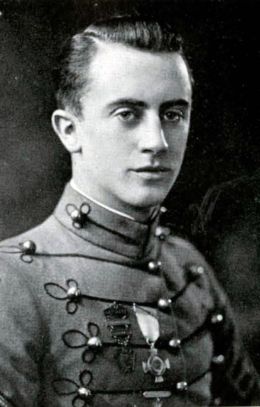
David J. Brightbill
Class of 1962

David J. Brightbill ’62: From PMC Cadet to Pennsylvania Senate Leader


David J. Brightbill attended Pennsylvania Military College from 1960 - 1962.   He continued his education at Penn State, where he earned a degree in economics.   He worked at the Lebanon Daily News and then attended Duquesne University School of Law.  In 1970, the future senator served as Editor-in-Chief of the Duquesne Law Review and graduated with honors. He has worked at many levels of state and local government, including serving as a member of the Lebanon School Board and District Attorney for Lebanon County. Brightbill was elected to the Pennsylvania State Senate in 1982 and has represented the 48th Senatorial District in this capacity until the present.  During his tenure in the State Senate, Senator Brightbill has held numerous leadership positions, including Majority Whip and, since 2000, Majority Leader.  He has also served as Chairman of the Policy Committee, the Environmental and Energy Committee and the Rules and Executive Nominations Committee.  In 2000, the National Republican Legislators Association named Senator Brightbill Legislator of the Year.

Share link - https://pmc.widener.edu/pmc/legacies/cadets/david-j-brightbill-62-pmc-cadet-pennsylvania-senate-leader 

Rukard Hurd
Class of 1878

Rukard Hurd ’78: Mining Expert and PMC Songwriter


Rukard Hurd was born on July 15, 1858, in Cincinnati, Ohio.  He graduated from PMA in 1878, earning a degree in civil engineering.  After graduating, Hurd settled in Minnesota.  From 1889 to 1907, he worked in the life insurance business.  He served on the Minnesota State Legislature in 1901 and 1902. In 1915 Hurd was appointed director of the Department of Mines and Natural Resources for the Minnesota Tax Commission; he had already served as Secretary of the Commission since 1907.  Hurd also acted as a consulting engineer for the U. S. Bureau of Mines. In 1911, Hurd's Iron Ore Manual of the Lake Superior Region was published cementing Hurd's reputation as one of the leading mining experts in the northwest. During World War I, Hurd took a position as major in the Engineer Reserve Corps and was the officer in charge of the Division of Statistics and Reports.  He worked in the General Engineering Depot in Washington, D.C., from December 21, 1917, to June 5, 1918. Hurd was a long time member of the American Mining Engineers and the American Iron and Steel Institute. Hurd remained active with his alma mater by participating in the Western Alumni Association of Pennsylvania Military College, which each year presented a gold medal to the cadet of the third class who maintained the highest record of scholarship. In 1912 PMC awarded Hurd an honorary Doctor of Philosophy degree for his accomplishments in life and dedication to the school. In honor of PMC, Hurd wrote the words and music to three cadet songs: Rally (in memory of Theodore Hyatt), PMC Marching Song, and PMC Cadet Lay (dedicated to Charles Hyatt). Rukard Hurd died at his vacation home in Frontenac, Minnesota on July 27, 1922.  He was 64.

Share link - https://pmc.widener.edu/pmc/legacies/cadets/rukard-hurd-78-mining-expert-and-pmc-songwriter 

Russell Kelso Carter
Class of 1967

Russell Kelso Carter ’67: Educator, Hymn Writer, and PMA Pioneer


Russell Kelso Carter was born on November 18, 1849 and grew up in Baltimore, Maryland.  He attended Pennsylvania Military Academy and graduated in 1867.  In this year, Carter was one of the first cadets to graduate with a degree in Civil Engineering.  Cater was also a member of PMA's first baseball team, which started in 1866.  Serving as pitcher, he is described as "one of the cleverest of the early pitchers at the school." After graduating, Carter remained at PMA where he taught Natural Sciences and Chemistry until 1872.   After a three-year respite, where he went California to raise sheep, he returned to PMA and taught Mathematics and Civil Engineering.  In 1878, Carter developed a course that warranted the conferring of a degree in Chemistry. He was appointed chair of the Civil Engineering Department in 1881 and held that position until his resignation in 1887.  Carter is regarded as bringing a fine mathematical ability to his chairmanship.  While teaching at PMA, Carter also served at the first president of the Alumni Association, holding this post from 1873 to 1874 and again from 1878 to 1879. After resigning from PMA, Carter became an ordained Methodist minister and then he became a physician in Baltimore, Maryland. During his many career changes, Carter wrote prolifically on religion, mathematics and science. Of the major works published by R. Kelso Carter, at least five books were about holiness and faith healing, seven about Christianity and science, one about medicine, one about missions, three were hymnals, and four were novels. In Hymns of the Christian Life published in 1891, Carter wrote the words and music for 52 hymns, the music for 44 hymns by other writers, and adapted music for 25 other hymns. The most beloved hymn written by R. Kelso Carter is Standing on the Promises, contained in the 1885 hymnal, Songs of Perfect Love. R. Kelso Carter died on August 23, 1928.  In this year he was the oldest living alumnus of PMA.  Today, Widener University continues to honor Carter by bestowing the R. Kelso Carter Award each year on a U.S. citizen (other than a graduate of PMC or Widener) who "in the opinion of the Alumni Association, has through acts and accomplishments brought honor to the college.

Share link - https://pmc.widener.edu/pmc/legacies/cadets/russell-kelso-carter-67-educator-hymn-writer-and-pma-pioneer 

PMC Authors

PMC Authors

The key to successful writing, Ernest Hemmingway famously said, is “the application of the seat of the pants to the seat of a chair.” What he was referring to, of course, was discipline. At PMC, inculcating discipline was at the heart of the curriculum, not to mention the real purpose of all that seemingly interminable spit-shining and brass polishing and bracing and close-order drill. So it’s not surprising that several former cadets went on to become successful authors. Here are a few:

BILL SPEER (Class of 1972) has taught at the American Military University and Georgia Military College and produced several historical documentaries and films. “Broomsticks to Battlefields: After the Battle, the Story of Henry C. Robinett in the Civil War,” is the biography of an 1860 graduate of Delaware Military Academy (predecessor to PMC) who distinguished himself as a Civil War artillery captain, only to commit suicide. The book “reminds us that historians and psychologists have barely begun to study…post-traumatic stress disorder among Civil War veterans,” one reviewer wrote.

MARK L. RICHARDS (Class of 1969) served as an Army infantry officer before entering the health care field, where he worked as the chief financial officer at a large academic health center. “Legions of the Forest,” which opens in 9 A.D., and centers around a clash between Roman legions and the German people they intend to subjugate, is a tale of war, treachery and the vicious politics of the Golden Age of Rome.

ROY EATON (CLASS OF 1969) left the Army as a second-lieutenant. He taught math and coached wrestling at St. Bernard, a Connecticut prep school that inducted him into its Athletic Hall of Fame in 2006. He was named to the New York Military Academy Sport Hall of Fame in 2007 and the New London (Conn.) Hall of Fame in 2009. His memoir, “Soldier Boy,” tells the story of his experiences at PMC and as a prep school cadet at New York Military Academy.

DAVID FIEDLER (Class of 1968) served in the Signal Corps and after a deployment to Vietnam was assigned to the U.S. Army Electronics Command. Drawing on his combat experiences, Fiedler wrote a book on radio physics that is still in use today, was used extensively in the Gulf War/Afghanistan and has been incorporated into official Signal Corps doctrine. As a result of his work in tactical communications the Army Chief of Signal has awarded him the Chief of Signal plaque twice and inducted him into the Order of Mercury signal honor society

BRIAN KATES (Class of 1968) served as an Army military police captain in Berlin Brigade during the Cold War. His first recognition as a writer was PMC’s Dome Award as best student journalist. Later, as a reporter and editor at the New York Daily News, he won numerous awards for journalistic excellence, including a Pulitzer Prize for editorial writing. His non-fiction book, “The Murder of a Shopping Bag Lady,” the story of a homeless woman slain on the streets of New York, won a Special Edgar Allan Poe Award from Mystery Writers of America.

TOM VOSSLER (Class of 1968) severed 30 years in the U.S. Army commanding an infantry platoon in the Vietnam War and a mechanized infantry-armored battalion task force in Germany. In addition, he taught military history, strategy and leadership at the U.S. Army War College and is a former director of the U.S. Army Military History Institute at Carlisle Barracks, Pa. Vossler and co-author Carol Reardon combined to encapsulate the events of the Battle of Antietam, the bloodiest single day in American military history, and in their newest book “A Field Guide to Gettysburg.”

EDWARD J. MAROLDA (Class of 1967) served as the Acting Director of Naval History and Senior Historian of the Navy. In 2017 the Naval Historical Foundation honored him with its Commodore Dudley W. Knox Naval History Lifetime Achievement Award. He has authored, coauthored, or edited nine works on the U.S. Navy’s experience in Vietnam. In support of the U.S. Naval Institute’s Oral History Program, he has interviewed Vietnam veterans and retired admirals Stanley R. Arthur and Joseph W. Prueher.

CHARLES E. “Doc” MERKEL, Jr. (Class of 1967) served for more than 20 years as an Master Army Aviator in the U.S. Army and currently serves as the historian for the 53d Wing at Eglin Air Force Base, Florida. He authored the book “Unraveling the Custer Enigma,” which contains information about the court martial of Custer.


 FAGIANI (Class of 1967) was a social worker and director of a program for recovering drug addicts, He is also a translator, essayist, short story writer and poet whose free verse captures “the rhythms of struggle and street life,” the New York Times wrote in 2014. His first book of poetry, “Rooks,” published in 2005, follows him through his freshman year at PMC, where, one reviewer noted, “the spotlight is on the time-honored discipline that transforms young men into warriors.”

LOUIS HORNER (Class of 1962) served in the U.S. Army Signal Corp. He received a presidential citation from President Ronald Reagan in 1985 for designing a computer enrichment program that served several thousand children nationwide. His book “Who Will Water the Flowers,” chronicles his life as an African American during a turbulent time in U.S. history and examines the friendships he forged, beginning with those built at PMC.

MERVYN HARRIS (Class of 1957) is a former Army captain and served as a representative to the Pennsylvania House of Representatives from Delaware County from 1964-66. He has served on the boards of numerous non-profit organizations and events committees. His book traces the history of Nether Providence Township, Pa, from its original Lenape Indian inhabitants.

KARL WETTENGEL (Class of 1921) wrote “The Ghost of Paddy O and Other Poems” in free verse while at PMC. It illustrates the continuity of the spirit of PMC.

EUGENE HOOPES (Class of 1901) served as an engineer during World War I and became an aeronautical consultant for the military, working at air fields in the U.S. and Europe. He began his writing career in 1951 with the publication of “Tales of a Dude Wrangler,” a series of fictional stories told, as one reviewer put it, “by the type of wrangler one may find at any roundup, at any ‘dude’ ranch, or around any campfire where stories of the rangeland and its lore were told.”

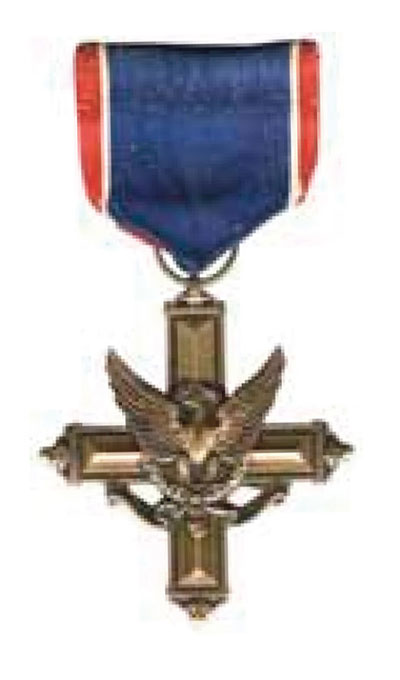
HORACE HOBBS (Class of 1897) was awarded the Distinguished Service Cross for extraordinary heroism during the Philippine Insurrection in 1905 and the Silver Cross for gallantry in France during World War I. “Kris and Krag: Adventures among the Moros of the Southern Philippine Islands” is recognized as a classic work on the little-documented Philippine Insurrection.

Share link - http://pmc.widener.edu/pmc/legacies/cadets/pmc-authors 

PMC Authors Theodore Hyatt

PMC Aviators

In the fall of 1919, just 16 years after the Wright brothers made the first powered flight, PMC became what was reported at the time to be “the first college in the United States to include flying in its curriculum.”

Lt. Theodore Hyatt Cowee ’20, of the United States Air Service, the grandson of PMC founder Theodore Hyatt, was the instructor for program, which consisted of eight flying lessons in a Curtis biplane and 12 ground lessons. Twenty students enrolled, and training took place on the field opposite Springhaven Country Club in Wallingford, about two miles north of the campus.

The following year, the course was under the direction of G. Sumner Ireland, of Curtis Eastern Airplane Corporation. Although 17 Cadets wanted to participate, most were unable to obtain parental consent and the program was grounded.

Records are sketchy, but it appears that the course was not revived until 1939, with the Civil Aeronautics Authority providing both ground schooling and flight training at Philadelphia’s S. Davis Wilson Airport, later to become Philadelphia International Airport. Students who successfully completed 72 classroom hours and flight training received a pilot’s license.

In 1955, PMC became the first military college in the U.S. to have a Civil Air Patrol program. According to the Alumni Bulletin “more than 100 cadets have enrolled in the program ….” The instructors were Air Force Reserve officers. Studies included aerodynamics, navigation, meteorology and flight training. By 1963, first classmen able to pass a flight physical qualified for the Army ROTC Flight Training Program conducted at the Bridgeport Airport in New Jersey. After 35 hours of instruction, which included soloing, cadets received the ROTC pilot’s badge and could apply to the Federal Aviation Administration for a private pilot’s license.

In 1967, the Atlantic Aviation Corporation awarded the Atlantic Aviation Trophy to the first classman selected the outstanding student pilot in the ROTC flight training program. After 1st Lt. William J. Stephenson (’63) was killed by enemy ground fire while flying a Sioux observation helicopter in Viet Nam in 1966, the award was renamed in his honor. Three years later, criteria for the medal was changed, awarding it to the first classman in the program who displayed the most sincere and dedicated desire for a career as an Army aviation officer. In 1972, the year the Corps of Cadets was disbanded, the award was once again tendered to the most outstanding student in the program.

When PMC started its aviation program, it was leading the way into the future, and the move made headlines nationwide. After all, the Ironwood (Mich.) Daily Globe reported in its coverage of the cutting-edge course, “In a short time, aerial passenger service will be demanding a great number of experienced fliers who will be needed in the coast-to-coast service … composed of large, comfortable planes capable of carrying twenty-five passengers….”

PMC Aviators

NameYearUnit
Elliot Durand, Jr.190324th Aero Squadron
Frank B. Smith1910Aviation Section, Signal Reserve Corps
John Burns1912Aviator USMC
Clarence Paige1916Aviation Division Signal Corps Reserves
Theodore H. Cowee1920Aviation Section, Signal Reserve Corps
Hugh McCaffery192431st Bomber Squadron 7th Bombardment Group
Joseph V. Carels193435th Fighter Squadron 8th Fighter Group
S. Ellsworth Duff1938Army Air Corps
Robert Moyer1939Air Force Cryptologic Depot, USAF
George Kassab1939530th Bomb Squadron, 380th Bomb Group B-24
J. Gerald Lynch193971st Bombardment Squadron Army Air Corps
Sidney Rosberger1939338th Bomb Squadron, 96th Bomb Group, 8th Air Force
William F. Spang1939Marine Scout Bombin Sqadron 132
Myron B. Arronson1940653rd Bomb Squad, 35th Bomb Group
Thomas Anderson194226th Infantry Regiment, 1st Infantry Division
Silvio Dignazio1942491st Bombardment Group (Heavy), 8th Air Force
Lewis Brunner1943827 Bomb Squadron, 484 Bombardment Wing
Benjamin Kimlau1942380th Bomb Group, 5th Air Force
Art Riley1943Air Wing
Bruce Hoffman1946Patrol Squadron 21 (Navy P4M)
Richard E. LaBrode1951162nd Assault Helicopter Company, 11th Combat Aviation Battalion
Robert Azzolin1954Avation Section, 2ND Cavalry Regiment
John Adams195511th Air Assaault Division
David Johnson195511th Aviation Battalion
Joseph Mossman1961VA-72, CVW-7 Task Force 77, 7th Fleet
Joseph Newsome1961145th Aviation Battalion, 1st Aviation Brigade, USARV
Edward Underwood1961Air Cavalry Troop, 11th Armored Cavalry Regiment, USARV
Richard Handly, Jr.196218th Aviation Brigade
Martin Post1962Avionics Systems Engineer US Army Avionics Lab
George Horn1962118th Aviation Company
Dan Madish1962604th Transportation Company Pleiku
Rex Newman196226th Bomb Squadron, 668th Bomb Squadron USAF
David Cole1962Rex: all Army aviators (deceased)
Paul Sykes1962Helicopters (4/24/2005 deceased)
Albert Hansen III1963Army Helicopter School (Hearing loss prevented graduation)
George D. Alloway1963146th Aviation Company
Kenneth Chien1963118th Assault Helicoper Company
Kenneth Johnson1963118th Aviation Co. (AML), 145th Aviation Battalion
Larry Liss1963162nd Assault Helicopter Company Aviation Detachment, II Field Force, USARV
David C. Sapp1963220th Aviation Company, 1st Aviation Brigade
William J. Stephenson19631st Squadron, 9th Cavalry Regiment, 1st Cavalry Divison
Richard Zeltner1963282nd Assault Helicopter Company
John F. Giblin, Jr1963unkown
William G. Miller1963unkown
Peter Vanderland19641st Aviation Battalion, 1st Infantry Division
Charles Weber196413th Combat Aviation Battalion, 1st Aviation Brigade, USARV
Jim Delay1964jdelay@mindspring.com
William Allanach1965229th Aviation Battalion (Assault Helicopter) 1st Cavalry Division
Anthony Coggeshall1965116th Assault Helicopter Company, 269th Aviation Battalion USARV
John Grant1965VMAW Pilot
Evans Kayser19653rd Squadron, 5th Cavalry, 9th Infantry Division, USARV
Michael McCloy1965219th Recon Airplane Company
Clayton Rash1965229th Aviation Battalion (Assault Helicopter) 1st Cavalry Division
David Rittman1965229th Aviation Battalion (Assault Helicopter) 1st Cavalry Division
Frederick Scheffler196511th Armored Cavalry Regiment (Blackhorse)
Richard Taus1965307th Combat Aviation Battalion, 1st Aviation Brigade
Bill Whittaker1965unkown
Richard Berkey1966388nd Aircraft Maintenance Transportation Company (DS)
Edwin Carpenter196617th Assault Helicopter Company
Jeffrey Travers1966Mission Pilot, Connecticut Wing U.S. Air Force Auxiliary
S. Douglas Eckard1967117th Air Assault Helicopter Company, 14th Combaat Aviation Battalon
David B. Usechak1967Avionics Systems Engineer US Army Avionics Lab
Charles Merkel, Jr.1967Casper Platoon, 173d Airborne Brigade
Hayden Wilbur1967unkown
Joseph Gross1968176th Assault Helicopter Company, Americal Divison
Charles W. Dievendorf19683rd Squadron, 17th Air Cavalry
Steven Raho1968128th Avn Co, 52nd Avn Bn, 17th Avn Group
David Fiedler1968Avionics Systems Engineer, U S Army Avionics Lab
James Pearson196898th Medical Company (Air Ambulance)
Robert Aldrich1969Marine Medium Helicoper Squadron 165, 7th Fleet
Robert Huntley19714th Squadron, 9th Cavalry, 6th Air Cav Combat Brigade
Glen Dower1973Co A, 8th Combat Aviation BN, 8th Infantry Division
Jeff Fox1973356th Tactical Fighter Squadron “Desert Demons” (deceased)

Share link - http://pmc.widener.edu/pmc/legacies/cadets/pmc-aviators 

Bill Speer
Class of 1972

Bill Speer ’72: Stories That Stay With You

BILL SPEER (Class of 1972) has taught at the American Military University and Georgia Military College and produced several historical documentaries and films. “Broomsticks to Battlefields: After the Battle, the Story of Henry C. Robinett in the Civil War,” is the biography of an 1860 graduate of Delaware Military Academy (predecessor to PMC) who distinguished himself as a Civil War artillery captain, only to commit suicide. The book “reminds us that historians and psychologists have barely begun to study…post-traumatic stress disorder among Civil War veterans,” one reviewer wrote.

Share link - http://pmc.widener.edu/pmc/legacies/cadets/bill-speer-72-stories-stay-you 

Brian Kates
Class of 1968

Brian Kates ’68: From Military Police to Pulitzer Prize Journalist

BRIAN KATES (Class of 1968) served as an Army military police captain in Berlin Brigade during the Cold War. His first recognition as a writer was PMC’s Dome Award as best student journalist. Later, as a reporter and editor at the New York Daily News, he won numerous awards for journalistic excellence, including a Pulitzer Prize for editorial writing. His non-fiction book, “The Murder of a Shopping Bag Lady,” the story of a homeless woman slain on the streets of New York, won a Special Edgar Allan Poe Award from Mystery Writers of America.

Share link - http://pmc.widener.edu/pmc/legacies/cadets/brian-kates-68-military-police-pulitzer-prize-journalist 

Charles E. “Doc” Merkel Jr.
Class of 1967

Charles Merkel ’67: Army Aviator and Military Historian

CHARLES E. “Doc” MERKEL, Jr. (Class of 1967) served for more than 20 years as an Master Army Aviator in the U.S. Army and currently serves as the historian for the 53d Wing at Eglin Air Force Base, Florida. He authored the book “Unraveling the Custer Enigma,” which contains information about the court martial of Custer.

Share link - http://pmc.widener.edu/pmc/legacies/cadets/charles-merkel-67-army-aviator-and-military-historian 
 

David Fiedler
Class of 1968

David Fiedler ’68: Advancing Military Communications Doctrine

DAVID FIEDLER (Class of 1968) served in the Signal Corps and after a deployment to Vietnam was assigned to the U.S. Army Electronics Command. Drawing on his combat experiences, Fiedler wrote a book on radio physics that is still in use today, was used extensively in the Gulf War/Afghanistan and has been incorporated into official Signal Corps doctrine. As a result of his work in tactical communications the Army Chief of Signal has awarded him the Chief of Signal plaque twice and inducted him into the Order of Mercury signal honor society

Share link - http://pmc.widener.edu/pmc/legacies/cadets/david-fiedler-68-advancing-military-communications-doctrine 

Edward J. Marolda
Class of 1967

Edward J. Marolda ’67: Preserving Naval History and Legacy

EDWARD J. MAROLDA (Class of 1967) served as the Acting Director of Naval History and Senior Historian of the Navy. In 2017 the Naval Historical Foundation honored him with its Commodore Dudley W. Knox Naval History Lifetime Achievement Award. He has authored, coauthored, or edited nine works on the U.S. Navy’s experience in Vietnam. In support of the U.S. Naval Institute’s Oral History Program, he has interviewed Vietnam veterans and retired admirals Stanley R. Arthur and Joseph W. Prueher.

Share link - http://pmc.widener.edu/pmc/legacies/cadets/edward-j-marolda-67-preserving-naval-history-and-legacy 


Eugene Hoopes
Class of 1901

Eugene Hoopes ’01: Engineer and Storyteller of the American West

EUGENE HOOPES (Class of 1901) served as an engineer during World War I and became an aeronautical consultant for the military, working at air fields in the U.S. and Europe. He began his writing career in 1951 with the publication of “Tales of a Dude Wrangler,” a series of fictional stories told, as one reviewer put it, “by the type of wrangler one may find at any roundup, at any ‘dude’ ranch, or around any campfire where stories of the rangeland and its lore were told.”

Share link - http://pmc.widener.edu/pmc/legacies/cadets/eugene-hoopes-01-engineer-and-storyteller-american-west 

Fagiani
Class of 1967

Fagiani ’67: Capturing Discipline and Street Life in Poetry

FAGIANI (Class of 1967) was a social worker and director of a program for recovering drug addicts, He is also a translator, essayist, short story writer and poet whose free verse captures “the rhythms of struggle and street life,” the New York Times wrote in 2014. His first book of poetry, “Rooks,” published in 2005, follows him through his freshman year at PMC, where, one reviewer noted, “the spotlight is on the time-honored discipline that transforms young men into warriors.”

Share link - http://pmc.widener.edu/pmc/legacies/cadets/fagiani-67-capturing-discipline-and-street-life-poetry 

Horace Hobbs
Class of 1897

Horace Hobbs ’97: Heroism in War and Chronicler of Conflict

HORACE HOBBS (Class of 1897) was awarded the Distinguished Service Cross for extraordinary heroism during the Philippine Insurrection in 1905 and the Silver Cross for gallantry in France during World War I. “Kris and Krag: Adventures among the Moros of the Southern Philippine Islands” is recognized as a classic work on the little-documented Philippine Insurrection.

Share link - http://pmc.widener.edu/pmc/legacies/cadets/horace-hobbs-97-heroism-war-and-chronicler-conflict 


Louis Horner
Class of 1962

Louis Horner ’62: Bridging Technology, Service, and Storytelling

LOUIS HORNER (Class of 1962) served in the U.S. Army Signal Corp. He received a presidential citation from President Ronald Reagan in 1985 for designing a computer enrichment program that served several thousand children nationwide. His book “Who Will Water the Flowers,” chronicles his life as an African American during a turbulent time in U.S. history and examines the friendships he forged, beginning with those built at PMC.

Share link - http://pmc.widener.edu/pmc/legacies/cadets/louis-horner-62-bridging-technology-service-and-storytelling 

Mark L. Richards
Class of 1969

Mark L. Richards ’69: From Infantry Officer to Historical Novelist

MARK L. RICHARDS (Class of 1969) served as an Army infantry officer before entering the health care field, where he worked as the chief financial officer at a large academic health center. “Legions of the Forest,” which opens in 9 A.D., and centers around a clash between Roman legions and the German people they intend to subjugate, is a tale of war, treachery and the vicious politics of the Golden Age of Rome.

Share link - http://pmc.widener.edu/pmc/legacies/cadets/mark-l-richards-69-infantry-officer-historical-novelist 

Mervyn Harris
Class of 1957

Mervyn Harris ’57: From Army Captain to Public Servant

MERVYN HARRIS (Class of 1957) is a former Army captain and served as a representative to the Pennsylvania House of Representatives from Delaware County from 1964-66. He has served on the boards of numerous non-profit organizations and events committees. His book traces the history of Nether Providence Township, Pa, from its original Lenape Indian inhabitants.

Share link - http://pmc.widener.edu/pmc/legacies/cadets/mervyn-harris-57-army-captain-public-servant 

Roy Eaton
Class of 1969

Roy Eaton ’69: Athlete, Educator, and Memoirist

ROY EATON (CLASS OF 1969) left the Army as a second-lieutenant. He taught math and coached wrestling at St. Bernard, a Connecticut prep school that inducted him into its Athletic Hall of Fame in 2006. He was named to the New York Military Academy Sport Hall of Fame in 2007 and the New London (Conn.) Hall of Fame in 2009. His memoir, “Soldier Boy,” tells the story of his experiences at PMC and as a prep school cadet at New York Military Academy.

Share link - http://pmc.widener.edu/pmc/legacies/cadets/roy-eaton-69-athlete-educator-and-memoirist 

Tom Vossler
Class of 1968

Tom Vossler ’68: Soldier-Scholar of American Battlefields

TOM VOSSLER (Class of 1968) severed 30 years in the U.S. Army commanding an infantry platoon in the Vietnam War and a mechanized infantry-armored battalion task force in Germany. In addition, he taught military history, strategy and leadership at the U.S. Army War College and is a former director of the U.S. Army Military History Institute at Carlisle Barracks, Pa. Vossler and co-author Carol Reardon combined to encapsulate the events of the Battle of Antietam, the bloodiest single day in American military history, and in their newest book “A Field Guide to Gettysburg.”

Share link - http://pmc.widener.edu/pmc/legacies/cadets/tom-vossler-68-soldier-scholar-american-battlefields