Notable Cadets

Search Cadet Stories

Filter Cadet Stories

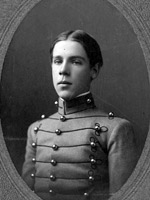
Burt Mustin
Class of 1903

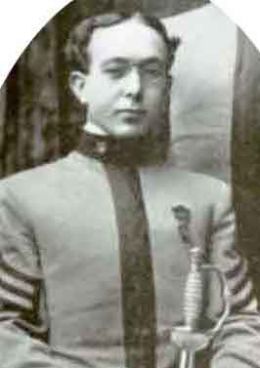
Burt Mustin ’03: From PMC Cadet to Hollywood’s Beloved Character Actor

Burt Mustin, the son of Sadie and William Mustin of Pittsburgh, Pennsylvania, matriculated at Pennsylvania Military College in 1899 and, by his senior year, he was the Cadet Lieutenant of “D” Company, the catcher as well as the first baseman of the P.M.C. baseball team, the goalie of the PMC hockey team, and a talented vocalist with the PMC chorale-group. When the Merit List (Honor Roll) was announced in 1903, his 88.7 academic average placed him sixth in his class. He later recalled that he was a quick learner, especially with a staff-officer on-duty in each corridor who could “…pop in….” to his room at any moment to ensure that his nose was buried in his books.

His classmate, Charles Spinney, kept dozens of photographs of young ladies that he knew in his hometown of Memphis, Tennessee, on the wall of his room and one day, while viewing ‘Spinney’s Gallery,’ Mustin remarked, “There’s the prettiest girl in the room.” Mustin later traveled to Memphis where he met and married Robina Woods, to whom he referred as his darling ‘Bine,’ in 1915.

His career at his father’s brokerage firm ended before it began due to an economic collapse and, for the next 25 years, Mustin was a car salesman. With the advent of World War II, automobile-production was halted in the United States. For a time he was a salesman for hearing aids. At age 60, Mustin and his wife moved to the warmer-climate of Tucson, Arizona, because of her failing-health. There he resumed his passion for acting by performing in an assortment of roles at local theaters.

In 1951, Mustin was performing in a cameo role as “Willie,” the janitor, in Detective Story starring Kirk Douglas at the Sombrero Theater in Phoenix, Arizona. One night, William Wyler, a noted director, attended the play and was very impressed with Mustin’s performance as “Willie.” Wyler cast Mustin as “Willie” in Detective Story, together with fellow actor Kirk Douglas in the lead-role. Throughout his theatrical career, which spanned more than four decades, Mustin became a well known character actor who was noted for his dependability and versatility. Mustin appeared in more than 150 films and more than 400 television-productions, including roles as “Jud Crowley,” the barber shop patron, on The Andy Griffith Show, as “Gus,” the fireman, on Leave It To Beaver and as “The World’s Oldest Cat-Burglar” on Dragnet. He was a semi-frequent guest-star on the Dragnet television-series, both in the 1950’s and 1960’s, because he was a personal-friend of Jack Webb, the creator, director and producer of Dragnet. Mustin honored his alma mater by reprising his original (1951) film role as “Willie,” the janitor, in the theatre pmc student production of Detective Story in February 1970. Mustin’s campus visit was arranged by Cadet John E. N. Blair ’70, theatre pmc General Manager, who presented Mustin with a theatre pmc plaque and gray cadet-sweater following thunderous applause at the conclusion of the Opening Night performance of Detective Story, which was attended by numerous local dignitaries, including President and Mrs. Clarence R. Moll.

Throughout his entire life, Burt Mustin ’03 never swerved from his love of and loyalty to the PMC Corps of Cadets. Possibly, that ‘view’ was best expressed by General of the Army Douglas MacArthur who, during his final visit to his alma mater, the United States Military Academy, told the West Point Corps of Cadets, “As I cross the ‘River,’ my final-thoughts will be of The Corps, The Corps and The Corps. I bid you farewell!” It could be surmised that Burt Mustin had similar thoughts when he died on 28 January 1977.

Share link - http://pmc.widener.edu/pmc/legacies/cadets/burt-mustin-03-pmc-cadet-hollywoods-beloved-character-actor 

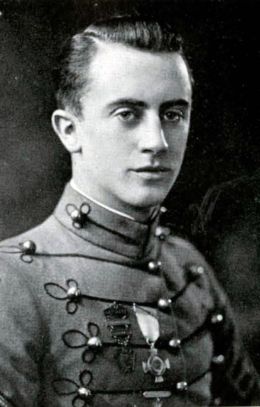
Charles F. B. Price
Class of 1902

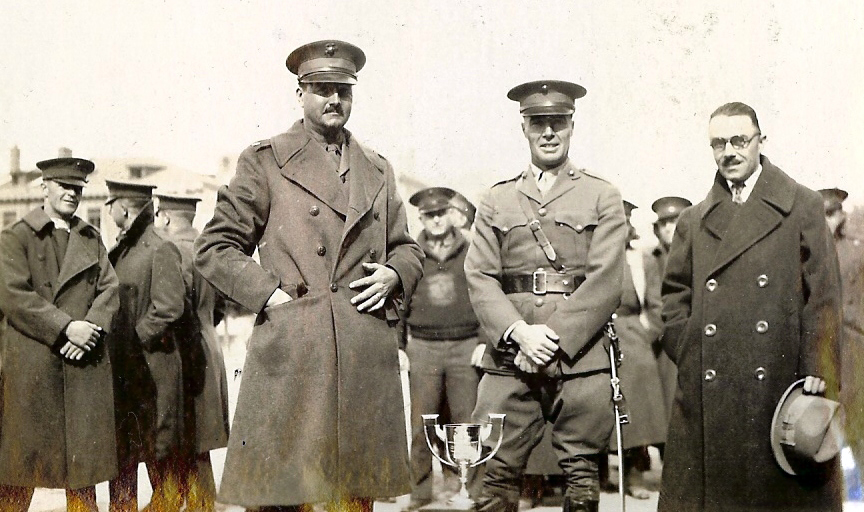
Charles F. B. Price ’02: Marine Leader Across Half a Century of Conflict

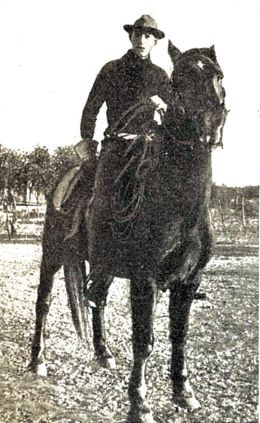
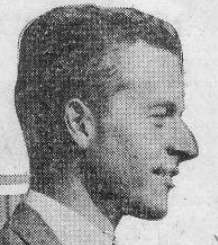
Charles Frederick Berthold Price was born in Germany of American parents. He and his parents returned to America when Price was six months old. His family settled in Wayne, PA. Price entered PMC in 1898. At PMC, he was a talented musician; particularly in his rendition of “Taps”. In his 2nd Class (Junior) Year, he was appointed Chief Musician, which meant he kept the PMC Bugle Corps in shape. As a First Classman (Senior), he commanded “B” Company as a Cadet Captain. The Porcupine Annual (then the PMC Yearbook) described Price as: “an advocate for the Extermination of Room Inspectors.” It was written that to avoid the “exertion” of making his bed every morning, he “nailed his sheets and blanket to the bed.” He slept on the floor with a spare blanket. Yet, his classmates considered him to be a “good fellow…and a kind officer.”

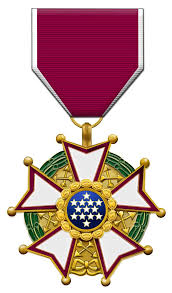
After graduation, Price was employed by the Pennsylvania Railroad and served in the Philadelphia City Cavalry of the Pennsylvania National Guard. In 1906, he was commissioned a Second Lieutenant in the Marine Corps and ordered to Annapolis for training. During the Spanish-American War, President Theodore Roosevelt ordered Price and a Marine Expeditionary Force to “protect American lives and property” in Cuba. Price remained there until 1908. He retuned to the U.S., but after a few months, he joined the Central American Expeditionary Force. Later deployments included: Panama during the construction of the Panama Canal; Vera Cruz during the Mexican Intervention in 1914; France, shortly before and after the armistice ending WWI; and Nicaragua. In 1935, he joined the Fourth Marines at the American Legation in Shanghai, China. Price was promoted to Brigadier General in 1940 and assumed command of the Department of the Pacific in 1941. After the Japanese attacked Pearl Harbor, he was promoted to Major General and placed in command of the Second Marine Division. He assumed command of the Defense Force, Samoan Group, in 1942. His assignment was to secure the approaches to Samoa Islands. His efforts in occupying and developing the U.S. presence on the Ellice Islands made the seizure of the Gilbert Islands possible, thereby opening the Central Pacific. For his ability, perseverance and tact he was awarded the Legion of Merit Medal with the Combat “V” for heroism during direct participation in combat operations by Admiral Chester W. Nimitz, Commander in Chief, Pacific Ocean Areas (CinCPOA), for U.S. and Allied air, land, and sea forces during World War II.
Price returned to the San Diego area in 1944. The following year he retired. He continued to live in the San Diego area until his death in 1954.

Share link - http://pmc.widener.edu/pmc/legacies/cadets/charles-f-b-price-02-marine-leader-across-half-century-conflict 


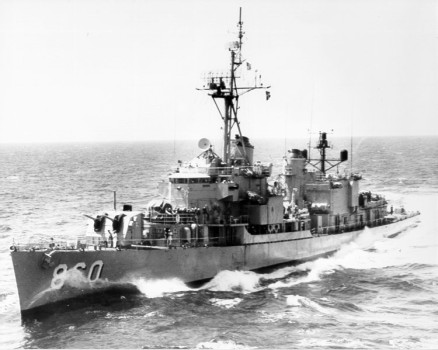
Joseoh LoPrete
Class of 1903

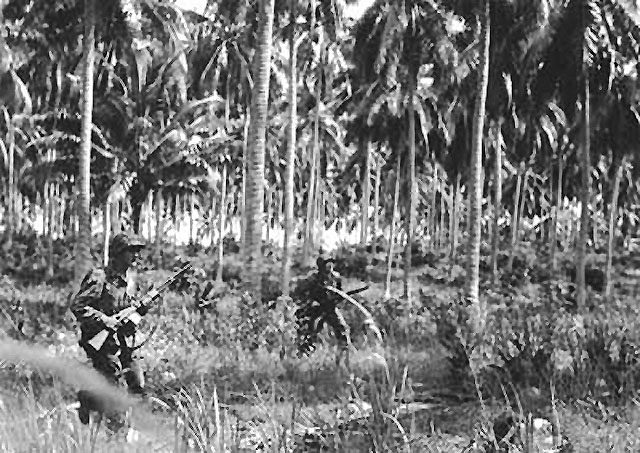
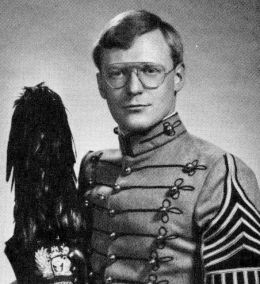
Joseph LoPrete ’42: A Marine Leader on Iwo Jima and in Vietnam

At the end of his sophomore year, “Joe” LoPrete transferred to PMC from Fordham University. A Brooklynite, his smile and infectious humor made him many friends. Although he was a star on the track team and the rifle range, his passion for lifting weights in his room and cars were well known. Six days after graduation, LoPrete joined the Marine Corps and was assigned to the 24th Marine Regiment.

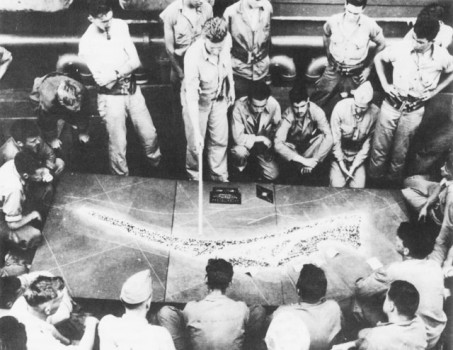
Three U.S. marine divisions landed on the island of Iwo Jima in February 1945. The island was of strategic importance to the U.S. and the Japanese were determined to defend it. From an elaborate network of caves, dugouts, tunnels and underground installations the Japanese troops fought to the death.

LoPrete led an Assault and Demolition Platoon. After some initial success, a bunker held up the advance of the 2nd Battalion. As the platoon advanced, two men beside him were killed. He was resolute and led the platoon forward, eventually destroying the bunker. As the battalion advanced, it suffered countless casualties. To help fill a void, LoPrete was given command of a rifle platoon. Shortly thereafter, a pocket of Japanese held up the Battalion again. Their position was well fortified and they were inflicting severe casualties among the Marines. LoPrete realized that a quick advance was necessary to avoid further losses. He led his men forward against the Japanese and annihilated them.

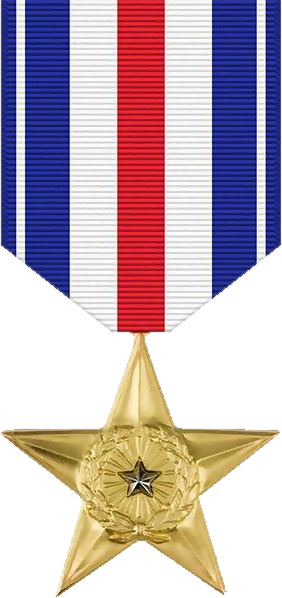
LoPrete was awarded The Silver Star Medal by Brigadier General Franklin Hart, former commander of the 24th Marine Regiment, for his “Leadership, Courage and Devotion to Duty.” It was later reported that one Marine said in response to a question about LoPrete’s leadership that he would go “anywhere he leads me.”

After the war, Major LoPrete served as an instructor at the Marine Training School in Quantico, VA. In 1967, he became the commander of the 3rd Marines. In late 1967, the 3rd Marines conducted Operation Lancaster, designed to protect the western flank of the 9th Marines. The area of operations included Camp Carroll, an important artillery position and the base of operations; the Rockpile, a strategic outcropping that gave the Marines a view of five major valleys; and, Ca Lu an outpost, located along Highway 9, that provided an early warning of enemy infiltration. The following year the 3d Marines were assigned to protect the Quang Tri base from enemy attack.

After serving in the Marine Corps for 31 years, Colonel LoPrete retired in 1973.

Share link - http://pmc.widener.edu/pmc/legacies/cadets/burt-mustin-03-pmc-cadet-hollywoods-beloved-character-actor-0 

Manie Sacks
Class of 1924

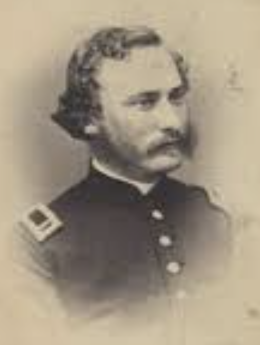
Manie Sacks ’24: The Pied Piper of the Stars

Emanuel (Manie, pronounced “Manny”) Sacks was a life long supporter and friend of PMC. His association with the school began in the 1918, when he enrolled in the Pennsylvania Military Preparatory School (PMPS). In 1920, he became a Cadet at PMC, Class of 1924. While at PMC he played football and became friendly with Hugh McCaffery ’24. He left PMC and began working at WCAU in Philadelphia. An avid supporter of PMC football, he arranged for WCAU to broadcast some PMC football games and military exercises. In June of 1955, this giant of the entertainment industry became a member of the PMC Board of Trustees. He had always taken an active interest in the school and its activities and this continued.

During his career at Columbia Records, RCA Victor and NBC Sacks gave encouragement and confidence to many artists. Although he kept out of the public eye, he worked closely with Jack Benny, George Burns, Edgar Bergen, Harry James, Dinah Shore and many others. In 1942, Sacks helped Frank Sinatra start his solo career. An appreciative Sinatra said during a 1959 CBS television tribute to Sacks that “There’s a little bit of Manie in everything good that has ever happened to me … Whenever I was in trouble and needed help, I yelled for Manie.” Despite Sacks’ reputation for his warm and charming personality, he was a tough bargainer according to RCA President David Sarnoff.

Sacks learned that he had leukemia when he was 52 years old, but only told his family and Sinatra. Upon learning of Sacks death, then Vice-President Moll, stated, “The College was deeply shocked to learn about his death, expressed the sentiments of the entire faculty, administration and student body of PMC. Manie Sacks, had made his mark in life as a top figure in the entertainment world, and we are going to miss a very influential friend.”

Watch Part 1 of Some of Manie’s Friends, a TV special which was broadcast in 1959. Perry Como, Dinah Shore, Eddie Fisher, Jane Wyman, Frank Sinatra and others are featured in the show.

Share link - http://pmc.widener.edu/pmc/legacies/cadets/manie-sacks-24-pied-piper-stars 

Stewart Robert
Class of 1966

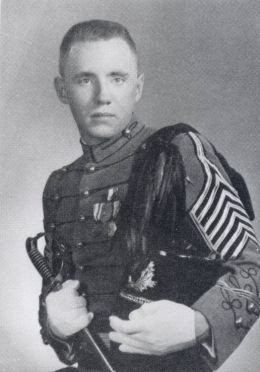
Robert R. Stewart ’68: Leading Through Fire in a Night Engagement

Robert R. Stewart
Class of 1968
6th Battalion, 31st Infantry, 9th Infantry Division, USARV

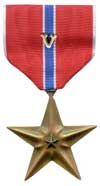
Bronze Star w/Valor for heroism while serving as a platoon leader during a night combat operation against a numerically superior enemy force. 1LT Stewart exposed himself to heavy small arms and automatic weapons fire upon contacting an entrenched enemy force, enabling him to direct the actions of his men and orchestrate the delivery of indirect fire and gunships. The effect of sound maneuver and well placed fires routed the enemy force and inflicted heavy casualties. 1LT Stewart’s actions were instrumental to the successful outcome of this engagement.

Share link - http://pmc.widener.edu/pmc/legacies/cadets/robert-r-stewart-68-leading-through-fire-night-engagement 

Thomas R. Childers
Class of 1969

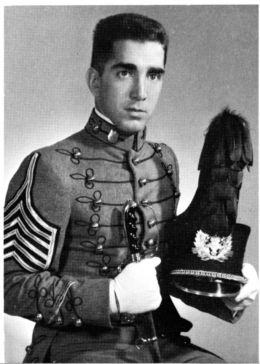
Thomas R. Childers, Jr. ’69: Valor in Night Ambushes and Close Combat

Thomas R. Childers, Jr.
Class of 1969
Third Battalion, Fourth Marines, First Marine Division, FMF Pacific

Bronze Star w/Valor for valorous actions and meritorious service in combat as a platoon leader and rifle company commander while conducting numerous night ambushes and other direct engagements with the enemy. In each of these actions, Lt. Childers exhibited courage under fire, composure, resourcefulness and disregard for his own safety to protect the lives of his Marines and accomplish the mission. Frequently, he retrieved wounded Marines from hot kill zones, pursued retreating enemy personnel, and motivated leadership by moving under fire to various positions to solidified and coordinate action essential to mission’s accomplishment.

Share link - http://pmc.widener.edu/pmc/legacies/cadets/thomas-r-childers-jr-69-valor-night-ambushes-and-close-combat 

Bill Stern
Class of 1930

Bill Stern ’30: A Pioneer Voice in American Sports Broadcasting

William Stern had failed several attempts at boarding schools. While his parents were traveling Europe, they happened to meet a Cadet from Pennsylvania Military College. Impressed by the young man’s poise and manners, the Sterns decided that PMC was the place for Bill to receive discipline and an education. Bill Stern flourished at PMC; he played basketball, football, and polo, used his extensive skills on the saxophone to help start a jazz group, led the college orchestra, and was appointed Captain Adjutant. Bill’s page in the Sabre and Sash, however, pointed to his future. “Is every body happy? This is Bill Stern speaking from the Bowl of Roses way out here in Lieperville.” Bill is a Graham McNamee, Ted Lewis, and a Frank Carideo all rolled up into one little bundle of vitality.”

“For twenty years, Stern was a fixture in broadcasting, rising to become one of the most famous, successful, and recognizable announcers of his time. He hosted several shows, including Spotlight on Sports, Remember This Date, and the very popular Sports Newsreel, a prime-time radio show featuring sports stories, news, and interviews. Sports Newsreel was heard on NBC from October 1937 to September 1953, when it moved to ABC, ending in June 1956. He was the recipient of over 30 awards from various radio, movie, and television publications for broadcasting. These included: the Billboard poll 1948-1949, the Radio Mirror poll 1949, the Scripps Newspaper Award Contest for five consecutive years, the Hearst newspaper award for four consecutive years, and the Radio Daily poll for ten years. In addition, Motion Picture Daily’s annual radio poll announced Bill Stern as the ‘Best Sports Announcer’ in 1951 for the 13th consecutive year. Stern retired from broadcasting in 1956 after collapsing at a football game.”

“Bill Stern never forgot Pennsylvania Military College. He returned in 1944 to deliver a eulogy for the PMC cadets lost during World War II, addressed a PMC sports banquet in 1955 and narrated the film ‘The PMC Story’ in 1957. Bill Stern paid his highest tribute to the college in a letter to the PMC Alumni Bulletin in which he wrote, ‘Whatever I did, you can credit to PMC. I came there a young punk, and left a man. PMC taught me much, mainly that in this life you get what you put into it.’ “

On November 19, 1971, Bill Stern died of a heart attack at the age of 64. He was inducted into the National Sportswriters and Sportscasters Hall of Fame in March 1974 and the American Sportscasters Association Hall of Fame in 1984.

Share link - http://pmc.widener.edu/pmc/legacies/cadets/bill-stern-30-pioneer-voice-american-sports-broadcasting 

Thomas Anderson
Class of 1942

Thomas Anderson ’42: A Four‑Time Silver Star Leader in Two Wars

When “B” Company Commander Thomas Anderson graduated from PMC in 1942, he was considered to be a no nonsense Cadet and a “True Leader.” He had a commanding voice, a squared-away military appearance and was an expert at handling those Cadets around him. During his four years, he was awarded the Dunlap Memorial Rifle Trophy and the Oliver Revolver Medal for his marksmanship. His amiable manner also kept him busy with several social pursuits, including the 3rd Class (Sophomore) and 2nd Class (Junior) Dance Committees and the Sabre and Sash (Yearbook).

Anderson was assigned to the 26th Infantry Regiment, nicknamed “The Blue Spaders”, 1st Infantry Division. He focused on preparing for the amphibious invasion of North Africa. First Lieutenant Anderson and his unit landed on the beaches west of Oran, in northwest Africa. The inexperienced American troops encountered stubborn enemy resistance. Anderson’s unit came under constant and effective machine-gun and small-arms fire. Anderson was awarded The Silver Star Medal for his leadership and bravery in leading his men to the successful completion of their mission.

Moving inland, the 1st Infantry Division took up defensive positions in the Kasserine Pass, a wide gap in the Atlas Mountains. Elements of Rommel’s Afrika Korps launched a counter-attack against the 1st Infantry in order to regain control of Tunisia. During the German assault, Anderson led a machine gun squad in the destruction of a well-concealed sniper nest. For his outstanding leadership and tactical skill, Anderson was awarded The Oak Leaf Cluster to The Silver Star Medal (Second Award).

On D-Day, the 26th Regiment landed on Omaha Beach. After landing on “Fox Green Beach,” Anderson, now a Captain and the Commanding Officer of A Company, 1st Battalion, 26th Infantry Regiment, was ordered to take the high ground west and southwest of the Port-en-Bessin, to include Mount Cauvin. Although little is recorded about this engagement, Anderson was awarded The 2nd Oak Leaf Cluster to The Silver Star Medal (Third Award).

During the Korean War, in late May 1951, the 7th Infantry Regiment launched a counter-attack to a Chinese advancement. The goal was to capture key hills and passes near Soksa-ri, Korea, and push the enemy back. During the siege, the 3rd Battalion became critically short of water, rations, and ammunition. Anderson responded to the regimental commander’s request for supplies. Despite being under constant small arms fire from the Chinese and avoiding jagged mountaintops, he piloted an unarmed aircraft four times. Each time he accurately dropped the supplies the 3rd Battalion urgently needed. By the end of May, the enemy offensive had been crushed. Anderson was The 3rd Oak Leaf Cluster to The Silver Star Medal (Fourth Award) for his “Unwavering Gallantry.”

Few men are awarded multiples of The Silver Star Medal, the Nation’s Third-Highest Combat Award (Decoration) for Gallantry. Anderson was one of them.

Share link - http://pmc.widener.edu/pmc/legacies/cadets/thomas-anderson-42-four-time-silver-star-leader-two-wars 

William Tumbelston
Class of 1937

William Tumbelston ’37: Leading Marines Through the Fire on Iwo Jima

The Tumbelston family had a long association with PMC. Dr. Robert T. Tumbelston, ’07 was a graduate and the President of the Alumni Association. His two sons followed in his footsteps and attended PMC. William “Blackie” Tumbelston started as a rook in the Prep School and rose to be Cadet Captain of B Company in his First Class (Senior) year. His classmates considered him to be one of the most accomplished members of the Class of 1937 and for his “fearless determination” and leadership abilities also admired him. After graduation, he joined a Marine reserve battalion in Philadelphia.

Tumbelston was the Executive Officer of the 1st Battalion of the 27th Marines when they landed on Iwo Jima. He assumed command when Lieutenant Colonel Justin Duryea was wounded while taking Hill 326A. After making a thorough Leader’s Reconnaissance of the forward positions of the battalion, Tumbelston launched an attack on the heavily defended Japanese position that had halted the battalion’s advance. Leading from the front, as he was taught at PMC, he was wounded. The bullet struck him in the left arm, but after receiving treatment and refusing evacuation, he returned to the front. After the battle, Tumbelston was evacuated. In the five days he commanded the battalion, the forward attacks destroyed Japanese opposition. For his actions he was awarded the Silver Star Medal.

The battle to secure Iwo Jima witnessed the toughest combat of World War II. The courage and heroism of the Marines, however, inspired a war-weary nation and helped to propel it to final victory.

Share link - http://pmc.widener.edu/pmc/legacies/cadets/william-tumbelston-37-leading-marines-through-fire-iwo-jima 

Douglas Haywood
Class of 1969

Douglas Haywood ’69: Leadership and Valor in Enemy‑Controlled Territory

Douglas Haywood
Class of 1969
11th Armored Cavalry Regiment (ACR)

While serving as an aero-rifle platoon leader with the 11th Armored Cavalry Regiment (ACR) during a reconnaissance mission in enemy-controlled territory, 1LT Haywood distinguished himself by valorous actions and decisive leadership. Upon making contact with an enemy force, small arms and rocket-propelled grenade fire resulted in several of his soldiers sustaining wounds. 1LT Haywood led their recovery and later orchestrated their evacuation. He then deployed his platoon in pursuit of the fleeing enemy, eventually reestablishing contact and inflicting losses on the enemy. The enemy broke contact and fled. 1LT Haywood’s heroic leadership and coolness under fire reflected great credit on himself and the 11th ACR.

Share link - 

James L. Hogg
Class of 1969

James L. Hogg ’69: A Daring Rescue Under Heavy Fire

James L. Hogg
Class of 1969
F Troop, 4th US Cavalry, 1st Aviation Brigade

Air Medal w/Valor

For heroism in aerial flight against an entrenched enemy force preventing the rescue of a downed American pilot. 1LT Hogg distinguished himself while serving as an aero-rifle platoon leader in enemy controlled territory in the border area of Northern South Vietnam. Assembling a volunteer group from his platoon, and commanding a two aircraft force, 1LT Hogg quickly located the downed pilot a mere 50 meters from a manned enemy bunker line. He directed his aircraft to lay down suppressive fire while the second aircraft boarded the wounded pilot. Enemy fire was heavy and despite the danger, 1LT Hogg maintained the suppressive fire at great risk to his aircraft until the rescue aircraft was completely clear of the area.

Share link - http://pmc.widener.edu/pmc/legacies/cadets/james-l-hogg-69-daring-rescue-under-heavy-fire 

John Eversosn
Class of 1967

John C. Everson ’67: Courage Inside the DMZ

John C. Everson
Class of 1967
1st Battalion, 11th Infantry, 5th Infantry Division (Mechanized), USARV

Bronze Star w/Valor for valorous actions. While commanding B Company, 1-11th Infantry during contact with an North Vietnamese force inside the DMZ, LT Everson’s unit sustained numerous casualties. After having evacuated the wounded, 1st Platoon discovered that its point man was unaccounted for and presumed KIA. In order to determine the young rifleman’s status and recover him, LT Everson moved 300 meters outside the company perimeter through the enemy automatic weapons kill zone to locate him. Though he located the body, it was too close to the enemy bunkers to recover it that night. The next morning the body was recovered during the morning’s sweep of the position.

Share link - http://pmc.widener.edu/pmc/legacies/cadets/john-c-everson-67-courage-inside-dmz 

Gross Joseph
Class of 1968

Joseph C. Gross ’68: Precision and Courage in a High‑Risk Extraction

Joseph C. Gross
Class of 1968
176th Assault Helicopter Company, 14th Combat Aviation Battalion, Americal Division USARV

Distinguished Flying Cross for his heroism and exceptionally valorous actions while serving as aircraft commander during the extraction under fire of a long range reconnaissance team. Despite the hazardous conditions of terrain and enemy fire, 1LT Gross maneuvered the aircraft into a stable and stationary position at tree top level to enable the team to be pulled through the canopy onto the aircraft. This was accomplished at significant personal risk and resulted in the team’s safe return to friendly control without any loss of life.

Share link - http://pmc.widener.edu/pmc/legacies/cadets/joseph-c-gross-68-precision-and-courage-high-risk-extraction

Michael Sullivan
Class of 1967

Michael R. Sullivan ’67: Holding the Line Under Heavy Fire

Michael R. Sullivan
Class of 1967
2nd Battalion, 14th Infantry, 25th Infantry Division, USARV

Silver Star for heroic action while on a reconnaissance mission in Vietnam. When his company came under attack from an enemy of unknown size, 1st Lt Sullivan acted swiftly. Despite heavy enemy fire he placed his men in strategic fighting positions. Sullivan was wounded as he positioned his men and directed suppressive fire on the enemy, allowing for his unit to withdraw and regroup. Being wounded a second time, he was forced to accept medical help and evacuation.

Share link - http://pmc.widener.edu/pmc/legacies/cadets/michael-r-sullivan-67-holding-line-under-heavy-fire 

Phil Gray
Class of 1967

Phillip Gray ’67: Heroism Amid a Burning Tank

Phillip Gray
Class of 1967
Company A, 2nd Battalion, 64th Armor, 3rd Infantry Division, USAREUR

Soldier’s Medal for heroism and leadership, while serving as a tank company commander in West Germany. While participating in tank gunnery qualification, a tank exploded near an ammunition point. Captain Gray immediately ordered the tank to be re-located away from that location and surrounding vehicles. Completely disregarding his own safety, Captain Gray climbed into the smoke-filled burning vehicle and removed ten rounds of HE ammunition and other sensitive equipment. He then directed the further movement of the tank to a remote location further eliminating danger to both personnel and material. Captain Gray’s courageous actions, decisive leadership, and humanitarian concern for his soldiers reflected great credit on himself.

Share link - http://pmc.widener.edu/pmc/legacies/cadets/phillip-gray-67-heroism-amid-burning-tank 

Richard I. Clark
Class of 1968

Richard L. Clark ’68: Courage Under Heavy Attack

Richard L. Clark
Class of 1968
1st Infantry Brigade, 5th Infantry Division (Mechanized), USARV

Army Commendation Medal w/V for heroism when his platoon was attacked by a well-equipped and determined company of North Vietnamese regulars. Lt. Clark directed retaliatory fire to each member of his platoon and then, under heavy fire, attempted to recover the body of a mortally wounded armored personnel driver. His courageous efforts kept casualties low and were a significant contribution to the defeat of the enemy.

Share link - http://pmc.widener.edu/pmc/legacies/cadets/richard-l-clark-68-courage-under-heavy-attack 

Wilfred P. Farrell
Class of 1939

Wilfred F. Farrell ’39: Valor and Survival Behind Enemy Lines

Wilfred “Casey” Farrell was a member of the basketball team and a determined student while attending PMPS (1932-35). He graduated from PMC in 1939. Best known for his unselfishness, leadership, and carefree outlook, he was a standout during his seven years as a resident of Old Main. After graduation, Farrell entered the Army and was assigned to the 26th Infantry Regiment, nicknamed the Blue Spaders. The 26th was a part of the 2nd Infantry Brigade of the First Infantry Division.

In 1942, the 26th Infantry led America’s first amphibious assault in North Africa near Oran in Algeria. In January 1943, Harold Boyle, a renowned war correspondent traveling with the Army, wrote that, in a pre-dawn assault, the Americans charged up a slippery slope of 1,000 feet with fixed bayonets and seized the heights. Farrell led his unit, a heavy weapons company, in advance of this attack. In February, in an effort to locate machine gun nests that had kept his unit pinned down on a hillside, he and another officer voluntarily went beyond their own lines. Many Americans, including Farrell, were subsequently cut off and taken prisoner when the Germans launched a counter attack. For his gallantry in action during the battle, Farrell was awarded the Silver Star Medal, which was presented, to his father at Fort DuPont.

According to Farrell, he was first taken to Tunis and then to a camp in Naples, Italy. Two weeks later, Farrell was moved to a camp in Austria. After three months in Austrian camp, he was shipped to Oflag (Offizierslager) 64, a prisoner of war camp for American officers in Poland. The camp was built around a Polish boys’ school in Szubin to detain the 150 officers captured in the North Africa Campaign. As the war continued, the size of the camp rose to 1,471 men. The “Kriegies” (short for Kriegsgefangenen: prisoners of war) made the best of their situation by organizing sports events, musical and theatrical performances and escape plans. Farrell wrote to his parents that he was studying French and German as well as reading some good books. In January 1945, the Russians liberated the camp and Farrell was returned to the United States. It was reported in the PMC News (June, 1945) that Farrell felt the Polish people “treated us wonderfully” and were of great assistance once the prisoners were liberated.

Share link - http://pmc.widener.edu/pmc/legacies/cadets/wilfred-f-farrell-39-valor-and-survival-behind-enemy-lines 

William G.Pfeifle
Class of 1966

William G. Pfeifle ’66: Commanding Through the Tet Offensive

William G. Pfeifle
Class of 1966
2nd Battalion (Airborne), 501st Infantry, 101st Airborne Division, USARV

Bronze Star w/Valor for heroism in ground combat, during the Tet offensive, when the battalion Tactical Command Post (TACCP) came under enemy mortar and ground attack. As the OIC of the makeshift TACCP, configured in the open on the bed of a MULE, 1LT Pfeifle remained unprotected, as supporting infantrymen dove for cover, and coordinated the actions of the battalion. Without any regard for his own safety, he located the flashes from the enemy mortars and directed counterbattery fire. Then, under a poncho to neutralize light from the radio console, 1LT Pfeifle radioed counterbattery fire to the battalion mortar section, coordinated the evacuation of wounded and maintained battalion-level command and control. He maintained this activity for over an hour under these perilous conditions without any consideration to his own safety and the danger. Upon emerging from the poncho, it was found to be perforated with numerous shrapnel holes. His devotion to duty and personal bravery enabled the unit to successful repel the enemy attack.

Share Link - http://pmc.widener.edu/pmc/legacies/cadets/william-g-pfeifle-66-commanding-through-tet-offensive 

Chuck Marsh
Class of 1966

Charles E. March ’66: Battling the 9th Viet Cong Division at Suoi Tre

Charles March
Class of 1966
2nd Battalion, 34th Armor, 25th Division USARV

Bronze Star w/Valor for his heroism while leading a battalion task force attempting to reinforce members of the 3rd Brigade, 4th Infantry Division under attack at Suoi Tre, Vietnam. After making a slow advance through jungle, 1st Lt. March encountered an enemy force of a large force from the 9h Viet Cong Division overrunning the fire support base he was to reinforce. He immediately deployed his platoon, taking advantage of his mobility and fire support. Throughout the battle, 1st Lt March engaged the Viet Cong at a very close range while exposing himself to hostile fire as he deployed his men and secured the perimeter.

Share link - http://pmc.widener.edu/pmc/legacies/cadets/charles-e-march-66-battling-9th-viet-cong-division-suoi-tre