Collage of Pennsylvania Military College cadets and archived yearbooks documenting student life and traditions

Notable Cadets

Search Cadet Stories

Filter Cadet Stories

David Wilson
Class of 1966

David Wilson ’66: Valor at the Mang Yang Pass

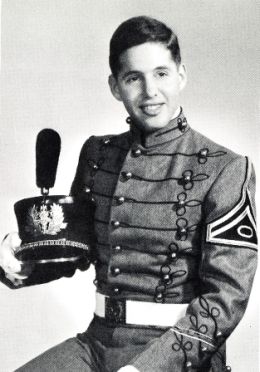
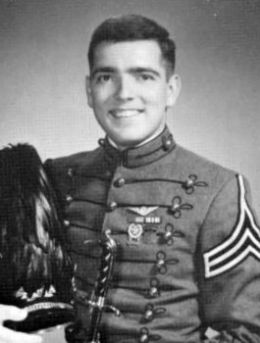
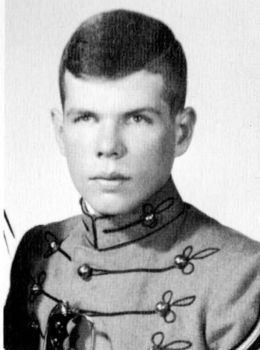
David Wilson was attracted to PMC by its military education, discipline, and development of leadership skills. He quickly assimilated to life at PMC and was considered to be a model Cadet. He promoted esprit-de-corps and motivation among his classmates. He was commissioned during the Commencement Exercises of 1966.

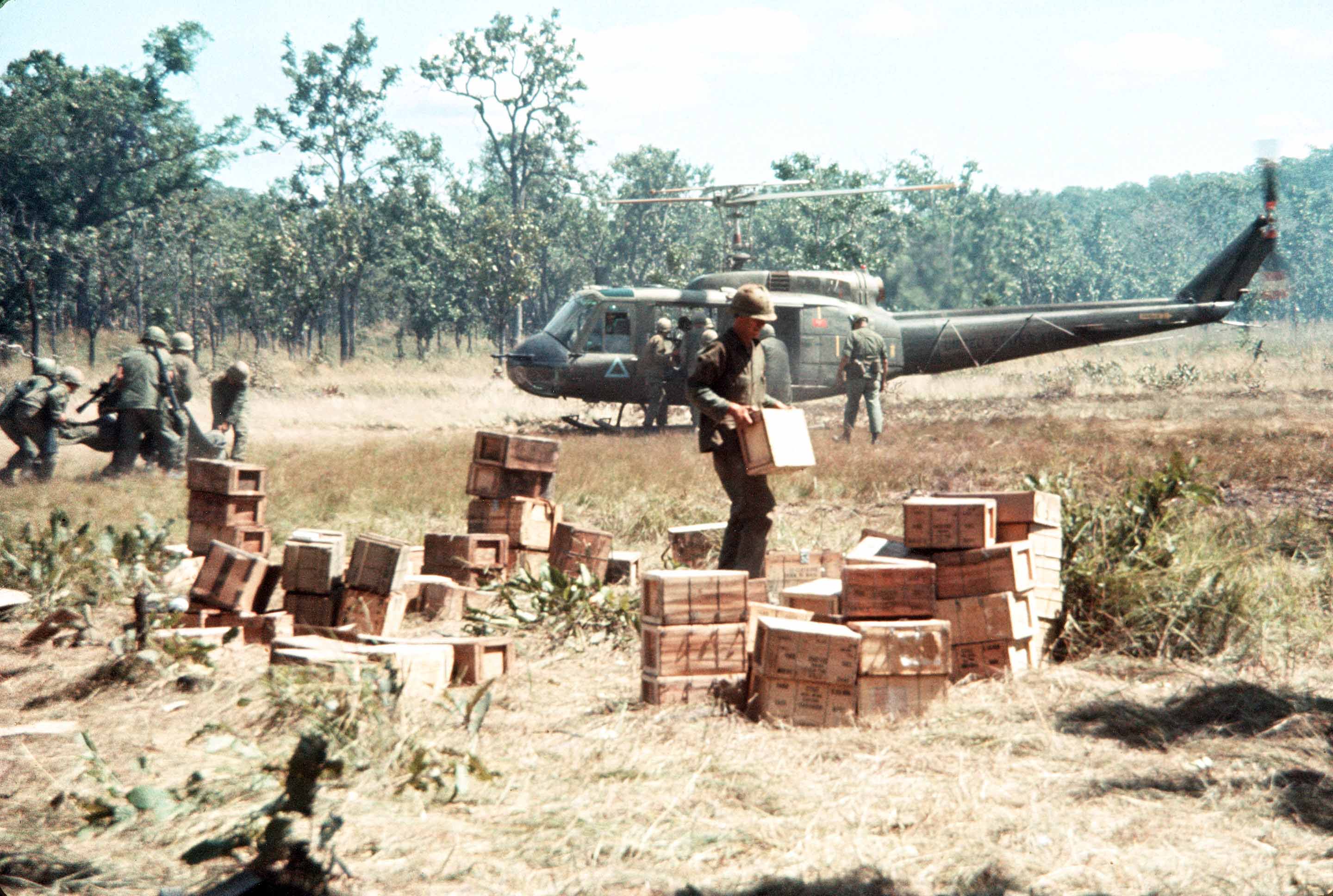
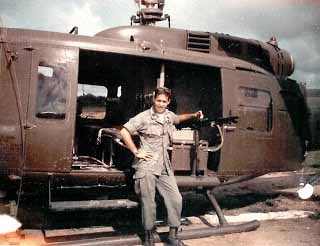
On 31 January 1968, First Lieutenant David Wilson commanded a supply convoy of mostly 5-ton tractor trailers that was returning to An Khe from Pleiku, RVN. At the foot of the Mang Yang Pass, a superior enemy force, supported with heavy weapons, ambushed the convoy. Many of the vehicles in the convoy had stopped and were subject to intense enemy mortar and small arms fire. At the moment the ambush was triggered, 1LT Wilson’s command vehicle was just forward of the kill zone. Although he was out of danger, he immediately returned to the kill zone and, with complete disregard for his own safety, 1LT Wilson commenced leading his men to safety. Then, while directing the convoy to safety, his jeep sustained a direct hit from a mortar round.

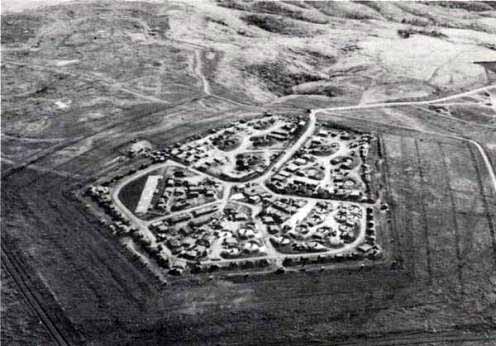
David Wilson was posthumously awarded the Silver Star and Purple Heart for his outstanding leadership and heroism for saving the lives of many of his men. Six Cadets served as pallbearers and the Commandant’s Staff and others from PMC attended the services. In December of 1968, the Bien Hoa Cantonment Area was dedicated to his memory. During the ceremonies, Brigadier General D.A. Richards, Commanding General of II Field Force Transportation units, stated: “David Wilson knew the meaning of valor…the meaning of caring…the meaning of responsibility, and to me, David Wilson represents the hope for the future!”

Military Honors & Valor

124th Transportation Battalion, 8th Transportation Group, 1st Logistic Command, USARV
Silver Star for his outstanding leadership and heroism while saving the lives of many of his men.
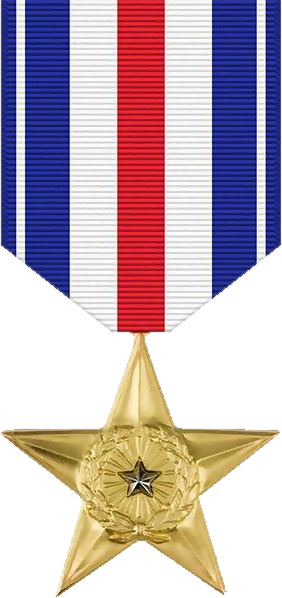
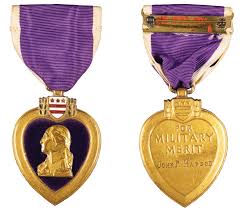
Silver StarPurple Heart

Share Link: http://pmc.widener.edu/pmc/legacies/cadets/david-wilson-66-valor-mang-yang-pass 
John Geoghegan
Class of 1963

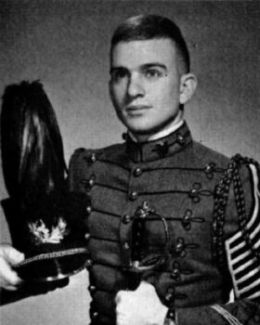
John “Jack” Lance Geoghegan ’63: Courage in the Ia Drang Valley

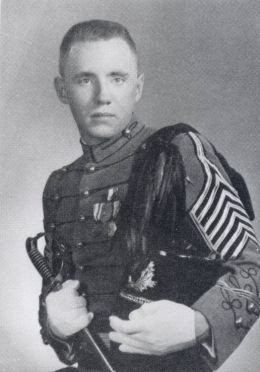
It was a rare occasion when PMC encountered John “Jack” Geoghegan. As a cadet he left everyone with the impression of potential greatness.  He entered PMC in 1959 and was described as a young man of “impressive presence and likeable personality.” He was selected as a Mother’s Day Corporal and as a second classman he was appointed Brigade Sergeant Major. As a First Classman, he was selected to be the Brigade Commander. He was also an above-average student and graduated in the top third of his class.

AirplaneBefore reporting to the Army, Geoghegan entered the University of Pennsylvania where he earned a master’s degree in International Relations. Upon completion of the Infantry Officers’ Basic Course he was assigned to the 1st Cavalry (Air Mobile) Division’s 1s Battalion, 7th Cavalry, under the command of Lt. Colonel Harold G. Moore.
In November 1965, the news of the ferocious and costly Battle of ia Drang Valley began to spread throughout the campus. Soon it was learned that Geoghegan had been killed while tending to a wounded soldier. PMC was shocked and in silent disbelief.

The tributes from those who knew him were endless. General William S. Biddle, Military Affairs Advisor at PMC, may have said it best: “he thus joined in memory Zadoc Aydelotte (Class of 1861) and other gallant sons of PMC who died on the field of battle.”

Military Honors & Valor

Silver Star1st Battalion, 7th Cavalry, 1st Cavalry Division (Airmobile), USARV
Silver Star for gallantry in action against a numerically superior force of North Vietnam Regulars. 

For a video presentation about the life of “Jack” Geoghegan, please visit http://www.youtube.com/watch?v=2FRscyNjuvU.

Share Link: https://pmc.widener.edu/pmc/legacies/cadets/john-jack-lance-geoghegan-63-courage-ia-drang-valley 

John H. Tilelli
Class of 1963

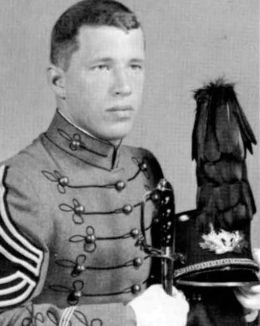
John H. Tilelli Jr. ’63: A Soldier’s Soldier

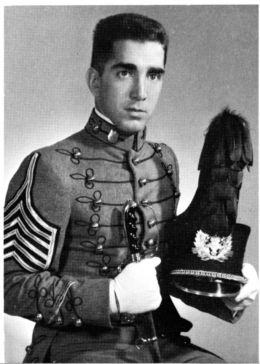
On the recommendation of a PMC alumnus, John Tilelli’s family visited the college. Impressed by the “rigor, discipline of study and environment” of PMC, John Tilelli applied, was accepted and enrolled. His Rook year was difficult, but as he became acclimated to the procedures and the expectations of the academic work, he improved. As a cadet, John quickly became an outstanding example. With some luck and hard work he never walked a tour and graduated as a Distinguished Military Graduate. To this day he credits the Corps of Cadets, with its camaraderie and the leadership education, putting him on the path to success.

After graduation, he began a career in the Army in a variety of diverse and vital positions. First in Vietnam as a Company Commander in the 18th Engineer Brigade and as the District Senior Advisor to Team 84, Commanding General the 1st Cavalry Division during Operations Desert Shield and Desert Storm, and four times in Germany. Tilelli’s staff assignments include the Pentagon, as the Assistant Deputy Chief of Staff for Operations and Plans, then as Deputy Chief of Staff for Operations and Plans and Vice Chief of Staff of the Army. He concluded his active duty career as Commander in Chief of the United Nations Command, Republic of Korea / U.S. Combined Forces / U.S. Forces Korea. 

For more than 30 years, John Tilelli served his country in the armed forces with integrity and distinction. His combat leadership and management skills have made the U.S. Army an improved organization. This sentiment was echoed on the floor of the House of Representatives in 2000.

Military Honors & Valor

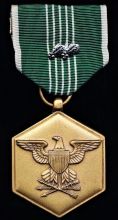
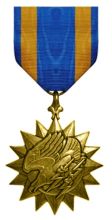
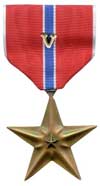
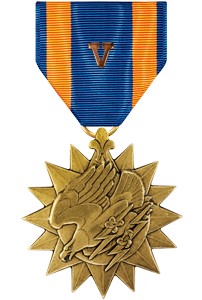
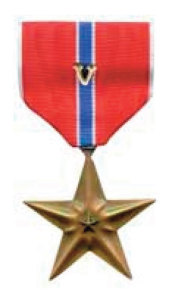
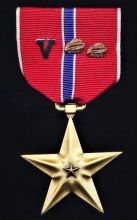
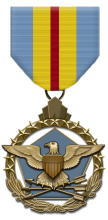
Tilelli is a highly decorated officer, wearing the Combat Infantryman Badge and the Parachutist Badge along with decorations. He was the recipient of the Distinguished Service Medal (with three Oak Leaf Clusters), the Legion of Merit, the Bronze Star with “V” Device (with two Oak Leaf Clusters), the Defense Distinguished Service medal, the Meritorious Service Medal (with three Oak Leaf Clusters), the Air Medal, the Army Commendation Medal (with two Oak Leaf Clusters), and the Vietnamese Cross of Gallantry with Silver Star and Palm.

Advisory Team 84, Dinh Tuong Province, USMACV
Bronze Star for heroic action while relieving a unit pinned down by heavy small arms and mortar fire, Major Tilelli, who had positioned himself on top of the command APC, ignored the impact of mortar rounds and hail of small arms surrounding him while directing the assault on the enemy.

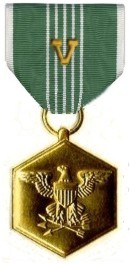
Bronze Star w/VDistinguished Service CrossArmy Commendation medal w/VAir Medal w/Valor

Listen to General John Tilelli Jr., USA (Ret) speak on Veterans Day at the Vietnam Memorial Wall. November 11, 2012: https://www.youtube.com/watch?v=rnCnfWCoi2s 

Share Link: http://pmc.widener.edu/pmc/legacies/cadets/john-h-tilelli-jr-63-soldiers-soldier 

Ken Byerly PMC alum and author

Ken Byerly '68: Vietnam Veteran & Writer Captures the Bravery & Sacrifice of PMC Cadets

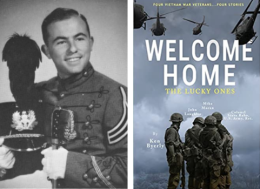
Vietnam Veteran and PMC alumnus Ken Byerly '68 has authored two books that honor the extraordinary bravery, sacrifice, and enduring legacy of those who served during the Vietnam War. Drawing from personal experience and firsthand accounts, his work shines a light on the heroism of fellow Pennsylvania Military College graduates and veterans, ensuring their stories continue to be remembered for generations to come.

Book Summaries:

Paid in Full: Tales of Bravery & Sacrifice: Step back in time to an era when the nation was torn asunder by conflict, and the unforgiving Vietnam War exacted a toll too heavy for the human spirit to bear. In this compelling narrative, you'll be introduced to eight exceptional graduates of Pennsylvania Military College, men whose stories have defied the test of time.

These remarkable individuals epitomize bravery, heroism, and honor, embodying these values as a way of life, not just empty words. In the pages of this book, you'll encounter their gripping tales, discovering their unwavering commitment to a nation they held dear. Yet, it was in the crucible of Vietnam that their mettle was truly tested.

The heavy price of war took lives prematurely and left dreams unfulfilled, but their legacy endures, a testament to the indomitable spirit. These heroes have left behind more than just memories; they've left families, friends, and a brotherhood bound by experiences that transcend time.

As a Vietnam Veteran and an alumnus of PMC, the author intimately understands that the sacrifices of these eight heroes must never fade into obscurity. It is time to shine a beacon on their courage, valor, and unwavering commitment to comrades, God, and country. Their legacy, and that of the Pennsylvania Military College, remains steadfast, a living tribute to the values that define genuine heroes. Step into their world, and let their stories inspire and enlighten.

Welcome Home: The Lucky Ones: (Co-authored with John Laughlin and Mike Moran) The sound of helicopter blades chopping through the air as they swiftly fly away into the distance, the eerie quietness before the buzzing of bullets zipping past the protective helmets, and the blasts of heavy shelling disturbing the ground. These were the familiar sounds heard once a drop was made leaving American soldiers in unfamiliar terrain to fight and fend off the enemy.

The Vietnam War took place between 1955 and 1975. This war saw the communist government of North Vietnam pitted against South Vietnam and its leading ally, the United States. The war was costly and controversial with more than 3 million people losing their lives including over 58,000 Americans and more than half of the total dead being Vietnamese civilians. The Vietnam War was a long and difficult war that caused casualties, impacted families, and created brave heroes who lived to tell their story today.

"Welcome Home The Lucky Ones" chronicles the tales of four brave American soldiers who served in the Vietnam War only to return home to the United States to find a bitterly divided opposition. Journey through the lives of Ken Byerly, John Laughlin, Mike Moran, and Colonel Steve Raho as they retell their time spent training in the Army and Air Force, leading up to the experiences and hardships they endured on the ground and in the air over Vietnam, to how the war shaped their lives upon their return back home.

Share Link: https://pmc.widener.edu/pmc/legacies/cadets/ken-byerly-68-vietnam-veteran-writer-captures-bravery-sacrifice-pmc-cadets 

Larry Liss
Class of 1963

Larry Liss ’63: Rescue at Cau Song Be

Larry Liss’ first exposure to PMC was as a high school senior at the 1958 Mother’s Day parade. He watched from the stadium as the Corps marched onto the field. He told his father “I’ve got to go to this school.” Larry adapted to balancing his academic and cadet life very well. As a "Rook” he joined Pershing Rifles, which was a demanding experience. Larry graduated as a Distinguished Military Student in 1963 and was commissioned a second lieutenant in the Regular Army. While stationed in Germany, he volunteered for helicopter flight training. After primary training, he was sent to the Army Aviation Center and learned to fly the Huey. Larry graduated from flight school in the fall of 1966. Within 30 days, he was in South Vietnam.

Helicopter

On May 14, two unarmed UH-1 “Huey” helicopters had landed at an outpost called Cau Song Be, near Tay Ninh City. Co-Pilot Captain Larry Liss along with Warrant Officer Tom Baca, learned that a South Vietnamese company had been surrounded by the 273rd North Vietnamese Army regiment. Along with another Huey they responded by taking off to rescue the South Vietnamese. The South Vietnamese had been ambushed along a narrow road with trees and bamboo growing along the roadside. As the helicopters hovered, it was clear that there was not clearing, so they chopped their way through the bamboo and other vegetation using the rotor blades.

town

Almost immediately South Vietnamese soldiers started to climb aboard both helicopters. Disregarding his own safety, Liss left the cockpit and assisted evacuees onto the helicopter during several landings. Later, the aircrews recalled seeing soldiers being killed on the aircraft while they were boarding the helicopters or already had boarded. The valiant helicopter crews made numerous trips, and rescued 80 to 100 South Vietnamese soldiers and the U.S. Special Forces adviser. In addition, information about the location of the enemy force likely prevented the outpost at Cau Song Be from being overrun. His courageous actions during the Cau Song Be rescue mission earned Liss the Distinguished Flying Cross for Valor.

Military Honors & Valor

Silver StarAviation Detachment, II Field Force, USARV
Silver Star for heroism and gallantry in action while participating in aerial flight in an unarmed helicopter in support of a Civilian Irregular Defense force under attacked by a numerically superior force on May 14, 1967 near Cau Song Be, Republic of Vietnam.

Disregarding his own safety, Captain Liss diverted from his routine transportation mission to fly in reinforcements and evacuate the wounded from the friendly force. To successfully land Captain Liss used his rotors to clear an area in the dense canopy to land his vehicle. This was an extremely hazardous undertaking. He successful landed with reinforcements and evacuated the wounded. He repeated his cycle several more times, despite a shrinking perimeter, enemy fire and lost communications with supporting tactical air. Due to chaos on the ground on the last two trips, it was vital that control be established and he exited the aircraft, organized the situation, and expedited the extraction of the wounded at great personal risk. On the last trip, with 18 soldiers on board, far in excess of weight guidelines, he nevertheless cleared the LZ and flew to a supporting aid station. Captain Liss’ heroism, determination, and ingenuity contributed to the successful outcome of the situation and reflect great credit on him and Field Force Il, United States Army Vietnam.

View Rescue at Cau Song Be On YouTube at http://m.youtube.com/watch?feature=player_embedded&v=rhdvG1X2AU4&desktop_uri=%2Fwatch%3Ffeature%3Dplayer_embedded%26v%3DrhdvG1X2AU4 produced by the Angelo Group.

Share Link: https://pmc.widener.edu/pmc/legacies/cadets/larry-liss-63-rescue-cau-song-be 

Tom Vossler
Class of 1968

Tom Vossler ’68: Soldier-Scholar of American Battlefields

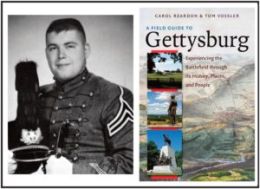
TOM VOSSLER (Class of 1968) severed 30 years in the U.S. Army commanding an infantry platoon in the Vietnam War and a mechanized infantry-armored battalion task force in Germany. In addition, he taught military history, strategy and leadership at the U.S. Army War College and is a former director of the U.S. Army Military History Institute at Carlisle Barracks, Pa. Vossler and co-author Carol Reardon combined to encapsulate the events of the Battle of Antietam, the bloodiest single day in American military history, and in the book “A Field Guide to Gettysburg.”

Book Summaries: Tom Vossler with Carol Reardon and Jeffrey D. McCausland

A Field Guide to Gettysburg, Second Edition: Experiencing the Battlefield through Its History, Places, and People: This second, updated edition of the acclaimed A Field Guide to Gettysburg will lead visitors to every important site across the battlefield and also give them ways to envision the action and empathize with the soldiers involved and the local people into whose lives and lands the battle intruded. Both Carol Reardon and Tom Vossler are themselves experienced guides who understand what visitors to Gettysburg are interested in, but they also bring the unique perspectives of a scholar and a former army officer. Divided into three day-long tours, this newly improved and expanded edition offers important historical background and context for the reader while providing answers to six key questions: What happened here? Who fought here? Who commanded here? Who fell here? Who lived here? And what did the participants have to say about it later?
With new stops, maps, and illustrations, the second edition of A Field Guide to Gettysburg remains the most comprehensive guide to the events and history of this pivotal battle of the Civil War.

A Field Guide to Antietam: The Battle of Antietam took place on September 17, 1862, and still stands as the bloodiest single day in American military history. Additionally, in its aftermath, President Abraham Lincoln issued his famous Emancipation Proclamation. In this engaging, easy-to-use guide, Carol Reardon and Tom Vossler allow visitors to understand this crucial Civil War battle in fine detail. Abundantly illustrated with maps and historical and modern photographs, A Field Guide to Antietam explores twenty-one sites on and near the battlefield where significant action occurred. Combining crisp narrative and rich historical context, each stop in the book is structured around the following questions: *What happened here? *Who fought here? *Who commanded here? *Who fell here? *Who lived here? *How did participants remember the events?

Battle Tested!: Gettysburg Leadership Lessons for 21st Century Leaders: You may never visit the Gettysburg battlefield, but understanding historic lessons from Battle Tested! will have a profound influence on not only your leadership abilities, but also your life, organizations, and career.

In order to be a truly effective leader, it is necessary to learn as much as possible from the examples of history—the disasters as well as the triumphs. At Gettysburg, Union and Confederate commanders faced a series of critical leadership challenges under the enormous stress of combat. The fate of the nation hung in the balance. These leaders each responded in different ways, but the concepts and principles they applied during those traumatic three days contain critical lessons for today’s leaders that are both useful and applicable—whether those leaders manage operations at a large corporation, supervise a public institution, lead an athletic team, or govern a state or municipality.

In the twenty-first century, leadership is the indispensable quantity that separates successful organizations from failures. Successful leaders communicate vision, motivate team members, and inspire trust. One must move both people and the collective organization into the future while, at the same time, dealing with the past. A leader must learn to master the dynamic requirements of decision-making and change.

Share Link: http://pmc.widener.edu/pmc/legacies/cadets/tom-vossler-68-soldier-scholar-american-battlefields 

Mark L. Richards
Class of 1969

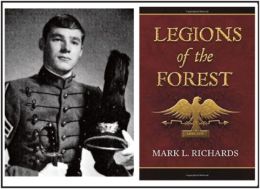
Mark L. Richards ’69: From Infantry Officer to Historical Novelist

MARK L. RICHARDS (Class of 1969) served as an Army infantry officer before entering the health care field, where he worked as the chief financial officer at a large academic health center. “Legions of the Forest,” which opens in 9 A.D., and centers around a clash between Roman legions and the German people they intend to subjugate, is a tale of war, treachery and the vicious politics of the Golden Age of Rome.

Share Link: http://pmc.widener.edu/pmc/legacies/cadets/mark-l-richards-69-infantry-officer-historical-novelist 

John Grant
Class of 1965

John Grant ’65: From Marine Officer to America’s Cup Champion

John Grant ’65 (A Marine aboard Stars & Stripes)

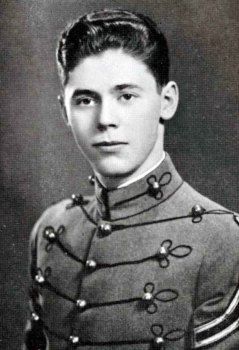
Like many others before him, when John Grant completed Bordentown Military Institute, he enrolled at PMC. His classmates described him as a “straight up man.” He studied economics, played football and was E Company Commander in his First Class (Senior) year. He graduated in 1965 as a Distinguished Military Student and entered the Marine Corps.

After flight school, he was assigned to the 4th Marine Division. As a Marine, he was involved in a series of battles in Vietnam. One noteworthy campaign was Operation Hastings in 1966. In order to confront the lead forces of a North Vietnamese force advancing across the DMZ, the Marines launched an attack. It was during this time that 2nd Lieutenant Grant responded, organized, and deployed a defense for a forward aid station. This act of gallantry was not isolated. While serving aboard the USS St. Paul, Grant dove into the sea to rescue a drowning sailor that had fallen overboard. Towards the end of his 20-year career, Grant was stationed at the Marine Corps Air Station at El Toro in California. It was while he was at El Toro that he met Dennis Conner, a famed yachtsman and a four-time winner of the America’s Cup. This chance meeting gave Grant an opportunity to follow a new path. Shortly after meeting Conner, Grant was asked to join the Stars & Stripes team. To be a part of the historic America’s Cup Races was an incredible opportunity for Grant. His perspective was that these races were the “holy grail” of yacht racing.

This challenging competition began in England in 1851, when the Royal Yacht Squadron challenged the New York Yacht Club. The New York Yacht Club won the race and was presented with the 100 Guineas Cup, an award commemorating Queen Victoria’s Jubilee year. The New York Yacht Club renamed the trophy “The America’s Cup,” after its winning yacht. For the next 132 years, American yachts successfully defended the America’s Cup. This changed in 1983, when the Australian challenger won. By 1987, Dennis Conner had organized and built a new yacht which went on to defeat an Australian defender. Grant’s role on the team was that of a “winch grinder.” Although he was the senior member of the crew, his emotional and physical leadership quickly caught the attention and respect of his teammates. They affectionately called him “Rambo.” Just prior to the start of the America’s Cup in 1987, Grant was sidelined by a broken foot. The next year he was part of the team that defended the America’s Cup from a New Zealand challenge.

Military Honors & Valor

Bronze Star w/V3rd Battalion, 4th Marine Regiment, 3rd Marine Division, FMF Pacific
Bronze Star w/Valor for heroism during Operation Hastings. After the Battalion had been attacked by a North Vietnamese Army regiment, 2nd Lt. Grant organized and deployed a defense for a forward aid station under enemy attack. Despite being exposed to constant enemy mortar and automatic weapons fire, Lt. Grant continued to provide security for aid the station, allowing the corpsmen to treat the wounded. In an attempt to evacuate the wounded while the clashes with the NVA continued, Lt. Grant used a flashlight to guide the helicopters to a safe landing. Later that night, he took command of the Company and led them on a four-hour march through enemy territory to a safe location.

Share Link: http://pmc.widener.edu/pmc/legacies/cadets/john-grant-65-marine-officer-americas-cup-champion 

Joseoh LoPrete
Class of 1903

Joseph LoPrete ’42: A Marine Leader on Iwo Jima and in Vietnam

At the end of his sophomore year, “Joe” LoPrete transferred to PMC from Fordham University. A Brooklynite, his smile and infectious humor made him many friends. Although he was a star on the track team and the rifle range, his passion for lifting weights in his room and cars were well known. Six days after graduation, LoPrete joined the Marine Corps and was assigned to the 24th Marine Regiment.

Three U.S. marine divisions landed on the island of Iwo Jima in February 1945. The island was of strategic importance to the U.S. and the Japanese were determined to defend it. From an elaborate network of caves, dugouts, tunnels and underground installations the Japanese troops fought to the death.

LoPrete led an Assault and Demolition Platoon. After some initial success, a bunker held up the advance of the 2nd Battalion. As the platoon advanced, two men beside him were killed. He was resolute and led the platoon forward, eventually destroying the bunker. As the battalion advanced, it suffered countless casualties. To help fill a void, LoPrete was given command of a rifle platoon. Shortly thereafter, a pocket of Japanese held up the Battalion again. Their position was well fortified and they were inflicting severe casualties among the Marines. LoPrete realized that a quick advance was necessary to avoid further losses. He led his men forward against the Japanese and annihilated them.

LoPrete was awarded The Silver Star Medal by Brigadier General Franklin Hart, former commander of the 24th Marine Regiment, for his “Leadership, Courage and Devotion to Duty.” It was later reported that one Marine said in response to a question about LoPrete’s leadership that he would go “anywhere he leads me.”

Camp CarrollAfter the war, Major LoPrete served as an instructor at the Marine Training School in Quantico, VA. In 1967, he became the commander of the 3rd Marines. In late 1967, the 3rd Marines conducted Operation Lancaster, designed to protect the western flank of the 9th Marines. The area of operations included Camp Carroll, an important artillery position and the base of operations; the Rockpile, a strategic outcropping that gave the Marines a view of five major valleys; and, Ca Lu an outpost, located along Highway 9, that provided an early warning of enemy infiltration. The following year the 3d Marines were assigned to protect the Quang Tri base from enemy attack.
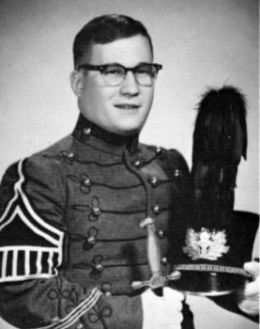
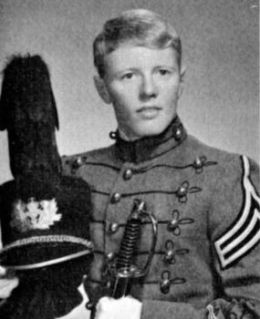
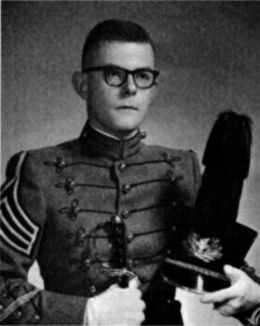
After serving in the Marine Corps for 31 years, Colonel LoPrete retired in 1973.

Military Honors & Valor

Silver Star2nd Battalion, 24th Marines, 4th Marine Division, FMF, Pacific
Silver Star for conspicuous gallantry and intrepidity as a Leader of an Assault and Demolitions Platoon of the Second Battalion on Iwo Jima.

Share Link: http://pmc.widener.edu/pmc/legacies/cadets/joseph-loprete-42-marine-leader-iwo-jima-and-vietnam 

Stewart Robert
Class of 1966

Robert R. Stewart ’68: Leading Through Fire in a Night Engagement

Military Honors & Valor

Bronze Star w/V6th Battalion, 31st Infantry, 9th Infantry Division, USARV
Bronze Star w/Valor for heroism while serving as a platoon leader during a night combat operation against a numerically superior enemy force. 1LT Stewart exposed himself to heavy small arms and automatic weapons fire upon contacting an entrenched enemy force, enabling him to direct the actions of his men and orchestrate the delivery of indirect fire and gunships. The effect of sound maneuver and well placed fires routed the enemy force and inflicted heavy casualties. 1LT Stewart’s actions were instrumental to the successful outcome of this engagement.

Share Link: http://pmc.widener.edu/pmc/legacies/cadets/robert-r-stewart-68-leading-through-fire-night-engagement 

Thomas R. Childers
Class of 1969

Thomas R. Childers, Jr. ’69: Valor in Night Ambushes and Close Combat

Military Honors & Valor

Bronze Star w/VThird Battalion, Fourth Marines, First Marine Division, FMF Pacific
Bronze Star w/Valor for valorous actions and meritorious service in combat as a platoon leader and rifle company commander while conducting numerous night ambushes and other direct engagements with the enemy. In each of these actions, Lt. Childers exhibited courage under fire, composure, resourcefulness and disregard for his own safety to protect the lives of his Marines and accomplish the mission. Frequently, he retrieved wounded Marines from hot kill zones, pursued retreating enemy personnel, and motivated leadership by moving under fire to various positions to solidified and coordinate action essential to mission’s accomplishment.

Share Link: http://pmc.widener.edu/pmc/legacies/cadets/thomas-r-childers-jr-69-valor-night-ambushes-and-close-combat 

Douglas Haywood
Class of 1969

Douglas Haywood ’69: Leadership and Valor in Enemy‑Controlled Territory

Military Honors & Valor

Bronze Star w/V11th Armored Cavalry Regiment (ACR)
Bronze Star w/V. While serving as an aero-rifle platoon leader with the 11th Armored Cavalry Regiment (ACR) during a reconnaissance mission in enemy-controlled territory, 1LT Haywood distinguished himself by valorous actions and decisive leadership. Upon making contact with an enemy force, small arms and rocket-propelled grenade fire resulted in several of his soldiers sustaining wounds. 1LT Haywood led their recovery and later orchestrated their evacuation. He then deployed his platoon in pursuit of the fleeing enemy, eventually reestablishing contact and inflicting losses on the enemy. The enemy broke contact and fled. 1LT Haywood’s heroic leadership and coolness under fire reflected great credit on himself and the 11th ACR.

Share Link: http://pmc.widener.edu/pmc/legacies/cadets/douglas-haywood-69-leadership-and-valor-enemy-controlled-territory 

James L. Hogg
Class of 1969

James L. Hogg ’69: A Daring Rescue Under Heavy Fire

Military Honors & Valor

Air Medal w/ValorF Troop, 4th US Cavalry, 1st Aviation Brigade
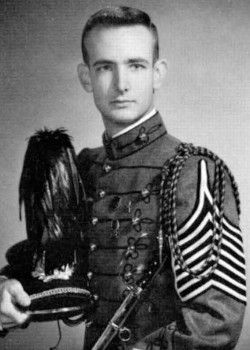
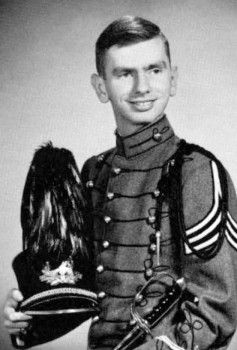
Air Medal w/Valor for heroism in aerial flight against an entrenched enemy force preventing the rescue of a downed American pilot. 1LT Hogg distinguished himself while serving as an aero-rifle platoon leader in enemy controlled territory in the border area of Northern South Vietnam. Assembling a volunteer group from his platoon, and commanding a two aircraft force, 1LT Hogg quickly located the downed pilot a mere 50 meters from a manned enemy bunker line. He directed his aircraft to lay down suppressive fire while the second aircraft boarded the wounded pilot. Enemy fire was heavy and despite the danger, 1LT Hogg maintained the suppressive fire at great risk to his aircraft until the rescue aircraft was completely clear of the area.

Share Link: http://pmc.widener.edu/pmc/legacies/cadets/james-l-hogg-69-daring-rescue-under-heavy-fire 

John Eversosn
Class of 1967

John C. Everson ’67: Courage Inside the DMZ

Military Honors & Valor

Bronze Star w/V1st Battalion, 11th Infantry, 5th Infantry Division (Mechanized), USARV
Bronze Star w/Valor for valorous actions. While commanding B Company, 1-11th Infantry during contact with an North Vietnamese force inside the DMZ, LT Everson’s unit sustained numerous casualties. After having evacuated the wounded, 1st Platoon discovered that its point man was unaccounted for and presumed KIA. In order to determine the young rifleman’s status and recover him, LT Everson moved 300 meters outside the company perimeter through the enemy automatic weapons kill zone to locate him. Though he located the body, it was too close to the enemy bunkers to recover it that night. The next morning the body was recovered during the morning’s sweep of the position.

Share Link: http://pmc.widener.edu/pmc/legacies/cadets/john-c-everson-67-courage-inside-dmz 

Gross Joseph
Class of 1968

Joseph C. Gross ’68: Precision and Courage in a High‑Risk Extraction

Military Honors & Valor

Distinguished Flying Cross176th Assault Helicopter Company, 14th Combat Aviation Battalion, Americal Division USARV
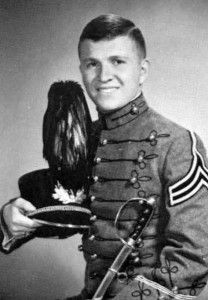
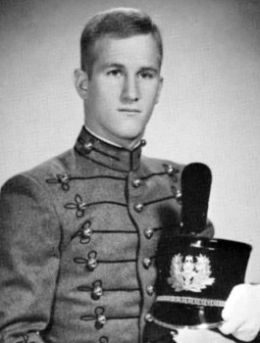
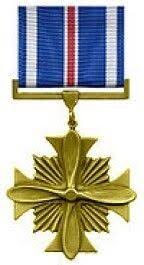
Distinguished Flying Cross for his heroism and exceptionally valorous actions while serving as aircraft commander during the extraction under fire of a long range reconnaissance team. Despite the hazardous conditions of terrain and enemy fire, 1LT Gross maneuvered the aircraft into a stable and stationary position at tree top level to enable the team to be pulled through the canopy onto the aircraft. This was accomplished at significant personal risk and resulted in the team’s safe return to friendly control without any loss of life.

Share Link: http://pmc.widener.edu/pmc/legacies/cadets/joseph-c-gross-68-precision-and-courage-high-risk-extraction 

Michael Sullivan
Class of 1967

Michael R. Sullivan ’67: Holding the Line Under Heavy Fire

Military Honors & Valor

Silver Star2nd Battalion, 14th Infantry, 25th Infantry Division, USARV
Silver Star for heroic action while on a reconnaissance mission in Vietnam. When his company came under attack from an enemy of unknown size, 1st Lt Sullivan acted swiftly. Despite heavy enemy fire he placed his men in strategic fighting positions. Sullivan was wounded as he positioned his men and directed suppressive fire on the enemy, allowing for his unit to withdraw and regroup. Being wounded a second time, he was forced to accept medical help and evacuation.


Share Link: http://pmc.widener.edu/pmc/legacies/cadets/michael-r-sullivan-67-holding-line-under-heavy-fire 

Richard I. Clark
Class of 1968

Richard L. Clark ’68: Courage Under Heavy Attack

Military Honors & Valor

Army Commendation Medal with Valor1st Infantry Brigade, 5th Infantry Division (Mechanized), USARV
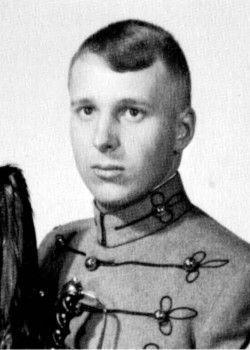
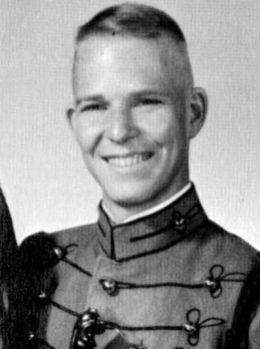
Army Commendation Medal w/V for heroism when his platoon was attacked by a well-equipped and determined company of North Vietnamese regulars. Lt. Clark directed retaliatory fire to each member of his platoon and then, under heavy fire, attempted to recover the body of a mortally wounded armored personnel driver. His courageous efforts kept casualties low and were a significant contribution to the defeat of the enemy.

Share Link: http://pmc.widener.edu/pmc/legacies/cadets/richard-l-clark-68-courage-under-heavy-attack 

William G.Pfeifle
Class of 1966

William G. Pfeifle ’66: Commanding Through the Tet Offensive

Military Honors & Valor

Bronze Star w/V

2nd Battalion (Airborne), 501st Infantry, 101st Airborne Division, USARV
Bronze Star w/Valor for heroism in ground combat, during the Tet offensive, when the battalion Tactical Command Post (TACCP) came under enemy mortar and ground attack. As the OIC of the makeshift TACCP, configured in the open on the bed of a MULE, 1LT Pfeifle remained unprotected, as supporting infantrymen dove for cover, and coordinated the actions of the battalion. Without any regard for his own safety, he located the flashes from the enemy mortars and directed counterbattery fire. Then, under a poncho to neutralize light from the radio console, 1LT Pfeifle radioed counterbattery fire to the battalion mortar section, coordinated the evacuation of wounded and maintained battalion-level command and control. He maintained this activity for over an hour under these perilous conditions without any consideration to his own safety and the danger. Upon emerging from the poncho, it was found to be perforated with numerous shrapnel holes. His devotion to duty and personal bravery enabled the unit to successful repel the enemy attack.

Share Link: http://pmc.widener.edu/pmc/legacies/cadets/william-g-pfeifle-66-commanding-through-tet-offensive 

Chuck Marsh
Class of 1966

Charles E. March ’66: Battling the 9th Viet Cong Division at Suoi Tre

Military Honors & Valor

Bronze Star with Valor2nd Battalion, 34th Armor, 25th Division USARV
Bronze Star w/Valor for his heroism while leading a battalion task force attempting to reinforce members of the 3rd Brigade, 4th Infantry Division under attack at Suoi Tre, Vietnam. After making a slow advance through jungle, 1st Lt. March encountered an enemy force of a large force from the 9h Viet Cong Division overrunning the fire support base he was to reinforce. He immediately deployed his platoon, taking advantage of his mobility and fire support. Throughout the battle, 1st Lt March engaged the Viet Cong at a very close range while exposing himself to hostile fire as he deployed his men and secured the perimeter.

Share Link: http://pmc.widener.edu/pmc/legacies/cadets/charles-e-march-66-battling-9th-viet-cong-division-suoi-tre