Collage of Pennsylvania Military College cadets and archived yearbooks documenting student life and traditions

Notable Cadets

Search Cadet Stories

Filter Cadet Stories

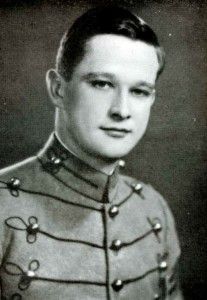
William E. Dudley
Class of 1942

William E. Dudley ’42: Gallantry in the Streets of Manila

As the 8th Cavalry Regiment began its push southward of Manila, Japanese resistance blocked its progress. Troop E, commanded by CPT William Dudley, was given the assignment to clear the area, starting with Gilmore Street. On Gilmore, a determined and tenacious Japanese force, consisting of machine guns and sniper fire, defended the area. Dudley was continually in the lead and exposed to the withering enemy fire. Throughout the daylong battle, Dudley remained in the forefront of the Troop reassuring his men and exploiting every gain before the enemy could reorganize. His leadership, personal courage, and heroism were directly responsible for the success of his and the regiment’s mission.

Military Honors & Valor

Silver Star1st Battalion, 8th Cavalry, 1st Cavalry Division, USAFE
Silver Star for gallantry and skillful leadership while encountering heavy machine gun and sniper fire while cleaning out Gilmore Street in the New Manila Subdivision, Philippines.

Share Link: http://pmc.widener.edu/pmc/legacies/cadets/william-e-dudley-42-gallantry-streets-manila 

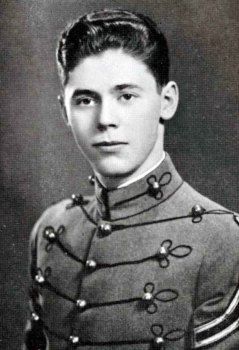
Joseoh LoPrete
Class of 1903

Joseph LoPrete ’42: A Marine Leader on Iwo Jima and in Vietnam

At the end of his sophomore year, “Joe” LoPrete transferred to PMC from Fordham University. A Brooklynite, his smile and infectious humor made him many friends. Although he was a star on the track team and the rifle range, his passion for lifting weights in his room and cars were well known. Six days after graduation, LoPrete joined the Marine Corps and was assigned to the 24th Marine Regiment.

Three U.S. marine divisions landed on the island of Iwo Jima in February 1945. The island was of strategic importance to the U.S. and the Japanese were determined to defend it. From an elaborate network of caves, dugouts, tunnels and underground installations the Japanese troops fought to the death.

LoPrete led an Assault and Demolition Platoon. After some initial success, a bunker held up the advance of the 2nd Battalion. As the platoon advanced, two men beside him were killed. He was resolute and led the platoon forward, eventually destroying the bunker. As the battalion advanced, it suffered countless casualties. To help fill a void, LoPrete was given command of a rifle platoon. Shortly thereafter, a pocket of Japanese held up the Battalion again. Their position was well fortified and they were inflicting severe casualties among the Marines. LoPrete realized that a quick advance was necessary to avoid further losses. He led his men forward against the Japanese and annihilated them.

LoPrete was awarded The Silver Star Medal by Brigadier General Franklin Hart, former commander of the 24th Marine Regiment, for his “Leadership, Courage and Devotion to Duty.” It was later reported that one Marine said in response to a question about LoPrete’s leadership that he would go “anywhere he leads me.”
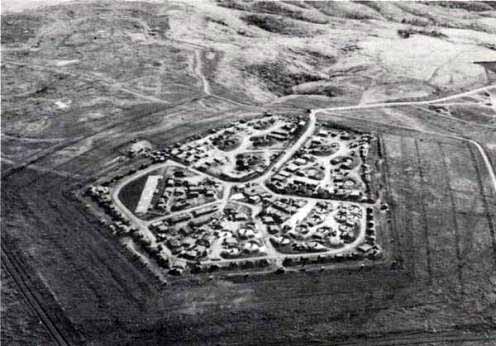
Camp CarrollAfter the war, Major LoPrete served as an instructor at the Marine Training School in Quantico, VA. In 1967, he became the commander of the 3rd Marines. In late 1967, the 3rd Marines conducted Operation Lancaster, designed to protect the western flank of the 9th Marines. The area of operations included Camp Carroll, an important artillery position and the base of operations; the Rockpile, a strategic outcropping that gave the Marines a view of five major valleys; and, Ca Lu an outpost, located along Highway 9, that provided an early warning of enemy infiltration. The following year the 3d Marines were assigned to protect the Quang Tri base from enemy attack.

After serving in the Marine Corps for 31 years, Colonel LoPrete retired in 1973.

Military Honors & Valor
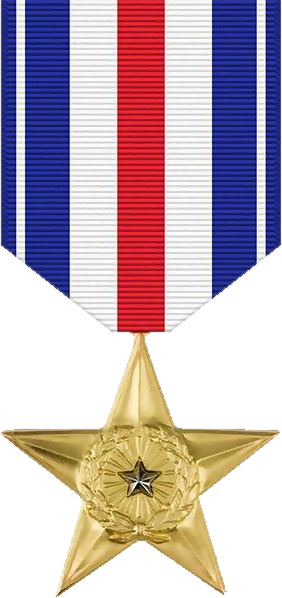
Silver Star2nd Battalion, 24th Marines, 4th Marine Division, FMF, Pacific
Silver Star for conspicuous gallantry and intrepidity as a Leader of an Assault and Demolitions Platoon of the Second Battalion on Iwo Jima.

Share Link: http://pmc.widener.edu/pmc/legacies/cadets/joseph-loprete-42-marine-leader-iwo-jima-and-vietnam 
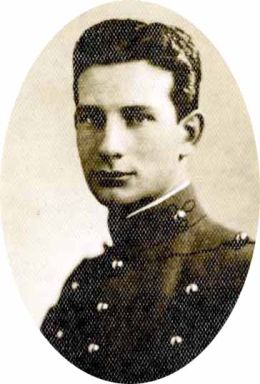
Francis P. Burk
Class of 1938

Francis P. Burk ’38: Daring Leadership in Normandy

Military Honors & Valor

2nd Battalion, 12th Infantry, 4th Infantry Division USAFESilver Star
Silver Star for gallantry, initiative and courage. As the 4ID moved inland from Normandy, the Germans offered stiff resistance, but there was no counterattack until June 14. During a furious German charge, Major Burk took emergency command of Company E. Through his own initiative and daring leadership he ably led his troops in repulsing the German attack.


Share Link: http://pmc.widener.edu/pmc/legacies/cadets/francis-p-burk-38-daring-leadership-normandy 

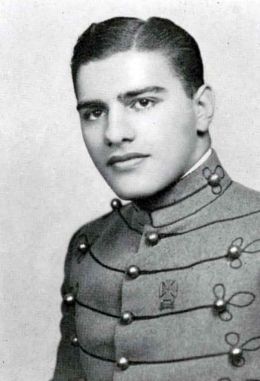
George Kassab
Class of 1939

George Kassab ’39: Heroic Co-Pilot in Pacific Air Battle

Military Honors & Valor

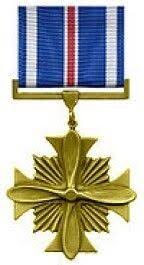
Distinguished Flying Cross530th Squadron, 380th Bomb Group
Distinguished Flying Cross for heroism during an air battle. In response to intelligence that a Japanese cruiser would possibly be in the vicinity, “Old Hickory," of the 530th Bomb Squadron piloted by Jack Bratton with George Kassab as the co-pilot, made the arduous flight from Fenton Field in Australia to Macassar in the Celbes. Although there was no cruiser, the Liberator (B-24 Bomber) was spotted and attacked by four Japanese Zeros (A6M Zero fighters). At first the Zeros unsuccessfully attacked with aerial burst bombs, and then reverted to more convention methods. The Liberator responded with 50cal fire. Despite severe damage, at the end of the ensuing fight, three Zeros were shot down. Lt. Kassab and the rest of the crew received the Distinguished Flying Cross for their “courageous service” during this air battle.

Share Link: http://pmc.widener.edu/pmc/legacies/cadets/george-kassab-39-heroic-co-pilot-pacific-air-battle 

George Wilkens
Class of 1943

George Wilkens ’43: A Selfless Leader Lost in the Minefield

Military Honors & Valor

Silver Star3rd Battalion, 398th Infantry Regiment, 100th Infantry Division, USAFE
Silver Star (Posthumously) for conspicuous gallantry while leading a combat patrol toward enemy territory at midnight on 1 March 1945. Lt. Wilkens encountered a hostile mine field and ordered his men to retrace their steps. When an alternate route was found, he instructed the members of the patrol to remain behind while he moved forward alone to reconnoiter. In so doing he was killed by the detonation of a mine, thus saving the lives of his comrades.

Share Link: http://pmc.widener.edu/pmc/legacies/cadets/george-wilkens-43-selfless-leader-lost-minefield 

William A. Nurthen III
Class of 1943

William A. Nurthen III ’43: Gallantry from Germany to the Front Lines

Military Honors & Valor

1st Battalion, 20th Infantry, 10th Armored Division, USAFE
Silver Star for gallantry in action at Schwerdorf, Germany where he braved intense enemy artillery and small arms fire during a patrol.

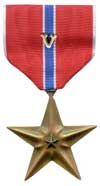
Bronze Star for heroism during an assault against a determined enemy which resulted in the recovery of eight disabled tanks.

Silver StarBronze Star


Share Link: http://pmc.widener.edu/pmc/legacies/cadets/william-nurthen-iii-43-gallantry-germany-front-lines