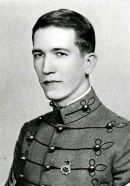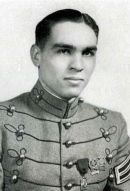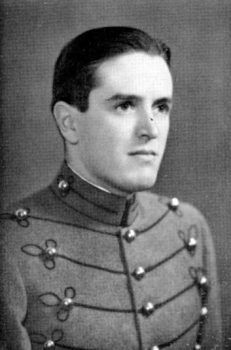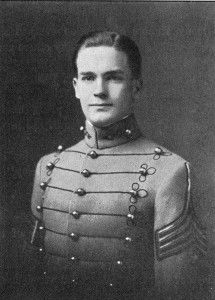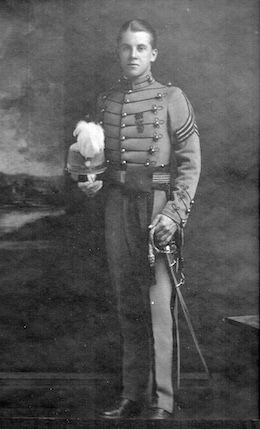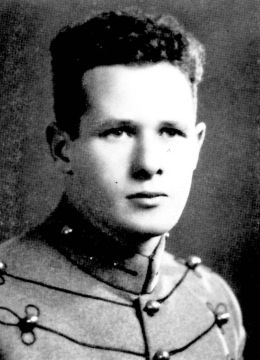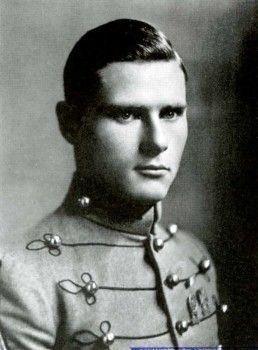
Collage of Pennsylvania Military College cadets and archived yearbooks documenting student life and traditions

Notable Cadets

Search Cadet Stories

Filter Cadet Stories

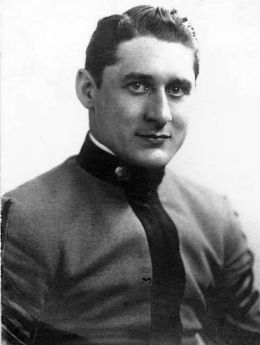
Richard O'Malley
Class of 1938

Richard O’Malley ’38: The Iron Major

After graduating PMC, Richard O’Malley, ’38, entered the Graduate School of Business at Harvard. The approaching war, however, changed his plans and he entered the military in 1940. He became the commander of H Company, 2nd Battalion, 12th Infantry Regiment, one of the oldest and most decorated regiments in the Army, and deployed to England with the 4th Infantry Division.

On D-Day, he saw his first action of the war when the 12th Regiment spearheaded the invasion of the Cherbourg Peninsula. The 12th Infantry landed south of the beaches Uncle Red and Tara Green. Despite being widely dispersed, the Regiment was quickly reassembled, organized and advanced inland. As the 2nd Battalion moved inland, it became engaged in a fierce firefight at Neuville-au-Plain. 
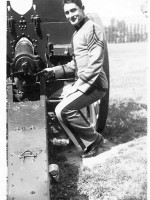
MachineWhen the Battalion commander became a casualty, O’Malley assumed command and proceeded to the front lines. There he could be heard calling “Up and at “em, 2nd Battalion, follow me!” The next objective of the 2nd Battalion was 2 enemy pillboxes near two stone quarries. O’Malley lead a fierce attack and in conjunction tanks, overcame the enemy. After the capture of the port of Cherbourg on June 26, the 12t Infantry was repositioned to the Sainteny front.

O’Malley’s then became engaged in fierce fighting against Götz von Berlichingen Division’s SS grenadiers, supported by the parachutists of the 6th Regiment. These elite enemy forces were entrenched in the hedgerows of the Normandy countryside. Although wounded twice, Major O’Malley continued to lead the battalion from a frontline position. Only hours before the Battalion was to be relieved on July 16, an enemy sniper shot and killed O’Malley. As the men of the 2nd Battalion learned of his death, they were stunned.
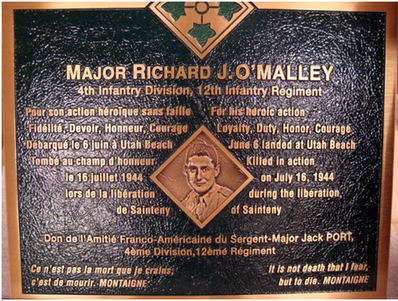
PlaqueRichard O’Malley was a “ruggedly handsome man with a voice that could crack timber,” whose manner was brisk, decisive and authoritative. His fearless leadership and concern for his troops endeared him to his men who called him “The Iron Major.”” When Major General Raymond Barton, Commander of the 4th Infantry Division, learned of the loss of Major O’Malley he was so moved that he ordered the mass firing of three volleys of the 4th Infantry Division artillery and mortars into enemy lines. This was the only time in World War II that this honor was given by the 4th Infantry Division and the only time to this day.”

In 1945, Major O’Malley was posthumously awarded the Silver Star. The citation accompanying the awarded stated:

“After relieving the battalion of another unit, Major O’Malley attacked with his battalion and succeeded in advancing in the face of fierce enemy resistance. Throughout this period, Major O’Malley, although handicapped by a stiff leg resulting from a previous wound, was continuously up forward, directing the attack.

“When his battalion was ordered to take up a defensive position, Major O’Malley continued to remain forward in order to adequately co-ordinate defensive fire. Despite the fact that the enemy front lines were less than 100 yards away, and that his own troops were continually under small arms and artillery fire, he visited each company front personally to check positions.”
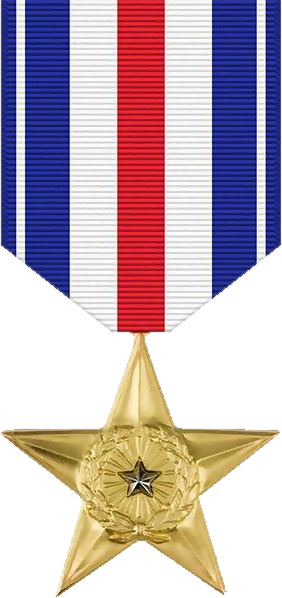
Silver StarMilitary Honors & Valor

2nd Battalion, 12th Infantry, 4th Infantry Division USAFE
Silver Star for for gallantry, initiative and courage displayed in action against an armed enemy.

Share Link: https://pmc.widener.edu/pmc/legacies/cadets/richard-omalley-38-iron-major 
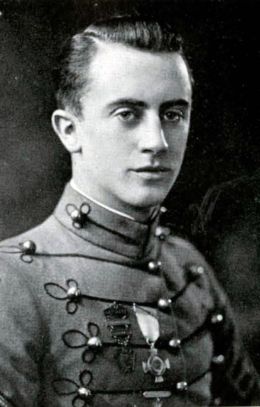
Joseph P. McCaffery
Class of 1927

Joseph P. McCaffery ’27: Marine Raider in the Pacific

Joseph P. McCaffery ’27 attended PMC along with his brother, Hugh McCaffery ’24. Because of his size and older brother, he was known as “Little Joe.” While at PMC, he was recognized as a marksman and the quarterback on the football team. “Babe” Buono ‘26, one of McCaffery’s roommates, stated that, “When it came to courage and transferring that courage to others, Joe had no equal.” After graduation, McCaffery was commissioned as a 2nd Lieutenant in the Army Reserves, but resigned to accept a commission in the Marine Corps Reserves.

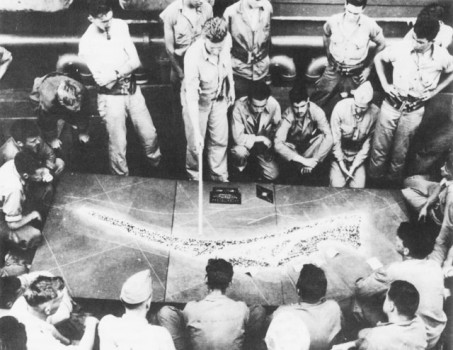
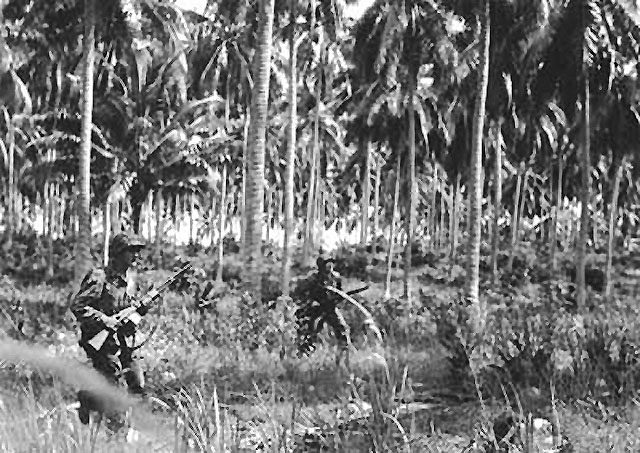
After serving at Pearl Harbor, Shanghai, San Diego, and Quantico, McCaffery joined the Marine Raiders. The Raider battalions were a special mission force that were lightly armed and intensely trained to spearhead larger amphibious landings on beaches (thought to be inaccessible); conduct raids requiring surprise and high speed, and operate as guerrilla units for lengthy periods behind enemy lines. When a battalion lost its commander on Guadalcanal, McCaffery assumed command. After leading his troops though a dense jungle to safety, he was immediately promoted to Lieutenant Colonel and assigned to the 1st Marine Raider Regiment. In the Munda-Rendova campaign, he led a 15-mile trek through a swamp and wiped out a Japanese garrison, which had been caught completely by surprise. Next came the landing at Bougainville.

BoatFor this operation, McCaffery took over the Second Raider Battalion. The landing encountered a Japanese crossfire, which caused havoc and disorder within the assault waves. McCaffery landed with the first wave of Raiders. As the Marines cleared the beach, they were stopped by machine-gun fire from a well-concealed bunker. While leading the Marines forward, McCaffery was struck four times in the chest. Despite the best efforts of the corpsman and Battalion surgeon, he died.
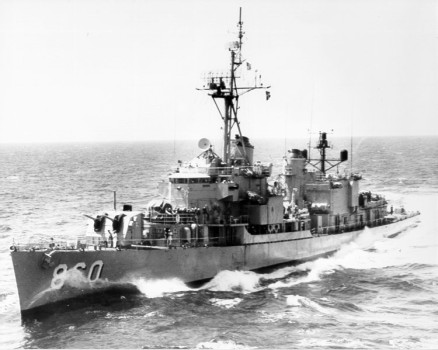
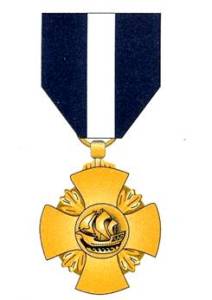
BoatHis fellow soldiers described him as a brilliant officer, kind and loyal friend, and courageous hero. He was awarded the Silver Star Medal for his superior leadership between November 1942 and January 1943. In May 1944, McCaffery was awarded the Navy Cross posthumously for “extraordinary heroism while in command of the 2nd Marine Raider Battalion in action against enemy Japanese forces.” In 1945, the USS McCaffery, a navy destroyer, was commissioned in his honor.
Military Honors & Valor

1st Battalion, 8th Marines (Reinforced) 2nd Marine Division, FMF (Pacific)
Silver Star for conspicuous gallantry and intrepidity as Commanding Officer of the First Battalion, Eighth Marines, Reinforced, in action against enemy Japanese forces on Guadalcanal, Solomon Islands.

2nd Raider Battalion, 4th Marines, FMF Pacific
Navy Cross for extraordinary heroism and distinguished service in action against enemy Japanese forces during the landing attack in the Cape Torokina Area, Bougainville Island, British

Silver Star

  Navy Cross

Share Link: http://pmc.widener.edu/pmc/legacies/cadets/joseph-p-mccaffery-27-marine-raider-pacific 

Thomas Merendino
Class of 1941

Thomas Merendino ’41: Heroism on Omaha Beach

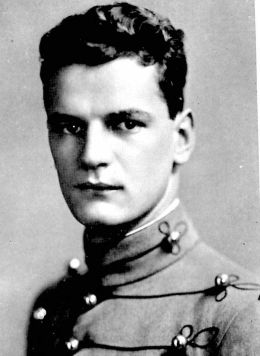
Thomas Merendino ‘41, often called Tommy, was known as an athlete, scholar and gentleman at PMC. He was a versatile athlete and played football, basketball, and baseball. Yet, it was his smile and good humor that his classmates remembered.

The D-Day mission of the 16th Infantry Regiment was to land on Omaha Beach, the most heavily fortified of the five beaches, reduce the beach defenses, and secure the Beach two hours before dark. As the regiment’s landing craft approached the Beach, they came under intense fire. As the assault wave slowly built up a firing line, Company B, led by Captain Merendino, landed ten minutes after the first assault wave. The scene was described as chaotic and disorganized. As landing craft dropped their ramps, men were killed and wounded as they attempted to get out of the boats. Others were hit as they struggled through the surf or tried to run across the sand weighted down with waterlogged equipment.

Merendino disembarked from the landing craft in the initial assault wave and, with complete disregard for his own safety, organized the men who were struggling in the water and led them through the intense enemy fire to the shore. Upon reaching the shore, he refused to take cover and again organized an assault group for further advance. Fully exposed to the sweeping fire from enemy pillboxes and machine gun nests and a constant target for the snipers on the hill, he personally led the charge up the slope and overran a German stronghold.

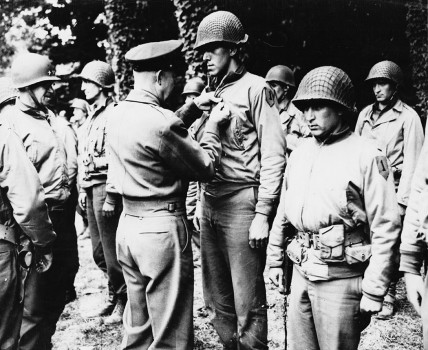
Soilder pinnedGeneral Eisenhower visited the First Division on July 2nd and pinned awards for heroism on twenty-five First Division heroes, including Merendino, who received The Distinguished Service Cross Medal. This was not his first act of valor. During the Oren offensive in Algeria, the (then) Lieutenant Merendino directed the fire of a 105mm self-propelled howitzer on an enemy stronghold. When this failed, he ordered the howitzer to ram the German stronghold. He then dismounted the vehicle and charged the German stronghold and captured 20 Germans. This act of bravery earned him The Silver Star Medal.
Military Honors & Valor

1st Battalion, 16th Infantry, 1st Infantry Division, USAFE
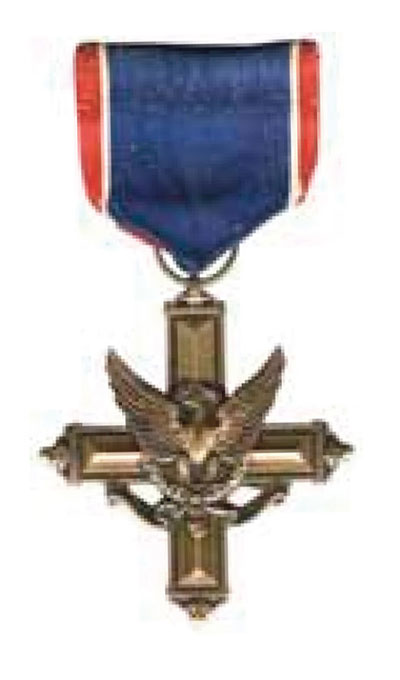
Distinguished Service Cross Capt Merendino disembarked from the landing craft in the initial assault wave and with complete disregard for his own safety, hastily organized the men who were struggling in the water and led them through the intense enemy to the shore. Upon reaching the shore, he refused to take cover and again organized an assault group for further advance.

Silver Star for gallantry during the Oran offensive (November 1942), Lieutenant Merendino directed the fire of his self-propelled 105-mm. howitzer upon an enemy stronghold. Observing that this fire failed to dislodge the enemy, Merendino ordered his vehicle to ram the stone wall which the enemy was using as cover. He then dismounted from his vehicle and, with the aid of one man, succeeded in taking twenty prisoners.

Silver Star (Bronze Oak Leaf Cluster) for gallantry during a fire fight near Nicemi, Sicily (July 1943). During an engagement with enemy forces near Nicemi Sicily in July 1943. Lieutenant Merendino, during a night attack on his position, and without regard for his own safety, demonstrated leadership, devotion to duty, and selfless actions by rescuing wounded occupants of a damaged vehicle in the midst of a large storage area containing high octane gasoline and ammunition. The large ammunition and gasoline supplies, being hit by enemy artillery began to burn and explode, and the men and vehicles trapped in both the area and individual vehicles. The enemy fire grew in intensity and accuracy, as enemy batteries, used the blazing fires to correct and adjust their artillery fires. After aiding the wounded occupants of the vehicle, without the least regard for his personal safety, went to the rescue of his men, who were dispersed in the staging area.. Time and time again he went through the flaming cauldron to carry out burned and wounded men. He continued his rescue efforts with the aid of several of his men until all the casualties and salvageable equipment were removed to safety and the enemy fires were suppressed.

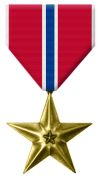
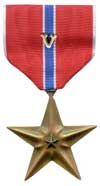
Bronze Star for heroic achievement in Tunisia (March 1943). For heroism in ground combat in Tunisia in March 1943 against an attacking superior-sized enemy force. During a movement to contact a superior enemy force was contracted and immediately began an aggressive counter-attack. Although exposed to heavy direct and indirect fires, Lieutenant Merendino skillfully placed his attached self-propelled howitzers in a strategic position that provided an effective counter-battery fires which were instrumental in breaking the enemy action. The break permitted his unit to withdraw to more favorable terrain and assume a more dominant positioning. Lieutenant Merindino’s valorous actions and quick thinking were key to the minimization of causalities and loss of equipment.

Distinguished Service Cross Silver StarSilver Star bronze star

Share Link: http://pmc.widener.edu/pmc/legacies/cadets/thomas-merendino-41-heroism-omaha-beach 

PMC cadet Herb Amey
Class of 1935

Herb Amey '35: Bravery on Tarawa in the Gilbert Islands

“Uncle Herb,” as he was called by many of his classmates at PMC, was a tall, black-haired cadet who had earned the respect and admiration of the Corps during his four years at the college. Academically he was an excellent student and played guard on the football team and captained the baseball team. After graduation he joined the Marine Corps. In November 1943, Lt Colonel Amey, the Commanding Officer of the 2nd Battalion of the 2nd Marine Regiment, was preparing his troops for the amphibious assault on Tarawa.

MapUSMC-C-Tarawa-p12Tarawa is located in the Gilbert Islands approximately 2,500 miles southwest of Hawaii. The island of Betio became the centerpiece of the Japanese fortifications because it was a defensive stronghold. The landings began on November 20 and immediately ran into trouble. After the first three waves of his command, Landing Team 2/2, had departed for the beach, Amey ordered his boat closer to the beach. 
According to Robert Sherrod, a war correspondent with the 2/2, “Somehow Amey flagged down two amtracs and transferred his group into them … Amey’s tractor was forced to halt about 200 yards from the beach by an obstacle of barbed wire on the reef.” Amey looked over the edge of the vehicle and then led his men over the side into water up to their necks. ‘C’mon gang,’ he shouted, ‘they can’t stop us.’ He took about ten steps – and they were the last he ever took.” 

As the sun set on Tarawa, the Second Marine Division occupied a thin strip of land. With courage, sacrifice, and skill, the U. S. Marines had broken Tarawa’s door in, and they were not about to leave.

Silver Star

Military Honors & Valor

2nd Battalion, 2nd Marines, 2nd Marine Division, FMF Pacific
Silver Star for conspicuous gallantry and intrepidity during the action against enemy Japanese forces on Tarawa, Gilbert islands.

Share Link: https://pmc.widener.edu/pmc/legacies/cadets/herb-amey-35-bravery-tarawa-gilbert-islands

Carl Schaubel
Class of 1930

Carl Schaubel ’30: Coach, Officer, and Leader

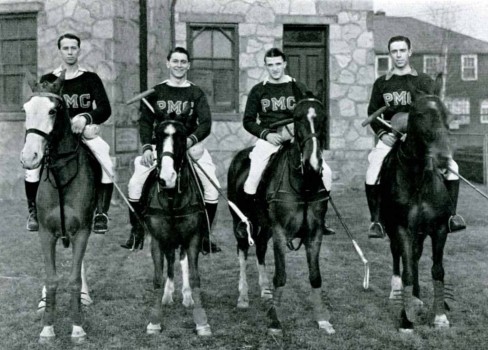
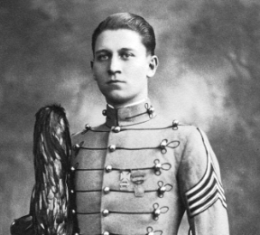
What drew Carl “Jimmie” Schaubel to PMC in the fall of 1926 was his interest in horses. His classmates soon recognized that his “witticisms and easy-going manner” made his personality a strong attribute. Schaubel was a hard worker in the classroom and played shortstop on the baseball team. At the same time he learned to ride and developed into a fine polo player under the tutelage of Frank Hyatt. Schaubel commented that being a member of the undefeated polo team in 1930 was a highlight of his time as a Cadet. As a polo coach, he was considered to be one of the best in the country.

polo teamIn 1930 Schaubel was awarded a Bachelor of Economics degree and was asked to remain at PMC as the coach of the polo team and assistant professor of military science and tactics. After spending 10 years in the army reserves, Mr. Schaubel volunteered for active duty in 1940. His first assignment was at PMC in large part due to Frank Hyatt. After a similar assignment at the College of William & Mary, Schaubel was ordered to report to the commanding general of the European Headquarters in London. After the invasion of Normandy, Schaubel traveled through Northern France and Germany as part of an advance team for General Eisenhower’s Staff. After the war, he was sent on a special mission, which included travels throughout the Middle East and all the countries behind the Iron Curtain including Russia. He was then transferred to the Pentagon.
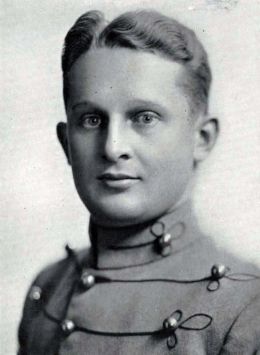
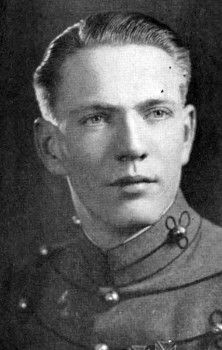
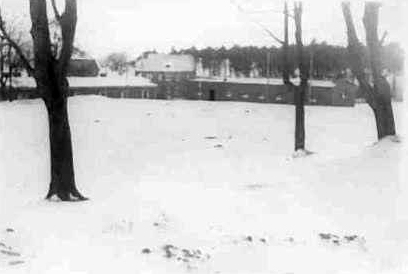
After leaving the Army, Schaubel worked at the Dunlap Printing Company in production and then as sales manager. In 1956 he became president of the company. In 1964, he returned to PMC as a staff vice-president and retired in the 1973.

Share Link: https://pmc.widener.edu/pmc/legacies/cadets/carl-schaubel-30-coach-officer-and-leader 

Henry T. Feige
Class of 1935

Henry T. Feige ’35: UDT Demolition Leader at Saipan and Guam

In 1943, the Army and Navy established the UDTs (Underwater Demolition Teams). These specialized units were the forerunners of the Navy Seals. Each unit was comprised of volunteers who were excellent swimmers. Their training was extensive and exhausting, often consisting of grueling exercises that were conducted in the ocean off Hawaii and the swamps of Florida with the alligators and snakes. They learned to reconnoiter beaches and the waters just offshore, as well as locating reefs, rocks, and shoals that would interfere with landing craft. They also became skillful in the use of explosives to demolish underwater obstacles planted by the enemy.

Military Honors & Valor

UDT 6, Amphibious Forces, US Pacific FleetSilver Star
Silver Star for gallantry and intrepidity in the face of enemy sniper, machine gun and mortar fire as he prepared the way for the amphibious landing of combat troops during the invasions of Saipan and Guam Islands.

Share Link: http://pmc.widener.edu/pmc/legacies/cadets/henry-t-feige-35-udt-demolition-leader-saipan-and-guam 

Wilfred P. Farrell
Class of 1939

Wilfred F. Farrell ’39: Valor and Survival Behind Enemy Lines

Wilfred “Casey” Farrell was a member of the basketball team and a determined student while attending PMPS (1932-35). He graduated from PMC in 1939. Best known for his unselfishness, leadership, and carefree outlook, he was a standout during his seven years as a resident of Old Main. After graduation, Farrell entered the Army and was assigned to the 26th Infantry Regiment, nicknamed the Blue Spaders. The 26th was a part of the 2nd Infantry Brigade of the First Infantry Division.

Prisoner Camp

In 1942, the 26th Infantry led America’s first amphibious assault in North Africa near Oran in Algeria. In January 1943, Harold Boyle, a renowned war correspondent traveling with the Army, wrote that, in a pre-dawn assault, the Americans charged up a slippery slope of 1,000 feet with fixed bayonets and seized the heights. Farrell led his unit, a heavy weapons company, in advance of this attack. In February, in an effort to locate machine gun nests that had kept his unit pinned down on a hillside, he and another officer voluntarily went beyond their own lines. Many Americans, including Farrell, were subsequently cut off and taken prisoner when the Germans launched a counter attack. For his gallantry in action during the battle, Farrell was awarded the Silver Star Medal, which was presented, to his father at Fort DuPont.

According to Farrell, he was first taken to Tunis and then to a camp in Naples, Italy. Two weeks later, Farrell was moved to a camp in Austria. After three months in Austrian camp, he was shipped to Oflag (Offizierslager) 64, a prisoner of war camp for American officers in Poland. The camp was built around a Polish boys’ school in Szubin to detain the 150 officers captured in the North Africa Campaign. As the war continued, the size of the camp rose to 1,471 men. The “Kriegies” (short for Kriegsgefangenen: prisoners of war) made the best of their situation by organizing sports events, musical and theatrical performances and escape plans. Farrell wrote to his parents that he was studying French and German as well as reading some good books. In January 1945, the Russians liberated the camp and Farrell was returned to the United States. It was reported in the PMC News (June, 1945) that Farrell felt the Polish people “treated us wonderfully” and were of great assistance once the prisoners were liberated.

Military Honors & Valor

1st Battalion, 26th Infantry, 1st Infantry Division USAFEPrisoner of WarSilver Star
Silver Star for conspicuous gallantry when he and First Lieutenant Johnson voluntarily pushed forward under heavy enemy fire beyond his own lines in an attempt to locate a better emplacement for his units machine-guns.

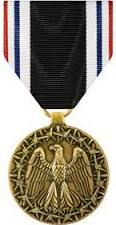
Prisoner of War After being captured during the above-mentioned mission, Captain Farrell was taken to Oflag (Offizierslager) 64, a prisoner of war camp for American officers in Poland.


Share Link: http://pmc.widener.edu/pmc/legacies/cadets/wilfred-f-farrell-39-valor-and-survival-behind-enemy-lines 

PMC cadet charles price
Class of 1902

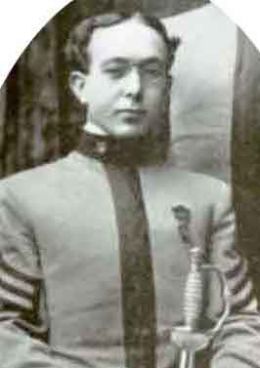
Charles F. B. Price ’02: Marine Leader Across Half a Century of Conflict

Charles Frederick Berthold Price was born in Germany of American parents. He and his parents returned to America when Price was six months old. His family settled in Wayne, PA. Price entered PMC in 1898. At PMC, he was a talented musician; particularly in his rendition of “Taps”. In his 2nd Class (Junior) Year, he was appointed Chief Musician, which meant he kept the PMC Bugle Corps in shape. As a First Classman (Senior), he commanded “B” Company as a Cadet Captain. The Porcupine Annual (then the PMC Yearbook) described Price as: “an advocate for the Extermination of Room Inspectors.” It was written that to avoid the “exertion” of making his bed every morning, he “nailed his sheets and blanket to the bed.” He slept on the floor with a spare blanket. Yet, his classmates considered him to be a “good fellow…and a kind officer.”

After graduation, Price was employed by the Pennsylvania Railroad and served in the Philadelphia City Cavalry of the Pennsylvania National Guard. In 1906, he was commissioned a Second Lieutenant in the Marine Corps and ordered to Annapolis for training. During the Spanish-American War, President Theodore Roosevelt ordered Price and a Marine Expeditionary Force to “protect American lives and property” in Cuba. Price remained there until 1908. He returned to the U.S., but after a few months, he joined the Central American Expeditionary Force. Later deployments included: Panama during the construction of the Panama Canal; Vera Cruz during the Mexican Intervention in 1914; France, shortly before and after the armistice ending WWI; and Nicaragua. 

In 1935, he joined the Fourth Marines at the American Legation in Shanghai, China. Price was promoted to Brigadier General in 1940 and assumed command of the Department of the Pacific in 1941. After the Japanese attacked Pearl Harbor, he was promoted to Major General and placed in command of the Second Marine Division. He assumed command of the Defense Force, Samoan Group, in 1942. His assignment was to secure the approaches to Samoa Islands. His efforts in occupying and developing the U.S. presence on the Ellice Islands made the seizure of the Gilbert Islands possible, thereby opening the Central Pacific. For his ability, perseverance and tact he was awarded the Legion of Merit Medal with the Combat “V” for heroism during direct participation in combat operations by Admiral Chester W. Nimitz, Commander in Chief, Pacific Ocean Areas (CinCPOA), for U.S. and Allied air, land, and sea forces during World War II.
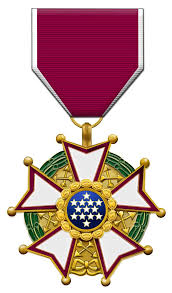
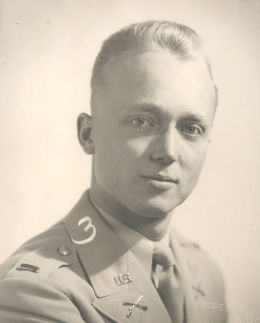
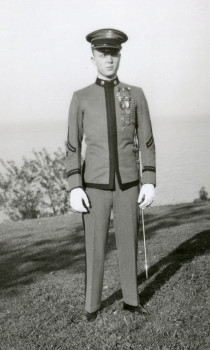
Price returned to the San Diego area in 1944. The following year he retired. He continued to live in the San Diego area until his death in 1954.

Military Honors & ValorLegion of Merit

Headquarters, 2nd Marine Division, Fleet Marine Force (FMF) Pacific
Legion of Merit w/V for heroism during direct participation in the defense of the Samoa Islands during the period of 1942 and 1944.

Share Link: http://pmc.widener.edu/pmc/legacies/cadets/charles-f-b-price-02-marine-leader-across-half-century-conflict 


A portrait of William J. Wolfgram, PMC '43
Class of 1943

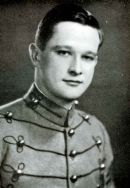
William J. Wolfgram ’43: Courage in the Italian Campaign

William John Wolfgram ’43 was born in Wisconsin in 1922. He attended the local Shorewood schools and then graduated from Northwestern Military and Naval Academy (now St. John’s Northwestern Military Academy). He excelled academically and enrolled at Harvard University. Wolfgram left Harvard and enrolled at Pennsylvania Military College as a Cadet during the second semester of the 1941-42 school year, in response to the outbreak of WWII. He continued his studies in engineering and earned a War Diploma in May, 1943. At graduation he received the Alumni Association Medal for maintaining the highest academic average.

IN uniformAfter his commissioning as a 2nd Lt., Wolfgram was assigned to Company L of the 87th Infantry Regiment, which was part of the 10th Mountain Division (Alpine), at Camp Hale in Colorado. The Division’s training at the 9,200-foot-high Camp Hale honed the skills of its soldiers to fight and survive under the most brutal mountain conditions. The men of the 87th experienced not only skiing, but snow-shoeing, snow fighting, and trail breaking on a toboggan. In January, 1945, the 87th left Newport News, VA for Italy, aboard the USS West Point. The division entered combat on January 28, 1945 in the North Apennine Mountains of Italy.
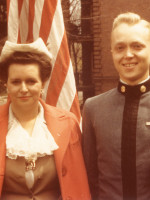
By early March, the 87th found itself racing along the German front line located along a ridge known as Mt. Della Vedetta. During an attack, the first platoon of Company L, under the command of Wolfgram, became pinned down by heavy machine gun fire from a farmhouse. Eventually, the platoon overcame the resistance and captured several prisoners. Wolfgram was awarded the Bronze Star “For heroic achievement in action.” The Executive Officer, 1st Lt. Wilbur S. Sheets, and a friend of Wolfgram, described him as a “brilliant unit commander” and that his men had “nothing but admiration for him.”

With Family MemberCompany L captured Mt. Croce and on the morning of April 16th was ordered to continue the attack along the 4,000 yard Riva Ridge the morning of April 16th. As the platoon began its assault, it came under heavy fire and continuous mortar barrage. Wolfgram successfully had his men withdraw, only to once again encounter German machine gun fire. Wolfgram was seriously wounded and the platoon was cut down to nineteen men. Wolfgram died shortly thereafter.
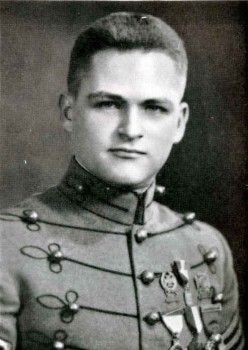
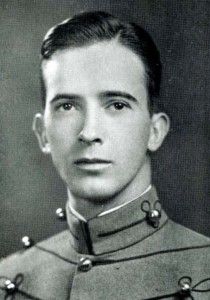
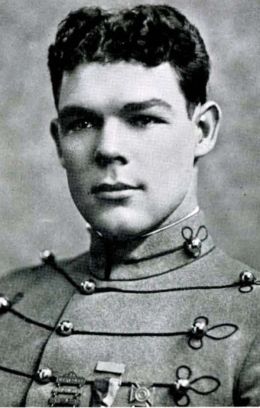
Edith and Frank Wolfgram established a living memorial to their son Lt. William J. Wolfgram. He had been a lover of English books and his parents donated his personal collection the William J. Wolfgram English Reference Library or simply the Wolfgram Collection, to the planned Memorial Library erected in 1948. In addition, the center court of the library was dedicated to Wolfgram. The family continued their support and played an active role in building the current library, also named in his memory.

Learn More About the Wolfgram Library

Military Honors & Valor

Bronze Star3rd Battalion, 87th Regiment, 10th Mountain Division, Fifth Army, USAFE
Bronze Star w/Valor: For heroism during an assault of an enemy held mountain peak near Mt. Della Vedetta, Italy in 1945. 2nd Lieutenant Wolfgram commanded the lead platoon of L Company and remained with the most forward units. They moved forward so aggressively and rapidly in the face of withering enemy fire, that no resistance was able to serious delay this advance. During the attack, Wolfgram continually inspired his men and risked his life on numerous occasions as he coordinated and directed his men.

Share Link: http://pmc.widener.edu/pmc/legacies/cadets/william-j-wolfgram-43-courage-italian-campaign

Thomas Anderson
Class of 1942

Thomas Anderson ’42: A Four‑Time Silver Star Leader in Two Wars

When “B” Company Commander Thomas Anderson graduated from PMC in 1942, he was considered to be a no nonsense Cadet and a “True Leader.” He had a commanding voice, a squared-away military appearance and was an expert at handling those Cadets around him. During his four years, he was awarded the Dunlap Memorial Rifle Trophy and the Oliver Revolver Medal for his marksmanship. His amiable manner also kept him busy with several social pursuits, including the 3rd Class (Sophomore) and 2nd Class (Junior) Dance Committees and the Sabre and Sash (Yearbook).

Anderson was assigned to the 26th Infantry Regiment, nicknamed “The Blue Spaders”, 1st Infantry Division. He focused on preparing for the amphibious invasion of North Africa. First Lieutenant Anderson and his unit landed on the beaches west of Oran, in northwest Africa. The inexperienced American troops encountered stubborn enemy resistance. Anderson’s unit came under constant and effective machine-gun and small-arms fire. Anderson was awarded The Silver Star Medal for his leadership and bravery in leading his men to the successful completion of their mission.

Moving inland, the 1st Infantry Division took up defensive positions in the Kasserine Pass, a wide gap in the Atlas Mountains. Elements of Rommel’s Afrika Korps launched a counter-attack against the 1st Infantry in order to regain control of Tunisia. During the German assault, Anderson led a machine gun squad in the destruction of a well-concealed sniper nest. For his outstanding leadership and tactical skill, Anderson was awarded The Oak Leaf Cluster to The Silver Star Medal (Second Award).

On D-Day, the 26th Regiment landed on Omaha Beach. After landing on “Fox Green Beach,” Anderson, now a Captain and the Commanding Officer of A Company, 1st Battalion, 26th Infantry Regiment, was ordered to take the high ground west and southwest of the Port-en-Bessin, to include Mount Cauvin. Although little is recorded about this engagement, Anderson was awarded The 2nd Oak Leaf Cluster to The Silver Star Medal (Third Award).

During the Korean War, in late May 1951, the 7th Infantry Regiment launched a counter-attack to a Chinese advancement. The goal was to capture key hills and passes near Soksa-ri, Korea, and push the enemy back. During the siege, the 3rd Battalion became critically short of water, rations, and ammunition. Anderson responded to the regimental commander’s request for supplies. Despite being under constant small arms fire from the Chinese and avoiding jagged mountaintops, he piloted an unarmed aircraft four times. Each time he accurately dropped the supplies the 3rd Battalion urgently needed. By the end of May, the enemy offensive had been crushed. Anderson was The 3rd Oak Leaf Cluster to The Silver Star Medal (Fourth Award) for his “Unwavering Gallantry.”

Few men are awarded multiples of The Silver Star Medal, the Nation’s Third-Highest Combat Award (Decoration) for Gallantry. Anderson was one of them.

Military Honors & Valor

1st Battalion, 26th Infantry, 1st Infantry Division USAFE
Silver Star for gallantry in action while leading his force against an enemy force which subjected his force to constant machine-gun and small-arms fire before being overtaken.

Silver Star (Bronze Oak Leaf Cluster) for gallantry in action while serving in the Mediterranean Theater of Operations.

Silver Star (Bronze Oak Leaf Cluster)  for gallantry in action while serving in the European Theater of Operations.

Aviation Section, 7th Infantry, 3rd Infantry Division, Eighth Army, USAFFE
Silver Star (Bronze Oak Leaf Cluster)  for his gallantry while engaged in a struggle to seize a strategic mountain pass near Sangori, Korea, became critically short of water, rations, and ammunition.

Silver StarSilver StarSilver Star

Silver Star


Share Link: http://pmc.widener.edu/pmc/legacies/cadets/thomas-anderson-42-four-time-silver-star-leader-two-wars 

William Tumbelston
Class of 1937

William Tumbelston ’37: Leading Marines Through the Fire on Iwo Jima

The Tumbelston family had a long association with PMC. Dr. Robert T. Tumbelston, ’07 was a graduate and the President of the Alumni Association. His two sons followed in his footsteps and attended PMC. William “Blackie” Tumbelston started as a rook in the Prep School and rose to be Cadet Captain of B Company in his First Class (Senior) year. His classmates considered him to be one of the most accomplished members of the Class of 1937 and for his “fearless determination” and leadership abilities also admired him. After graduation, he joined a Marine reserve battalion in Philadelphia.

Tumbelston was the Executive Officer of the 1st Battalion of the 27th Marines when they landed on Iwo Jima. He assumed command when Lieutenant Colonel Justin Duryea was wounded while taking Hill 326A. After making a thorough Leader’s Reconnaissance of the forward positions of the battalion, Tumbelston launched an attack on the heavily defended Japanese position that had halted the battalion’s advance. Leading from the front, as he was taught at PMC, he was wounded. The bullet struck him in the left arm, but after receiving treatment and refusing evacuation, he returned to the front. After the battle, Tumbelston was evacuated. In the five days he commanded the battalion, the forward attacks destroyed Japanese opposition. For his actions he was awarded the Silver Star Medal.

The battle to secure Iwo Jima witnessed the toughest combat of World War II. The courage and heroism of the Marines, however, inspired a war-weary nation and helped to propel it to final victory.

Military Honors & Valor

Silver Star1st Battalion, 27th Marines, 5th Marine Division FMF Pacific
Silver Star for conspicuous gallantry and intrepidity in action against Japanese forces on Iwo Jima.

Share Link: http://pmc.widener.edu/pmc/legacies/cadets/william-tumbelston-37-leading-marines-through-fire-iwo-jima 

Walter Layer
Class of 1932

Walter F. Layer ’32: Service, Leadership, and Distinguished Alumni

"Walt” Layer entered PMC in 1928 after attending Pennsylvania Military Preparatory School. As a cadet he was admired by all and earned the confidence of General Charles E. Hyatt. Academically he was a serious student and earned a degree in Civil Engineering. Athletically he was talented and captained the football, baseball and boxing teams. He also won a letter in basketball. George Hansell, former PMC Athletic Director said “No man ever had a greater love for the college and its athletic program than Walt.”

After graduation he taught mathematics at PMC for two years. He resigned his commission in the Army Reserve in 1941 and accepted a commission in the Marine Corps Reserve. During World War II, he served in both the European and Asiatic theatres. After the war he served in the state legislature and as a councilman for the borough of Ridley Park. In 1950, Layer was recalled to active duty and commanded the 1st Marine Regiment in Korea. In 1953 he was integrated into the regular Marine Corps. His next assignments were as Provost Marshal of the Navy Department and commanding officer of the Marine Corps Barracks, Brooklyn Navy Yard.

In 1965 Layer was awarded the Outstanding Alumnus Award that was presented posthumously. The citation read in part: “The purpose of the award is to honor a graduate who has … brought recognition and distinction to his Alma Mater and himself.” Cadets formed an honor guard for Colonel Layer’s funeral before his burial in Arlington National Cemetery.

Share Link: https://pmc.widener.edu/pmc/legacies/cadets/walter-f-layer-32-service-leadership-and-distinguished-alumni 

James Spurrier ’40, Emery Hickman ’40, William Dudley ’42 (From the Polo Field to the Battlefield)

James Spurrier ’40, Emery Hickman ’40, William Dudley ’42 (From the Polo Field to the Battlefield)

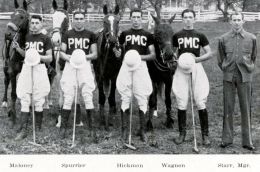
The 1939-1940 polo season was, perhaps, one of the greatest for polo at PMC. Under the guidance of Coach Carl Schaubel, ’30, considered at the time to be the best polo coach in the country, the team of Jim Spurrier ‘40, Emery Hickman ‘40 and “Bud” Maloney ‘41 excelled. Jim Spurrier was the sparkplug of the team. Bud Maloney formed the spearhead on attack, and Emory Hickman constantly retrieved the ball, feeding it to Spurrier and Maloney. Following the completion of a successful regular season, the PMC team once again played in the Intercollegiate Polo Tournament. They beat Harvard and West Point, but were defeated by Princeton in the Championship game. After graduation, these men, along with William Dudley ’42, a sophomore and another member of the polo team, were again teamed together in the 1st Cavalry Division. Three of these polo players distinguished themselves in action and earned Silver Star Medals for their leadership and heroism.

After months of “island hopping” through the Japanese held island chain known as “the Admiralties”, the 1st Cavalry Division invaded the Philippine Island of Leyte in October 1944. On November 30th, B Troop, under the command of CPT James R. Spurrier, was ordered to open the only available supply route by attacking a strongly entrenched force. To accomplish this, Spurrier was forced to cut his own trail through a densely wooded jungle over rugged mountain terrain. As darkness fell, there was the added danger of his troops becoming lost. Spurrier demonstrated initiative and courage leading his men to a point from which an attack could be made at first light. During the night, he gathered reinforcements to his command with men returning from the hospital and others carrying rations. As the sun rose the next day, Spurrier launched a coordinated attack. After 12 hours of hand-to-hand combat led by Spurrier, the supply route was reopened and an estimated 218 Japanese troops had been killed.

In January 1945, Luzon was invaded and General MacArthur issued the order “Go to Manila!” to liberate prisoners held by the Japanese and take the Malacañan Palace, the White House of the Philippines. Detached from the famous “flying column” and ordered to seize and hold the Palace, F Troop, commanded by CPT Emery M. Hickman, began the race towards Manila. To reach the objective, the squadron swept through the maze of unfamiliar streets and quickly overran the Japanese that were preparing to destroy the Palace. Hickey then organized the defense of the compound so well that when the Japanese tried to re-enter the grounds during the night they were stopped while taking many casualties. The next day, the Japanese began a murderous artillery bombardment of the Palace from across the Pasig River. Without regard for his personal safety Hickman courageously directed the fire of F Troop ordnance, observed the effects of the fire, and saw that all casualties received care.

As the 8th Cavalry Regiment began its push southward of Manila, Japanese resistance blocked its progress. Troop E, commanded by CPT William Dudley, was given the assignment to clear the area, starting with Gilmore Street. On Gilmore, a determined and tenacious Japanese force, consisting of machine guns and sniper fire, defended the area. Dudley was continually in the lead and exposed to the withering enemy fire. Throughout the daylong battle, Dudley remained in the forefront of the Troop reassuring his men and exploiting every gain before the enemy could reorganize. His leadership, personal courage, and heroism were directly responsible for the success of his and the regiment’s mission.

Military Honors & Valor

Black and white portrait of PMC alum William E. Dudley

Silver StarWilliam E. Dudley
Class of 1942
1st Battalion, 8th Cavalry, 1st Cavalry Division, USAFE
Silver Star for gallantry and skillful leadership while Encountering heavy machine gun and sniper fire while cleaning out Gilmore Street in the New Manila Subdivision, Philippines.


Black and white portrait of PMC alumni Emery M. Hickman

Silver StarEmery M. Hickman
Class of 1940
2nd Battalion, 8th Cavalry, 1st Cavalry Division, USAFFE
Silver Star for gallantry while leading his troops designated to seize and hold the Malacanon Palace, Philippines.


Black and white portrait of James R Spurrier

James R. SpurrierSilver Star
Class of 1940
1st Battalion, 12th Cavalry, 1st Cavalry Division, USAFFE
Silver Star for gallantry while leading his troops in an attack of a strongly entrenched Japanese position.


Share Link: http://pmc.widener.edu/pmc/legacies/cadets/james-spurrier-40-emery-hickman-40-william-dudley-42-polo-field-battlefield 

John L. Fancourt
Class of 1943

John L. Fancourt ’43: POW Escape and Post-War Leadership

After completing Germantown Academy in Pennsylvania, John “Jack” Fancourt attended PMC. He was a local track star, and, by his senior year, held the Middle Atlantic 220-yard record. He received a Bachelor of Science degree in Civil Engineering and went on to attend Officer Candidate School (Infantry). Because of a deficiency in math, he failed to graduate, and was transferred to Camp Butler, North Carolina. Private Fancourt wasted little time requesting an over sea’s transfer to replacement forces and was assigned to Company K, 179th Infantry Regiment, 45th Division.

During early morning hours of January 22, 1944, the Allies landed on the Italian beach near Anzio. They advanced inland, but were stopped by a German counter attack in early February. At dawn on February 16, the Germans, supported by tanks, launched an attack, with the 179th receiving the brunt of the assault. On February 18, the Germans launched a more intense assault and destroyed one battalion of the 179th, forcing the remainder of the regiment to fall back. Company K suffered heavy casualties, but Fancourt survived. He was captured by the Germans, and along with other prisoners forced to walk towards Rome. After four days, they reached “Cinecitta,” a prisoner of war camp located just outside of Rome. The camp was used to hold prisoners for short periods of time. It was lightly guarded by German soldiers, and surrounded by barbed wire. One night, the guards were distracted by an air raid near the camp. This allowed Fancourt and several others to escape through the barbed wire fence. For the next several months, Fancourt, now with a moustache and long hair, hid in an apartment in Rome, and eluded recapture with the help of the Italian Underground,. In June, Rome was liberated, and Fancourt returned to duty.

At the request of Major General James Ulio, Adjutant General of the Army and a trustee of PMC, Fancourt returned to the school for a short time as a staff member of the Army Specialized Training (AST) unit. After being honorably discharged in late 1945, Fancourt joined the family business, W.F. Fancourt & Company, makers of textile soaps, in Philadelphia. Eventually the company moved to Greensboro, North Carolina. There he enjoyed fishing and golf, serving as the Honorary Chairman of the Greater Greensboro Open in 1974. He died in 1996.

Share Link: http://pmc.widener.edu/pmc/legacies/cadets/john-l-fancourt-43-pow-escape-and-post-war-leadership 

Gordon M. Bettles
Class of 1910

Gordon M. Bettles ’10: From Mining Leader to POW in Manila

Gordon M. Bettles left Montana in 1906 and entered PMC, He quickly became a leader in a very talented class. As a senior, he received the honor of being the Cadet Battalion Commander. Commander Bettles was also an athlete and captained the football team. At Commencement he was awarded a degree in Civil Engineering and continued his education at the Colorado School of Mines. He oversaw the successful mining operations of the Yellow Tiger Mining Company in Goldfield, Nevada and introduced the use of an oil-driven compressor to mine the gold. In 1937, Bettles left his lucrative position at the Wiljobar Corporation in California and sailed to the Philippines. He was to become a part of a mining syndicate in Manila.

The bombings at Pearl Harbor in 1941 suddenly and dramatically changed the American attitude towards the Philippines. Since becoming a colony at the end of the Spanish American War, America’s approach was muddled. To many, the Philippine were an economic investment. This resulted in various large and small companies seeking the wealth of lumber, sugar and precious metals that the islands offered. After Pearl Harbor, the view was that Manila Bay was a large well-fortified port in the Pacific.

Within a month, Gordon Bettles and 6,000 other American and British civilians were interred in Japanese prison camps in Manila. The largest of these camps was Camp No. 1, University of Santo Tomása Internment Camp. The University campus consisted of 50 acres and was surrounded by high masonry walls on three sides an an ornate iron fence facing the main street. Inside the compound were the Main Building and an education building, both structures were 3-stores in height and contained offices, classrooms and a gymnasium. In addition, there were two light construction one-story buildings called the Annex and the Infirmary. Segregated by sex, thirty to fifty people were crowded into these small spaces. Bathrooms were scarce.

While there were many difficulties accommodating the growing number of internees, the Japanese absolved themselves of any responsibility. The Japanese did not consider the internees to be prisoners, but merely civilians held in protective custody. This left the internees struggling to find ways of feeding of themselves and dealing with a variety of health issues.

On June 14, 1943, Gordon M. Bettles, age 50, died of unknown causes while imprisoned. He was buried in the Manila North Cemetery.

Share Link: http://pmc.widener.edu/pmc/legacies/cadets/gordon-m-bettles-10-mining-leader-pow-manila 

Black and white image of Hugh F. McCaffery standing in PMC uniform with a hat in one hand and a sword in the other.
Class of 1924

Hugh F. McCaffery ’24: A Leader Lost After Pearl Harbor

For 150 years, PMC taught students to be academically disciplined and instilled in them the qualities of leadership. Two brothers, Hugh and Joe McCaffery, learned these lessons well and were superior leaders at a time when the nation needed them.

Hugh McCaffrey ‘24 started in the PMC Prep School and then entered the college. During his time at PMC he was a multi-sport athlete, football, basketball and baseball, and was admired by his classmates for his energy and leadership. As the quarterback of the football team, McCaffrey was considered by many, including Col. Frank Hyatt, to be “slightly” better than Reds Pollock ’34. In 1924, he received his Degree in Civil Engineering from PMC and was commissioned as a Second Lieutenant in the Army Reserves. McCaffery then entered law school at Notre Dame University. While there, he joined the swim team, became the team’s captain, set collegiate records in the 100-meter freestyle, and qualified for the Olympics swim team. After earning his law degree, his interest in flying took him in a different direction.

McCaffery was a gifted pilot. Before joining the Army Air Corps in 1930, he graduated from the School of Aviation at Essington, PA. He then joined the Army Air Corps and completed flying school at Randolph Field in Texas. Thereafter, he received specialized training in pursuit, observation and bombardment in a variety of airplanes. Upon completing his training, he was assigned to the 31st Bombardment Squadron. In 1939, he was an instructor at the Air Navigation School at Hickam Field in Hawaii. In 1940, he was put in charge of the squadron.

Shortly after the attack on Pearl Harbor, Secretary of War Stimson ordered Major General Herbert A. Dargue, an aviation pioneer and commanding officer of the First Air Force, and his staff, including Major McCaffery, to investigate the lack of preparedness at Pearl Harbor and to take command of the Army units in Hawaii. On December 12, 1941, while flying a Douglas B-18 enroute to Hamilton Field in California, McCaffrey encountered a snow storm as he approached the Sierra Nevada Mountains and subsequently went missing. An exhaustive search was conducted. It wasn’t until May, 1942, that a search party led by Norman Clyde, a well-known mountaineer with experience in the Sierra Nevada, found the aircraft and bodies, covered by five feet of snow.

On the evening of October 14, 1949, the Corps of Cadets gathered in the Armory to hear Bill Stern, ’30 noted sports broadcaster. During his 15-minute, coast-to-coast broadcast that evening, Stern paid tribute to Hugh and Joe McCaffery, who had been killed in action. Any death in war is tragic. For PMC, the loss of the McCaffery boys was very personal and underscored the sacrifice PMC has made while serving our country.

Share Link: http://pmc.widener.edu/pmc/legacies/cadets/hugh-f-mccaffery-24-leader-lost-after-pearl-harbor 

Frank W. Jakob
Class of 1941

Frank W. Jakob ’41: Leading Under Fire in Tunisia

Frank “Jake” Jakob entered PMC from Collinswood High School (NJ), where he was a multi-sport athlete. At PMC Jake was a star tackle on the football team and played basketball and track. Jake was also a leader and in his senior year was the Battalion Captain. At Commencement, he was commissioned and joined the Army. After basic training, he was assigned to the 18th Infantry Regiment of the 3rd Battalion, First Infantry Division.

After a successful amphibious landing in North Africa in 1942, the Allies focused on seizing Tunisia, the strategic key to the Mediterranean. In March, 1943, the First Infantry Division received orders to move towards El Guettar. The Division was expected to capture the cliffs at Djebel el Ank and to press eastward along the Gumtree Road. After a day of reconnaissance and preparations, an attack was launched on the night of 22-23 March. Company G of the 3rd Battalion was commanded by Frank Jakob, who assumed command after the company commander had been wounded. The company was ordered to capture an insignificant ridge that would become very significant.

After taking the ridge, German snipers on an opposite hill began to pick off the Americans who moved. The men of Company G omit scrambled to dig shallow foxholes as the omit intense fire continued. “We just had to lie there and take it,” Lt. Jakob told the Philadelphia Inquirer. The Germans outnumbered us and “our communications were broken and we couldn’t contact our artillery to return fire.” The next day, the Germans made frequent attacks on the hill in groups of four but were turned back. By the light of the moon on the evening of March 25, 133 of the original 183 Americans burst through the German lines to safety. When morning came, the Americans discovered that the Germans had withdrawn.

After the war, Jakob married and raised family in Collingswood. He worked at Campbell Soup until he retired as a Supervisor. In 1995, he was inducted into the Coolingswood High School Athletic Hall of Fame. He passed away in 1997.

Share Link: http://pmc.widener.edu/pmc/legacies/cadets/frank-w-jakob-41-leading-under-fire-tunisia 

Jesse W. Roberts
Class of 1936

Jesse W. Roberts ’36: Tank Destroyer Valor at the Bulge

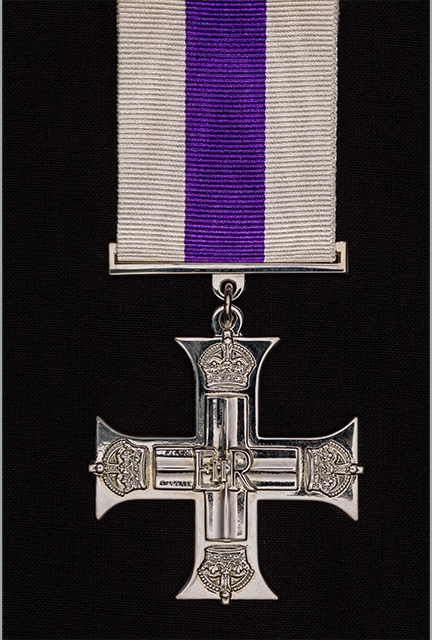
British Military CrossJesse Roberts came to PMC from Upper Darby High and spent a term in the Pennsylvania Military Prep School. He then transitioned to PMC. He was gregarious, played football, and was part of the Cavalry Squad while at PMC. His keen sense of humor and love of a good practical jokes resulted in his intimate acquaintance with the “Delinquent Guard”, later known as “Walking (penalty) Tours”. After graduation, Roberts worked for the Roberts Filter Manufacturing Company, which his family had started in 1896. Jesse later returned to PMC as the Adjutant in 1941 and continued in that role until he was called to active duty in January 1942. After completing Tank Destroyer School, he was assigned to the 702nd Tank Destroyer Battalion (the “Seven O Deuce”).
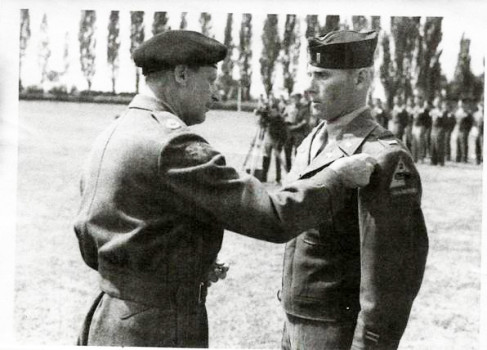
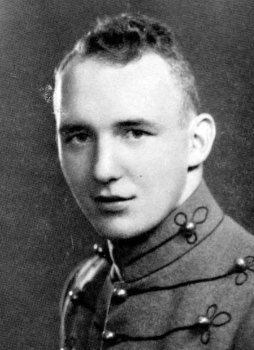
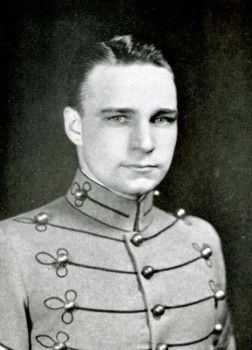
The “Seven O Duce” landed on Omaha Beach in mid-June and entered the line in early July. The battalion became part of the 2d Armored Division. In November, Roberts joined the “Seven O Duce” as Platoon Leader, second platoon of Company A.

In response to the German counter attack in the Ardennes, the VII Corps, under the command of Field Marshall Montgomery, was tasked with halting the advance. As the battle intensified, the 2d Armored Division was ordered to seize Buissonville, Belgium, where German tanks had been reported. Company A moved toward Buissonville and attacked the 2d Panzer Division and elements of the 116th Panzer Divisions as they were preparing to move north. After encountering and destroying several German tanks, Roberts positioned his troops on an exposed ridge, where they battled the enemy that were hidden in the woods. During this encounter, the Germans lost two Panther tanks, two 88 mm anti-tank guns, one Self-Propelled 75 mm gun, one armored car, one personnel carrier and eight trucks. In early January 1945, Roberts lead an attack against two German Panther tanks near La Wate, Belgium. During the firefight, a German round struck Roberts’ gun crew, killing two men and wounding Roberts. He extinguished the fire in the vehicle and evacuated three wounded men. Despite refusing medical assistance for burns to his hands and face, he returned to his unit. Later in January he was injured twice and eventually evacuated to a field hospital. It was determined that Roberts had suffered fractured ribs and remained hospitalized. For his actions, Field Marshall Montgomery awarded Roberts The British Military Cross Medal.

Like many families, the Roberts family connection to PMC continued. He was the President of the Alumni Association and later the PMC Parents Association. In addition, both sons of Roberts were members of the Corps of Cadets and graduated from PMC.

Share Link: http://pmc.widener.edu/pmc/legacies/cadets/jesse-w-roberts-36-tank-destroyer-valor-bulge 

Russell A. Freas, Jr.
Class of 1941

Russell A. Freas, Jr. ’41: A Gallant Leader at the Bulge

Russ Freas came to PMC from Glen-Nor High School, in Glenolden, where he was described as one of the “pluckiest” football players of his time and he was selected to the All-Delaware County and Chester team. While playing football at PMC, he became an outstanding Guard. As a Cadet, he was described as having great energy and determination. After Commencement, he joined the Army and was eventually assigned to the 423rd Infantry Regiment.

A week before the start of the Battle of the Bulge, the 106th Infantry Division was sent in to relieve the 2nd Infantry Division near Schonberg, Germany. The Germans began their assault at dawn on December 16th and the 106th stared directly down the barrels of the Second SS Panzer Division.

The German attack on the town of Bleialf that morning gave the Germans control of the lower two thirds of the town. The arrival of more than two hundred reinforcements, including the Service Company, which had been re-organized as a rifle company and commanded by Freas, halted the German advance. These reinforcements were then ordered to counterattack. Freas personally led his men into many of the town’s buildings. He was credited with personally capturing numerous German prisoners. By mid-afternoon, Freas and the other reinforcements had reoccupied the entire town, except for the houses around the train station.

After three days of arduous combat, two regiments of the 106th Division, the 422nd and the 423rd, were surrounded. While both regiments continued to fight, supplies of ammunition and food ran low. On December 18, the regiments counter-attached in hopes of breaking through the German lines. This bold action was blocked by the sheer weight of German numbers. Both regiments surrendered.

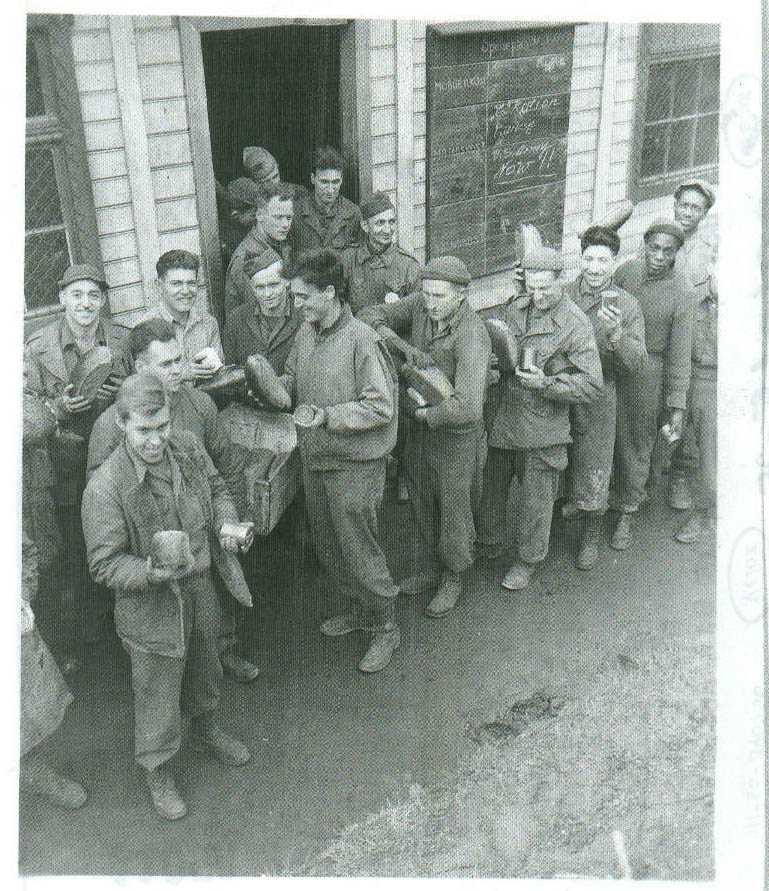
The Germans marched 985 captured men of the 106th for four days until they reached Stalag XIIA near Limburg, Germany. The Americans never entered the camp, but were packed into boxcars, 60 men to a boxcar, and transported to Stalag 9-B, considered to be one of the worst POW camps in Germany. During 

the trip to Stalag 9-B, eight men attempted to escape and were killed by an exploding land mine. The German sergeant-in-charge was enraged and began shooting. Although the sergeant knew that every boxcar was densely packed, he fired a round through the door of a car, killing an American soldier.

Military Honors & Valor

In 1946, Freas was posthumously awarded the Silver Star Medal for his gallantry.

Silver Star

1st Battalion, 423rd Infantry Regiment, 106th Infantry Division, USAFE
Silver Star for his heroic actions while leading an attack on the German held town of Bleialf at the start of the Battle of the Bulge.

Share Link: http://pmc.widener.edu/pmc/legacies/cadets/russell-freas-jr-41-gallant-leader-bulge 

Walter D. Fetterly
Class of 1929

Walter D. Fetterly ’29: The Liberator of Stalag IX‑B

Walter “Fet” Fetterly arrived in 1922 and spent two years at Pennsylvania Military Prep School before starting PMC and graduating in 1929. He was not an outstanding athlete, but was known more as on organizer of military and social events. Fetterly was, however, an outstanding rifleman and Captain of the Rifle Team during his senior year. This team went undefeated and Fetterly led them to PMC’s first Eastern Championship and the Hearst Trophy.

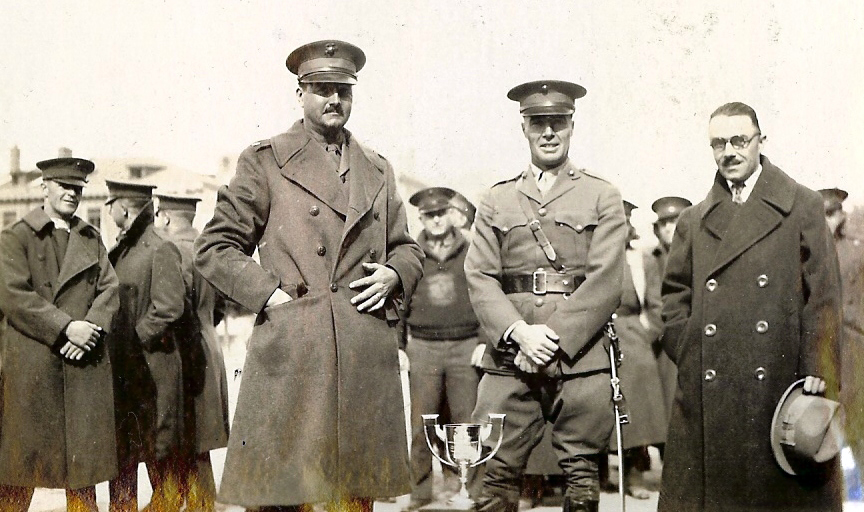
Walter Fetterly holding a rifle trophu

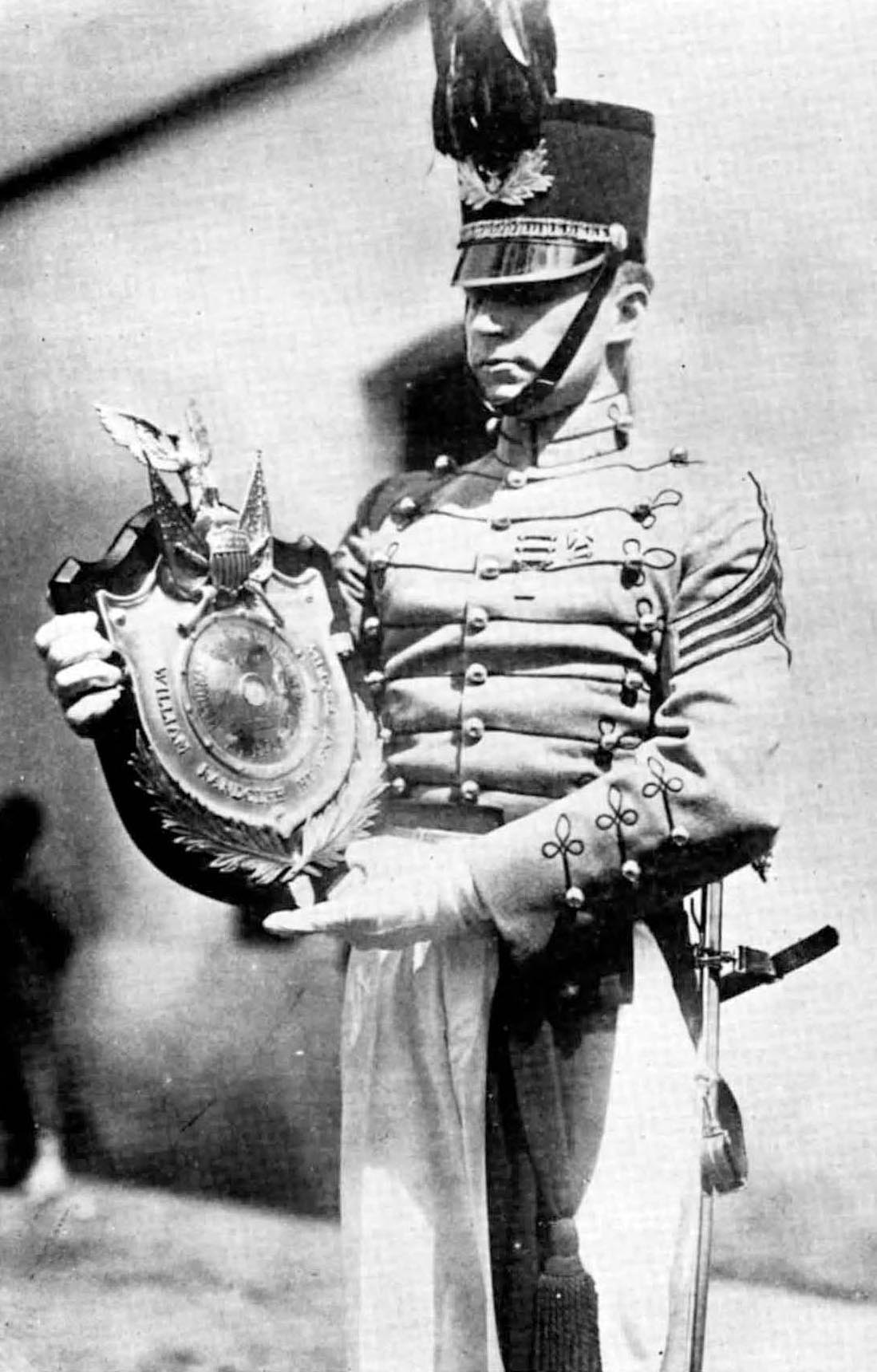
Fetterly joined the Army and was assigned to the 114th Infantry Regiment. In February 1945, he was awarded the Bronze Star Medal for “meritorious achievement … in the face of determined resistance from strongly fortified enemy positions, in addition to the hazards of extensive minefields along the axis of advance, the Second Battalion, under Lt. Colonel Fetterly’s direction, was able to secure its assigned objective. When heavy casualties were sustained and one company had lost all its officers, Fetterly quickly reorganized his battalion, assigning duties to new leaders and changing the plan of attack to meet the situation on the ground, and led his battalion in the assault which resulted in the capture of Bellevue and Brandelfingerhoff Farms.”

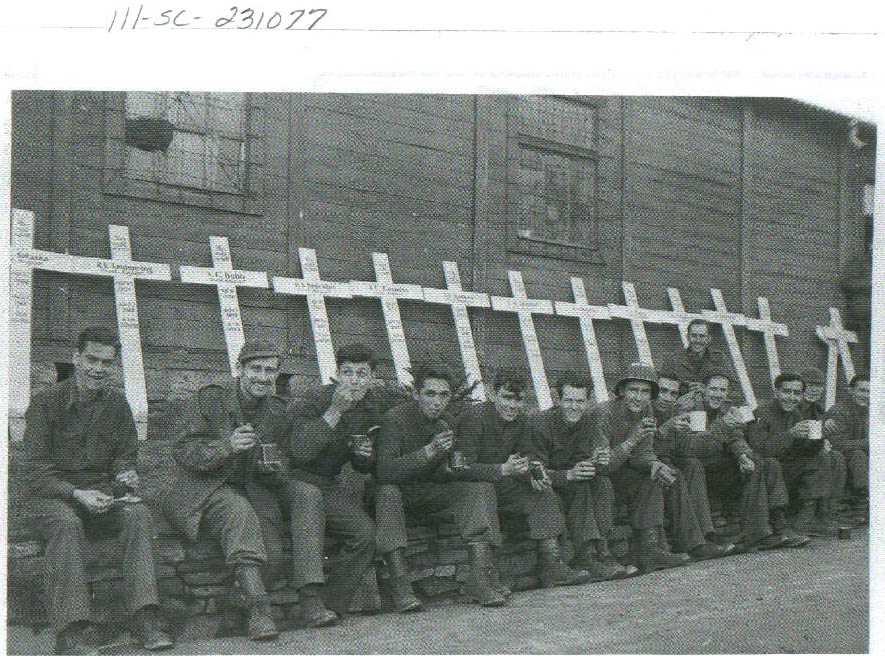
In April 1945, the end of the war was close at hand. The difficult and dangerous mission Lt. Colonel Fetterly received may have surprised him. He was to command a Task Force, consisting of the 2nd Battalion, 114th Regiment, 44th Infantry Division reinforced with light tanks and armored cars from 106th Cavalry Group, and Company C from the 776th Tank Destroyer Battalion equipped with M36 “Slugger” Tank Destroyer. The mission of the Task Force was to break through German lines and drive 60 kilometers (37 miles) through enemy held territory to liberate POWs at Stalag IX-B, in Bad Orb. The Task Force was to proceed with all deliberate speed avoiding contact with the enemy. With elements of the 106th Cavalry in the lead, the attack started well. On occasion, the Task Force experienced occasional resistance, but they were not slowed down and they rejoined the Cavalry in Bad Orb. On April 2, Fetterly and the Task Force liberated 6,000 Allied soldiers, of which 3,364 were American. What they found was shocking.
 

Share Link: https://pmc.widener.edu/pmc/legacies/cadets/walter-d-fetterly-29-liberator-stalag-ix-b