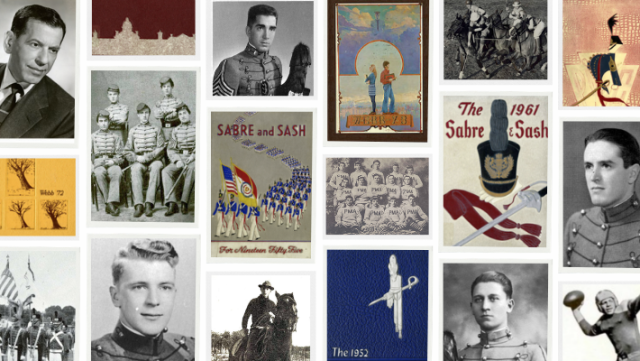
Collage of Pennsylvania Military College cadets and archived yearbooks documenting student life and traditions

Notable Cadets

Search Cadet Stories

Filter Cadet Stories

Horace Hobbs
Class of 1897

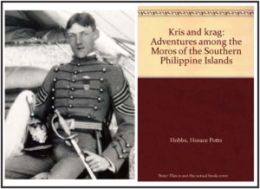
Horace Hobbs ’97: Heroism in War and Chronicler of Conflict

Horace Hobbs (Class of 1897) was awarded the Distinguished Service Cross for extraordinary heroism during the Philippine Insurrection in 1905 and the Silver Cross for gallantry in France during World War I. He wrote “Kris and Krag: Adventures among the Moros of the Southern Philippine Islands” which is recognized as a classic work on the little-documented Philippine Insurrection.

Military Honors & Valor

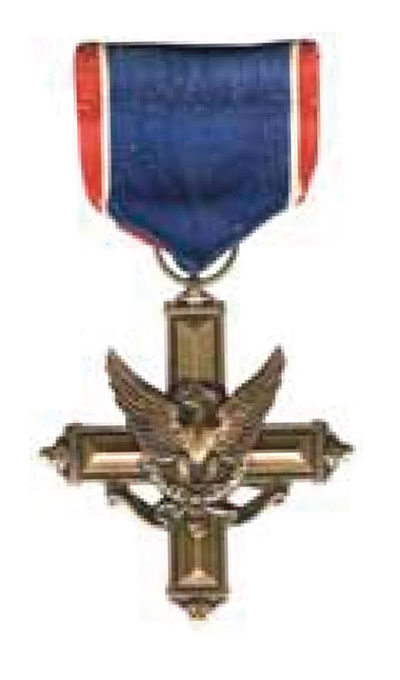
distinguished service cross

1st Battalion, 17th Infantry, 2nd Infantry Division, Fifth Corps
Distinguished Service Cross for extraordinary heroism in action at Pala’s Cotta, Island of Jolo, Philippine Islands during the Philippine Insurrection.

1st Battalion, 26th Infantry, 1st Infantry Division AEFSilver Star
Silver Star for gallantry in action while serving with the 101st Infantry Regiment A.E.F. in action near Beaumont, France


Share Link: http://pmc.widener.edu/pmc/legacies/cadets/horace-hobbs-97-heroism-war-and-chronicler-conflict

Raymond W. Hardenbergh
Class of 1898

Raymond W. Hardenbergh ’98: Service, Leadership, and the Legacy of Rags

Raymond W. Hardenbergh, also a member of PMC’s Class of 1898, left campus prior to Commencement to serve in the Spanish-American War. A Cadet Lieutenant at the time, he enlisted as a private in Company E of the 13th Pennsylvania Infantry, joining the regiment at Camp Hastings. Like his fellow cadets who entered military service, Hardenbergh received his degree in civil engineering.

From the 13th Pennsylvania, Hardenbergh went on to serve with the Army Corps of Engineers in Cuba under Colonel Edgar Jadwin, where he was appointed a Second Lieutenant in the regular army. His military career expanded further as he participated in the Philippine Insurrection. During World War I, he served as brigade adjutant with the 159th Brigade, 80th Division, American Expeditionary Forces.

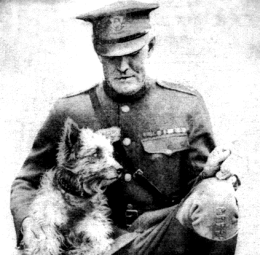
Hardenbergh is perhaps best remembered not only for his service, but for his connection to “Rags,” the famed war dog and mascot of the 1st Infantry Division. Rags, a mixed-breed terrier discovered in Paris by Sergeant James Donovan, was trained to carry messages between front-line units. During the Meuse-Argonne Campaign, Rags delivered a critical message despite being bombed, gassed, and partially blinded—an act that saved many lives and brought him widespread recognition.

After the war, both Donovan and Rags returned to the United States, where Donovan later died in 1919. Rags remained at Fort Sheridan, Illinois, where gas victims were being treated. When Major Hardenbergh arrived at Fort Sheridan the following year, he and his family adopted Rags, providing a home for the decorated war dog.

In 1924, Hardenbergh was transferred to Governor’s Island in New York Harbor, home of the 1st Infantry Division, where Rags became something of a celebrity in Manhattan. Hardenbergh was later transferred to the War Department in 1934. Rags died in 1936 and was buried with full military honors; a monument was erected in his memory at Aspen Hill Memorial Park and Animal Sanctuary in Silver Spring, Maryland.

Colonel Raymond W. Hardenbergh died on February 3, 1949.

Share Link: http://pmc.widener.edu/pmc/legacies/cadets/raymond-w-hardenbergh-98-service-leadership-and-legacy-rags 

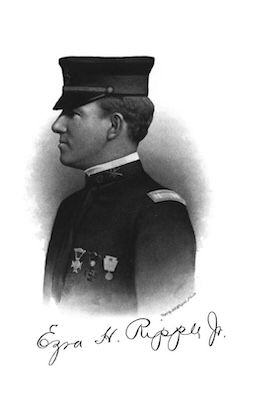
Side portrait of E.H. Ripple Jr in uniform
Class of 1898

Ezra H. Ripple, Jr. ’98: From Cadet to World War I Officer

Ezra H. Ripple, Jr., a member of PMC’s Class of 1898, answered the call to service before completing his studies. In May of that year, as the nation mobilized for the Spanish-American War, Ripple—then a Cadet Lieutenant—left campus to enlist as a private in Company D of the 13th Regiment of the Pennsylvania National Guard. Like many of his classmates who entered service, he still received his degree in civil engineering.

Ripple joined his regiment at Camp Hastings for training. At the time of muster, the 13th Pennsylvania consisted of thirty-six officers and 604 enlisted men. In May, the regiment was ordered to Camp Alger, near Dunn Loring, Virginia, where it became part of the 2nd Army Corps, First Division. The unit remained there until August, when it was ordered back to Pennsylvania’s Camp Meade near Middletown. The war came to an end on August 13, and the 13th Pennsylvania did not see combat.

Following his military service, Ripple worked as a mine surveyor until 1900, when he chose to pursue a career in law. He entered the law department of the University of Pennsylvania and graduated in 1904. The following year, he was admitted to the Lackawanna bar.

Ripple’s commitment to military service continued well beyond his early enlistment. In 1916, he commanded the 13th Pennsylvania during the Mexican Border Campaign. During World War I, he was drafted into service and assigned to Headquarters, 55th Infantry Brigade, 28th Infantry Division—once again answering the call in a time of national need.

Share Link: http://pmc.widener.edu/pmc/legacies/cadets/ezra-h-ripple-jr-98-cadet-world-war-i-officer 

Percival G. Lowe
Class of 1883

Percival G. Lowe ’83: Frontier Scout and Expedition Leader

Percival G. Lowe was born in 1863 in Leavenworth, Kansas. He completed his education in the local schools and entered PMC in 1880. He graduated from PMC in 1883 as an honor student, “First Captain” of the Corps of Cadets and received a C.E. (Civil Engineering) degree. Lowe returned to Leavenworth and for the next two years was employed as an assistant city engineer. In 1885 he enlisted in the 18th U.S. Infantry. He was commissioned a Second Lieutenant of Company B in 1889 and graduated from the infantry and cavalry school in 1895.

He was sent to Fort Bliss, Texas, in 1896 and placed in command of the Seminole-Negro Indian Scouts. Under his leadership, the Scouts had played a pivotal role in ending violations of U.S. neutrality laws by Mexican revolutionaries and bandits in Texas, including the killing of Mangas de Agua, described as the most desperate of all the bandits.

Alaska-expedition

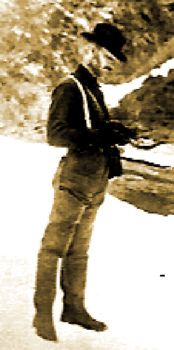
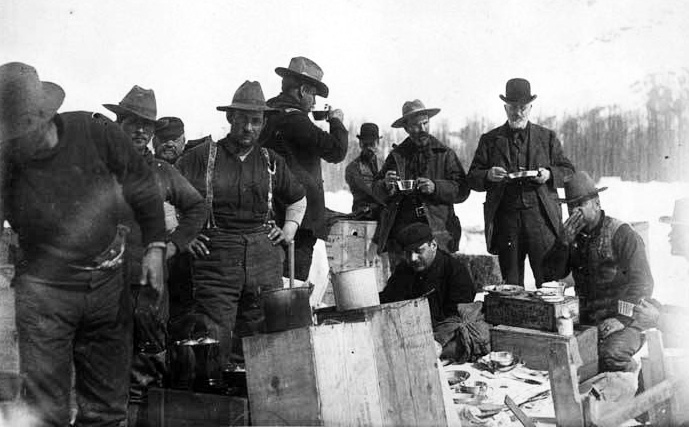
Alaska ExpeditionIn 1898, Secretary of War Russell Alger ordered three military expeditions to explore Alaska. Captain William R. Abercrombie, U.S. Army, commanded the second expedition. Upon his arrival, Abercrombie divided his party into two groups. The first was to make reconnaissance surveys of the Prince William Sound and the second, led by Lowe, was to navigate and chart the overland trail from Valdez to the Yukon River. Perhaps the most noteworthy event of Lowe’s expedition occurred when Abercrombie named the Lowe River after him, reportedly because of his endurance and scouting abilities.

In the spring of 1899, Lowe was promoted to Captain, given command of L Company in the 25th Infantry. and deployed to the Philippines. Lowe’s reputation as an Indian fighter and navigator was well-known when he arrived in the Philippines. As a result, General Henry W. Lawton assigned Lowe to be his chief of scouts. With the help of his friend from the Abercrombie Exploration of Alaska, Lieutenant Joseph C. Castern, 4th Infantry, Lowe pulled together a core group of enlisted men and Tagalog scouts. Henceforth they were known as “Lowe’s Scouts.“ With the need for more forces to garrison and patrol the territory, the number of Lowe Scouts increased. Within a year, over 100 Ilocano recruits were raised and “Lowe’s Scouts” grew to 250 soldiers. In addition, this unit became an integral part of the growing intelligence network of native spies and informants.

Seminol-Negro-Scouts

In October 1899, a plan developed to deal with Filipino revolutionary positions in the Cabanatuan area. American troops were to make a frontal attack at night, with Lowe’s Scouts, commanded by Lt. Castern, supporting the attack on its right flank. The fight was over by noon without any American casualties and the revolutionaries fleeing in disarray. This was the first real fight that included the scouts. During the battle this small force moved quickly and struck the entrenched revolutionaries hard. More importantly they proved their loyalty to the American forces.

The challenge of managing the scouts in the Philippines took a heavy toll on Lowe’s health and he was sent back to the U.S. By 1903, he had retired from military and was confined to the hospital in Colgate, Oklahoma. He died in 1910 at the age of 47.

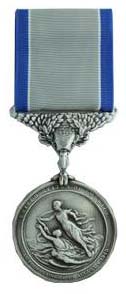
Military Honors & Valor Silver Life Saving medal

18th Infantry, Seminole Negro-Indian Scouts
Silver Lifesaving Medal for heroism in rescuing a Seminole Negro-Indian scout from drowning in the Pecos River, near Eagle Nest, Texas.

Share Link: http://pmc.widener.edu/pmc/legacies/cadets/percival-g-lowe-83-frontier-scout-and-expedition-leader 

Irving J. Carr
Class of 1897

Irving J. Carr ’97: Signal Corps Leader and Innovator

Irving J. Carr was born in Chippewa Falls, Wisconsin, in 1875. After attending the public schools, he enrolled at Pennsylvania Military College. While at PMC he played baseball, was awarded the Marksmanship Medal and was an exceptional student.

Carr graduated from PMC with a degree in Civil Engineering and began his Army career. He served as an infantry lieutenant in the 17th Infantry during the Philippine insurrection. During his time in the Philippines, he participated in several battles and engagements against the insurgents at Magalang on the island of Luzon. He was awarded the Silver Star for his gallantry. Carr graduated from the U.S. Army Signal School at Fort Myer in 1908. In 1914, he was assigned to the 2nd Division, IV Corps and Third Army in France as a signal officer. During the Spring Offensive of 1918, Carr participated in the attacks at Aisne-Marne and St. Mihiel and in the Somme-Dieu defensive. During the 1920s, he graduated from the General Staff School and the Army War College. After the war, he served as signal officer of the Western Department and as chief of staff of the Hawaiian Division.

In 1930, Carr was appointed Chief Signal Officer. He took charge of the U.S. Army Signal Corps as the nation plunged into the Great Depression and military preparedness was less important. At the time, Carr commanded a very small Corps, consisting of approximately 270 officers and 2,500 enlisted men. During his command, the Corps introduced the use of the typewriter, FM radio and walkie-talkies were all introduced. By 1934, The Corps provided the Army with the most comprehensive radio net in the world. Message traffic averaged almost 82 million messages per year from 1931 to 1934.

Carr retired from the Army in 1934 and settled in St. Petersburg, Florida. After a long illness, he died on June 12, 1963. He is buried in Arlington National Cemetery.

Silver Star

Military Honors & Valor

1st Battalion, 17th Infantry, 2nd Infantry Division, Fifth Corps
Silver Star for gallantry in action against insurgent forces at Magalang, Luzon, Philippine Islands.

Share Link: http://pmc.widener.edu/pmc/legacies/cadets/irving-j-carr-97-signal-corps-leader-and-innovator 

Julius T. Conrad
Class of 1887

Julius T. Conrad ’87: A Cavalry Officer of Global Campaigns

Conrad, a decorated career Army officer who served in the Mexican border wars, the Spanish-American War, the Chinese Relief Expedition, the Philippines Insurrection and World War I—and as a professor of Military Science and Tactics at PMC–has the distinction of not only graduating from PMC, but also from the U.S. Military Academy at West Point (Class of 1892).

Born in West Virginia, in 1868, he was the son of Col. Joseph Conrad, who commanded a Union brigade during the Atlanta campaign in the Civil War and “carried in his head a bullet intended for General Phil Sheridan…when he interposed his person for protection of his Chief,” according a 1955 USMA alumni bulletin.

At Pennsylvania Military Academy, Conrad was one of the youngest and most brilliant members of his class. After graduation, he passed the entrance exam for USMA, where his experiences in Chester “enabled him to fit comfortably into the pattern of cadet life at West Point,” the alumni bulletin, written after his death in 1955, reported. After graduation from the Academy, Conrad, an avid horseman, was assigned to the 3rd U.S. Cavalry Regiment. While stationed at Fort Sam Houston, Texas, he was commended for his conduct in the field during the Garza Revolution on the Mexican border.
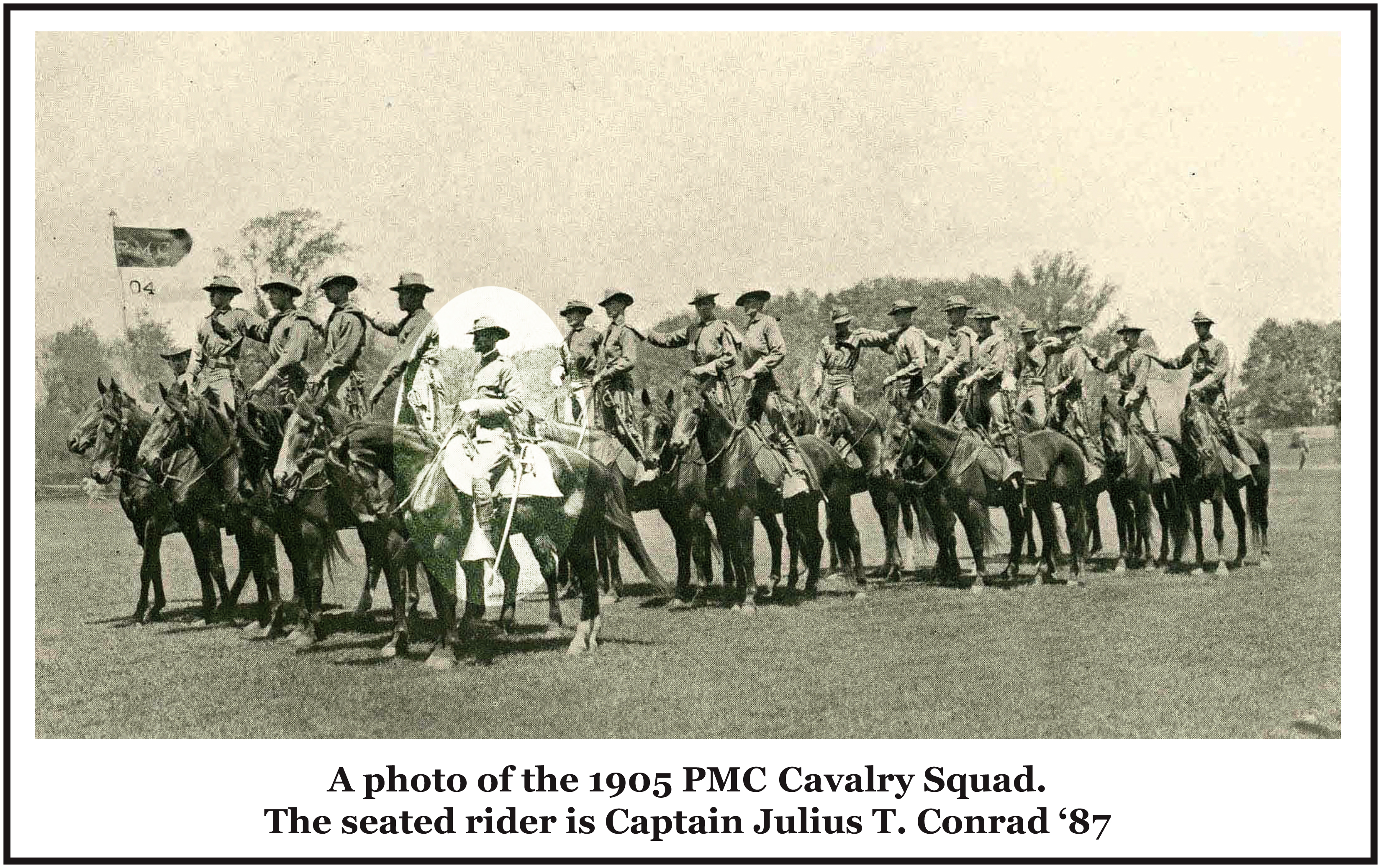
1905 PMC Cavalry SquadDuring the Spanish-American War, the 3rd Cavalry was one of five cavalry units assigned to the crucial assault on San Juan Heights. Three troopers in the regiment were killed and 52 wounded in the action, including 2nd Lt. Conrad, who was shot in the ankle. Conrad was also one of five troopers in the battle awarded a Silver for distinguished gallantry.

After three tours of duty in the Philippines and participation in the Chinese Relief Expedition at the end of the Boxer Rebellion, Conrad, by then a captain, served as Professor of Military Science and Tactics at PMC from 1902-1905. He took a special interest in the Cavalry Squad and was regarded by students as “firm and strict, yet always just, kindly and an ‘all-around good fellow.’” He returned to the college in 1924 to receive the Bachelor of Military Science degree, awarded to honor graduates who served in the military in time of war.

Conrad commanded the 38th Field Artillery during World War I and until it was demobilized in 1919. After that, he served with the Adjutant General’s Department in Washington, D.C. When he retired in 1932, he and his wife, the former Jean Hoskins, settled in Washington.

After his death in 1955, his plebe-year roommate at West Point remembered him as “as fine and loveable a character as ever was.” 

Military Honors & Valor
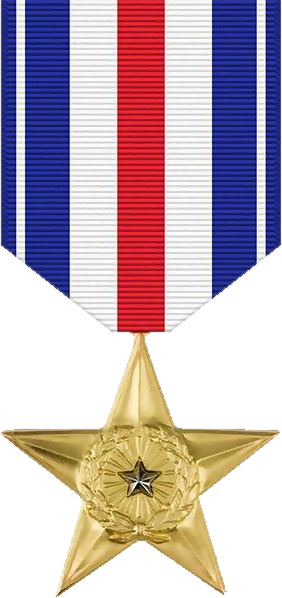
Silver Star3rd Squadron, Troop K, 3rd Cavalry Regiment
Silver Star for For gallantry in action against Spanish forces at Santiago, Cuba on 1 July 1898.


Share Link: http://pmc.widener.edu/pmc/legacies/cadets/julius-t-conrad-87-cavalry-officer-global-campaigns